


The movie that Guy Pearce will always regret: “The machine is the star”

Of all the actors to have decided they wanted to carve out a secondary career as the star of countless direct-to-video action thrillers that routinely take a critical pasting, Guy Pearce has to stand out as one of the most unlikely.
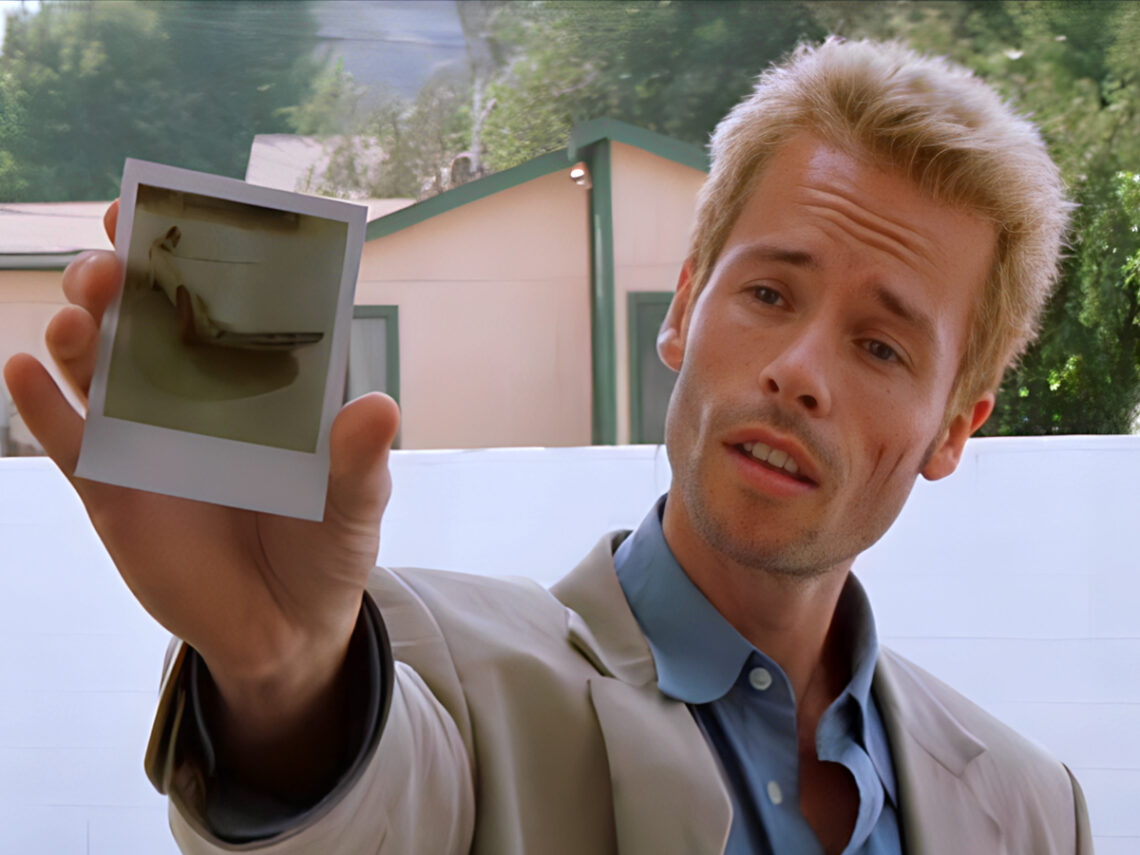
Doing what so many of his Australian contemporaries have done by following the Neighbours-to-Hollywood pipeline, his breakthrough big screen role in The Adventures of Priscilla, Queen of the Desert, Curtis Hanson’s crime classic L.A. Confidential, and Christopher Nolan’s mind-bending Memento gave the impression of a talented character actor blessed with leading man looks.
For the most part, the expectation for Pearce’s career was to buddy up alongside stars such as Brad Pitt and Edward Norton as a leading man who could offer you a little something different. Sure, he was box office-worthy, but he could also provide a neat hook for the cinephile buying tickets, too.
That’s not to say his career hasn’t lived up to its early promise, but a quick glance at Pearce’s filmography reveals that he’s become more prolific than ever over the last few years. Of his ten live-action features since 2019, though, it would be fair to say that quantity has drastically outweighed quality.
Brian De Palma’s Domino, Disturbing the Peace, The Seventh Day, Zone 414, and The Infernal Machine are all forgettable genre films that never enjoyed a wide theatrical release, with Liam Neeson’s Memory and Vin Diesel’s Bloodshot bombing at the box office, while Michael B Jordan’s Without Remorse was consigned to streaming.

Even 2012’s Lockout being successfully sued for plagiarism by John Carpenter paints the picture of action, horror, and fantasy hardly being the best use of Pearce’s talents, which only makes it all the more fascinating that his first-ever leading role in an effects-heavy blockbuster stands out as one of his biggest regrets.
Simon Wells’ adaptation of his great-grandfather H.G.’s novel The Time Machine was inevitably pilloried for making wide-ranging deviations and alterations from the seminal source material, culminating in a poorly-received sci-fi that still managed to earn $124m at the box office and go down in the history books for fans of early-2000s British pop music as the place Samantha Mumba made her acting debut.
Just a week after The Time Machine was released, Pearce revealed to The Los Angeles Times that he was never entirely convinced it was a film he wanted to make. “I had this dualistic approach. I thought, ‘Oh wow, that would be fun’,” he said, “The other side was saying, ‘No, you don’t make children’s movies. Do important things'”.
Acknowledging that it wasn’t his presence being relied on to sell tickets, “The machine is the star of the movie,” he continued, “That’s what I was told. I said, ‘Why doesn’t the machine do all the interviews?’ I can laugh at it now”. Even during production, though, he wasn’t entirely sold on himself.
According to Pearce, his issues with The Time Machine weren’t “so much about what happened but about my not being satisfied with what I offered up as a performance”, with reshoots hardly altering that perception when a hand double was brought in to cement the love interest dynamic between his Alexander Hartdegen and Mumba’s Mara, leaving him to reflect on how “it wasn’t how I saw the character”.
Guy Pearce’s career has certainly enjoyed some highs, battling it out on Christopher Nolan’s brain-itching Memento perhaps being the highlight, but it certainly endured a low or two, as well. There can be no doubt that the lowest moment came when his entire career was put to the side of the stage as he gave up the spotlight for a ficitonal time machine.
