


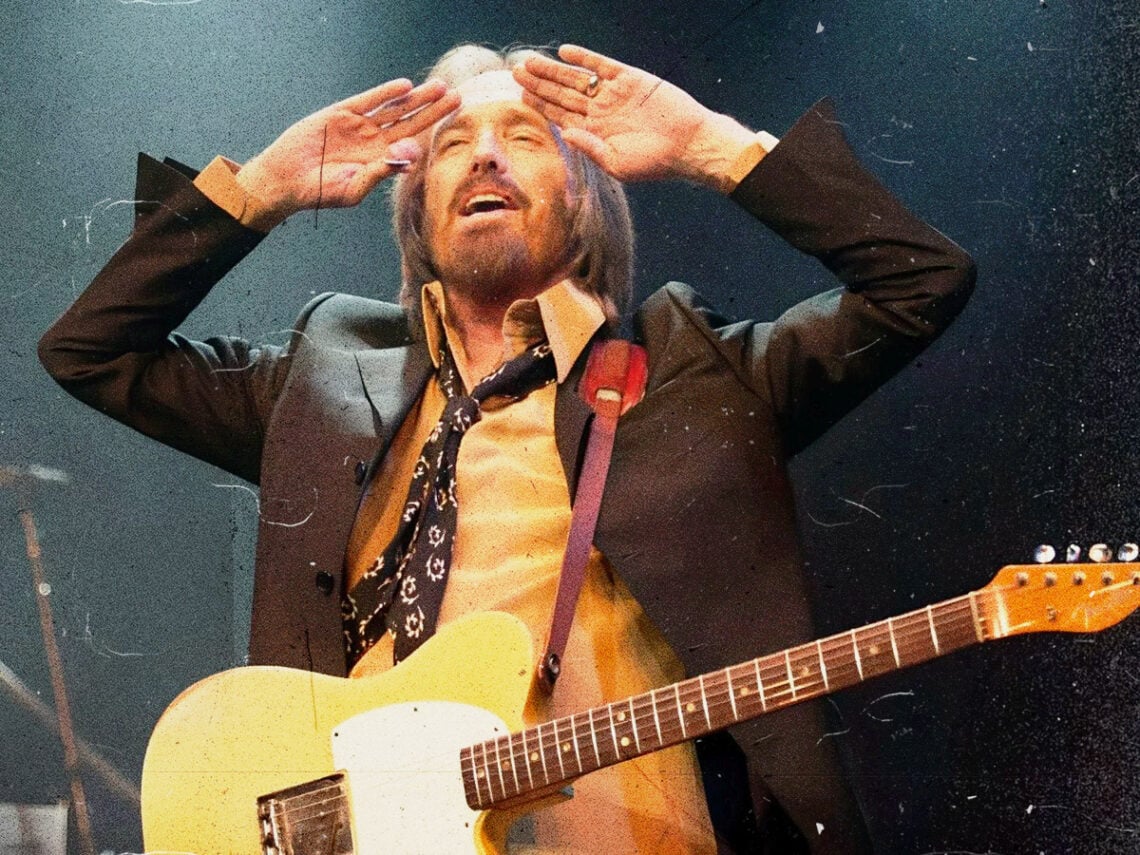
“The best”: the 1994 album Tom Petty wanted to be remembered for

Few figures in rock history loom as large as Tom Petty. As Bruce Springsteen put it, the long-haired Floridian “really understood the form” of the “classic four-minute rock song” perhaps better than anybody.
Whether leading The Heartbreakers, reviving Mudcrutch, or rolling with The Traveling Wilburys, Petty’s influence was seismic, shaping the sound of everyone from Dave Grohl to The Strokes. As John Mellencamp conceded, when it came to that catchy Heartland sound, Petty “was always the hero”.
His 2017 passing was a gut punch to music fans everywhere, but the Florida native left behind a legacy of immortal tracks, from ‘Don’t Do Me Like That’ to ‘Free Fallin’, carving his name into the bedrock of rock and roll history. A larger-than-life character, his presence is still felt in every chord of his celestial catalogue. And those of others to boot. As Stevie Nicks aptly explained, “Tom gave you the star you wear on your top hat”.
Like any great artist, Petty’s career was a rollercoaster. His 1979 album Damn the Torpedoes, a defining moment with The Heartbreakers, was shaped by a bitter legal battle with his label, MCA. The company sued him for breaching his contract after he refused to be passed between record labels like a commodity. Petty fought back, making a stand that would define his relationship with the industry forever.
That same defiance saw him emerge as one of the loudest voices for artistic freedom in an era saddled with increasing commercialism. That’s what attracted the likes of Bob Dylan as proud touring partners. Through the ’80s, he was a constant thorn in the music industry’s side, even taking on MCA for hiking album prices. His stance resonated with fans, and his persistence paid off: MCA backed down.

Musically, the decade was one of evolution. Petty and The Heartbreakers leaned into the shifting landscape, with Long After Dark (1982) and Southern Accents (1985) dabbling in synthesizers and drum machines. To some, this was a necessary evolution; to others, it was a sign of an old guard struggling to keep pace.
The latter album, a half-formed concept record, saw Petty briefly adopt the Confederate flag on tour. This was something he was heavily criticised for and later regretted. At the time, personal struggles had also entered the picture, and after biting back at the music industry for so long, he was feeling weary and making mistakes.
Petty wouldn’t fully reclaim his magic until Wildflowers in 1994. Technically a solo record but featuring The Heartbreakers, after a period of disillusionment, it was the cathartic product of the total creative control he had fought for. The album wasn’t credited to the band because, as Petty put it, “Rick (Rubin – producer) and I both wanted more freedom than to be strapped into five guys.”
A return to the heartland rock that made him a legend, Wildflowers is often cited as his magnum opus. Petty himself didn’t disagree. “Even on the last tour, if we played a song from Wildflowers, he’d say: ‘That’s the best record we ever made,’” Heartbreakers keyboardist Benmont Tench told The Independent. “And I appreciated that he said ‘we’.”
In truth, he desperately needed their support. In the few years prior to Wildflowers release, he had released Traveling Wilburys Vol 3, Into the Great Wide Open with the Hearbreakers, and his marriage with Jane Benyo was in a rocky spot following the arson attack on their family home. He was looking for a new lease.
So, he decided it was high tide to part ways with MCA and head over to Warner, but first, he found himself contractually obliged to write two new songs to add an extra oomph to a departing Greatest Hits record.
The whole project left him uninspired. He was only 42, and even if he had been an active musician since 1967, ‘best of’ albums felt like they should lie a little further down the line, so cutting another couple of tracks to stand alongside his most vibrant work was testing his patience.
He dreamt up a destraction. Now, his focus was firmly on that distraction, Wildflowers, a solo project that he hoped would define a new chapter in his work. He wanted to go it alone with the record in pretty much every sense, liberating himself to be his truest self, so he hired a notoriously laissez-faire Rubin to be his only real collaborator.
He soon realised that his truest self is part of a gang, after all. The album may well come complete with orchestral arrangements and an iconic producer in Rubin, but, in truth, the real beauty of the record is how connected Petty is with his sound and all the contributors around him.
Rootsy and bluesy in equal measure, Petty is never overcome by any of the adornments, instead, using them to embellish his own brilliance. The record is full of soul and excitement as it offers both a guiding hand and a chance for a new future. It’s a piece of Petty’s life that feels charged with the electricity of something new, and for that reason, it deserves its place at the top.
Flush with tracks like ‘Mary Jane’s Last Dance’, the album has the quietly anthemic feel of Petty’s music at its finest. It’s easy to see why Petty held it in such high regard. From ‘You Don’t Know How It Feels’ to ‘You Wreck Me’, it’s an album that encapsulates his stirring charm, one that will be talked about for generations. Though The Heartbreakers didn’t get official credit, their fingerprints are all over it. They couldn’t be.
As I say, Petty was always part of a gang. After all, he did say, “So much of the greatness of rock was that it was a shared experience.” While Wildflowers might be deeply personal, it is inseparable from that sentiment, and that sentiment made Petty a timeless great.
