


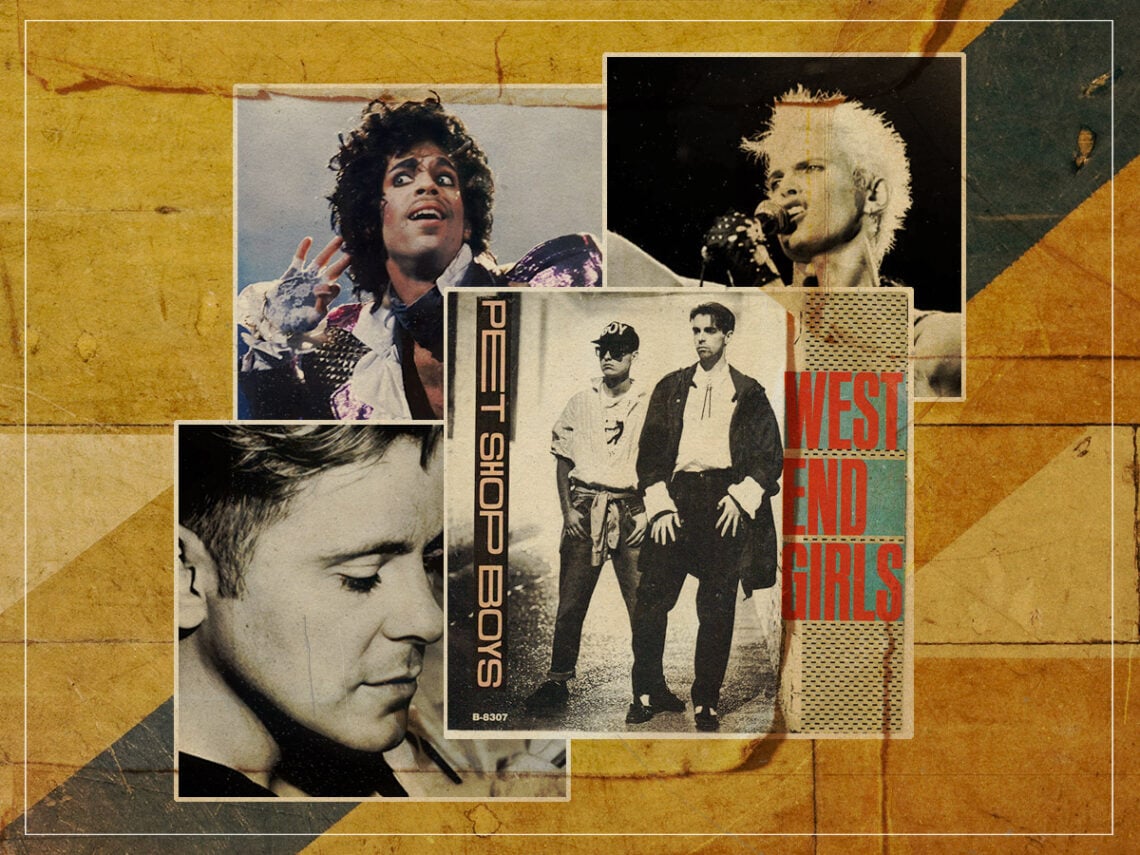
“There isn’t a band in the world who’s got a song anywhere near that”: the quest to make 1984 the best year in music history

Nothing could stop the storm that was brewing at the dawn of 1984. A few years prior, the launch of MTV proved that artists could blend artistry with innovative storytelling, while several developments in the technological and political spheres pushed disillusionment into action. Embracing flamboyance became a source of ammo, the definition of rock and roll itself became more fluid, and the overarching sense of cultural despair culminated in the one thing it claimed to oppose: commercialism.
Kickstarting this entire movement wasn’t just an overall sense of artistic intent; it was the drive to search for something bigger, better, and more impactful than before. Over 100 of the best singles of all time were released in 1984, leaving many outlets to rule this year as the most successful for pop music, but why? Technological advancements and political shifts weren’t solely to blame, neither was the surge of talent suddenly on display and up for grabs, but it was the perfect melting pot for a collective hunger for change and the desire to redefine artistic identity.
As the AIDS epidemic continued to surge, Ronald Reagan became re-elected to set America on a course towards political redemption while over in the music world, names that would forever be established as some of the biggest trailblazers of our time emerged as just that, from Prince, Boy George, and Annie Lennox to the Red Hot Chili Peppers, The Smiths, Depeche Mode, and others. This was also the year that music videos started to take a central position in an artist’s marketing efforts, sparked by the newfound importance of platforms like MTV and its ability to supercharge visibility.
Across technology, 1984 was also the year that changed many facets of listener habits, like cars suddenly having CD players installed, and what it meant to be an artist wasn’t just restrained to centralised concepts, as it had been in the past. Unlike today, this year sparked a revolution where all access was suddenly the main appeal of bigger artists for the first time, redefining the parameters of celebrity and popularity where gaining global success enhanced musical connection, blurring the lines between brands and artistry.
At the crux of this was also industry fragmentation, where different genres, approaches, and even aesthetics suddenly captivated the mainstream spotlight. This made boundary-pushing and the appearance of being more of an outsider feel like an immensely coveted asset—more so than ever before. Many of these included purveyors of the alternative and darkwave aesthetic, including Tears For Fears, New Order, Echo &and The Bunnymen, Bronski Beat, and more, sparking a shift towards musical authenticity, even when it felt overtly commercial.

These pioneers immediately instated 1984 as a force, one that didn’t play with half-baked ideas for easy wins. Instead, they reframed struggles and turmoil as something that could be misconstrued from the opposite perspective, proving that adopting unsettling sounds or themes in music gave it an enduring edge. Echo and The Bunnymen’s Ian McCulloch has famously spoken highly of their song ‘The Killing Moon’, and for good reason—making it far less of a stretch to presume that the song, which was released at the start of the year on January 20th, not only altered the alternative landscape but also triggered an entire year of extraordinary hits across respective spaces.
“When I sing ‘The Killing Moon’, I know there isn’t a band in the world who’s got a song anywhere near that,” he said, reflecting on a song that not only withstood the test of time but captured the essence of the year it emerged from, signalling a new musical artistry that hinged on sinister musings, moodiness, romanticised misery, and the quest to find something worth our attention amid broader uncertainties of political unrest. “Fate up against your will,” he sings, “Through the thick and thin. He will wait until you give yourself to him.” In McCulloch’s world, fatalism outweighs disillusionment, offering comfort in the dark.
Then came a surge of sophistication in music that didn’t rely solely on surface-level seduction to captivate attention. For instance, artists like Prince explored their artistry’s darker and more sinister sides, not just through music but also in the film world with Purple Rain. Bruce Springsteen’s ‘Born In The USA’, a misunderstood anti-patriotic anthem, touched on themes of societal discontent. Other artists, without overtly embracing melancholy, still channelled defiance, like Frankie Goes To Hollywood’s ‘Relax’ and Queen’s ‘I Want To Break Free’, standing out as active defiance in the language of societal rebellion.
While it’s not new to assume that music has always reflected its cultural and political landscape, the collective quest to establish 1984 as a haunting mirror ensured that authenticity came further into the spotlight as uncertainty paved the way for greater artistic expression. It’s also no surprise that many legacy acts and timeless tracks we still hear today emerged or established new layers to their artistry in 1984, but this year—for all intents and purposes— undoubtedly saw the art form reaching new depths, making it a standout year beyond the usual parameters of technological innovation and sonic developments.
As a result, music not only embraced what it found beneath the solid layers of showbusiness but also wallowed in the darkness for a while before opening its doors to the outside world. It was a pinball machine, restricted only by the walls that society and politics threatened to cave in, but within those confines, it collided and sparked new possibilities. In other words, 1984 was a year where anything was possible, and artists worked together to establish a space where acceptance flowed freely—because it couldn’t do so anywhere else.
