


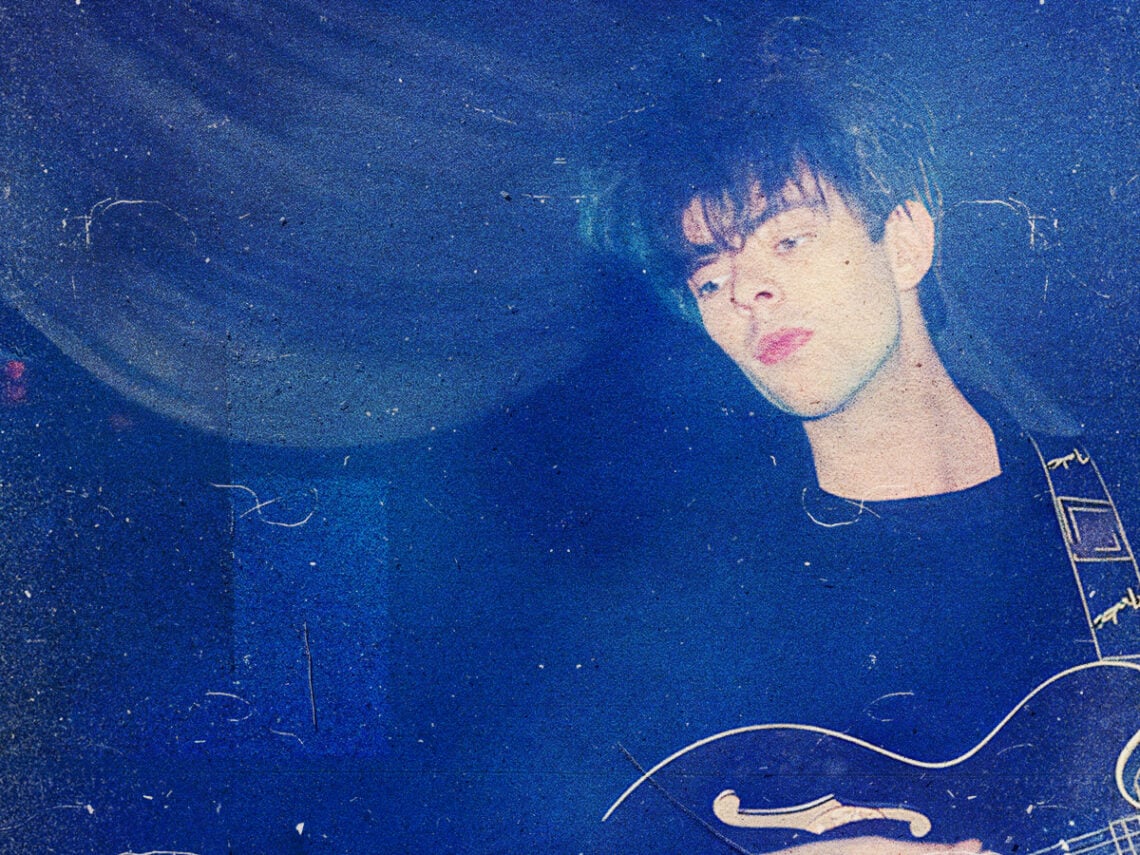
The iconic song Ian McCulloch half-credited to God: “It’s the greatest song ever written”

It’s natural for rock luminaries to be proud of their work; creating hits is a process that demands time, talent, and dedication, not to mention a deep understanding of audience tastes and preferences. Therefore, it’s entirely expected that ‘The Killing Moon’, an immensely popular hit and iconic piece within the soundtrack of Donnie Darko, has earned a place among the most cherished tracks of all time, a sentiment also shared by its composer, Ian McCulloch.
As mentioned in the liner notes of Echo and the Bunnymen’s Crystal Days box set, McCulloch woke up one morning with the phrase “fate up against your will” rooted in his mind. McCulloch’s confidence in the track was so unwavering he even expressed that, when he sang it, he felt that “there isn’t a band in the world who’s got a song anywhere near that”.
What he appreciates the most about the composition is the fact that he didn’t labour over it for days, as is often the case with many hit songs. “One morning,” he told The Guardian, “I just sat bolt upright in bed with this line in my head: ‘Fate up against your will. Through the thick and thin. He will wait until you give yourself to him.’ You don’t dream things like that and remember them. That’s why I’ve always half credited the lyric to God. It’s never happened before or since.”
When McCulloch first started working out the song’s chords, he attempted to draw inspiration from David Bowie’s ‘Space Oddity’, playing it backwards and messing around with its progressions. By the time he had finished, though, McCulloch states, “It sounded nothing like ‘Space Oddity'”. However, even though the song ultimately had no resemblance to the Starman’s hit, McCulloch maintained that the song’s final version still carried an unmistakable astronomical theme nonetheless.
For McCulloch, ‘The Killing Moon’ isn’t just great because of its melody, musical arrangements, and lyrical appeal; it’s much more than that. For McCulloch, it’s something other-worldly: “I’ve always said that ‘The Killing Moon; is the greatest song ever written,” he said. “I’m sure Paul Simon would be entitled say the same about ‘Bridge Over Troubled Water’, but for me ‘The Killing Moon’ is more than just a song. It’s a psalm, almost hymnal.”
During the same conversation, Will Sergeant also discussed how Russian balalaika bands with young communists affected the song’s overall sound. Revealing how he came up with its signature riff, he recalled: “During the recording, we went for a curry around the corner, and when we came back the producer had found this twangy thing on tape that I’d done tuning the guitar. He insisted it go in the song. It became the best-known guitar line in our entire catalogue.”
Like many other great tracks, the beauty of ‘The Killing Moon’ undeniably lies in its universal appeal: the abstract lyrics may seem impenetrable at first glance, but upon closer examination, they provide a moment of reflection for anyone who listens. It’s a moment to pause, contemplate, and get lost in the beauty of the void that the band presents.
