


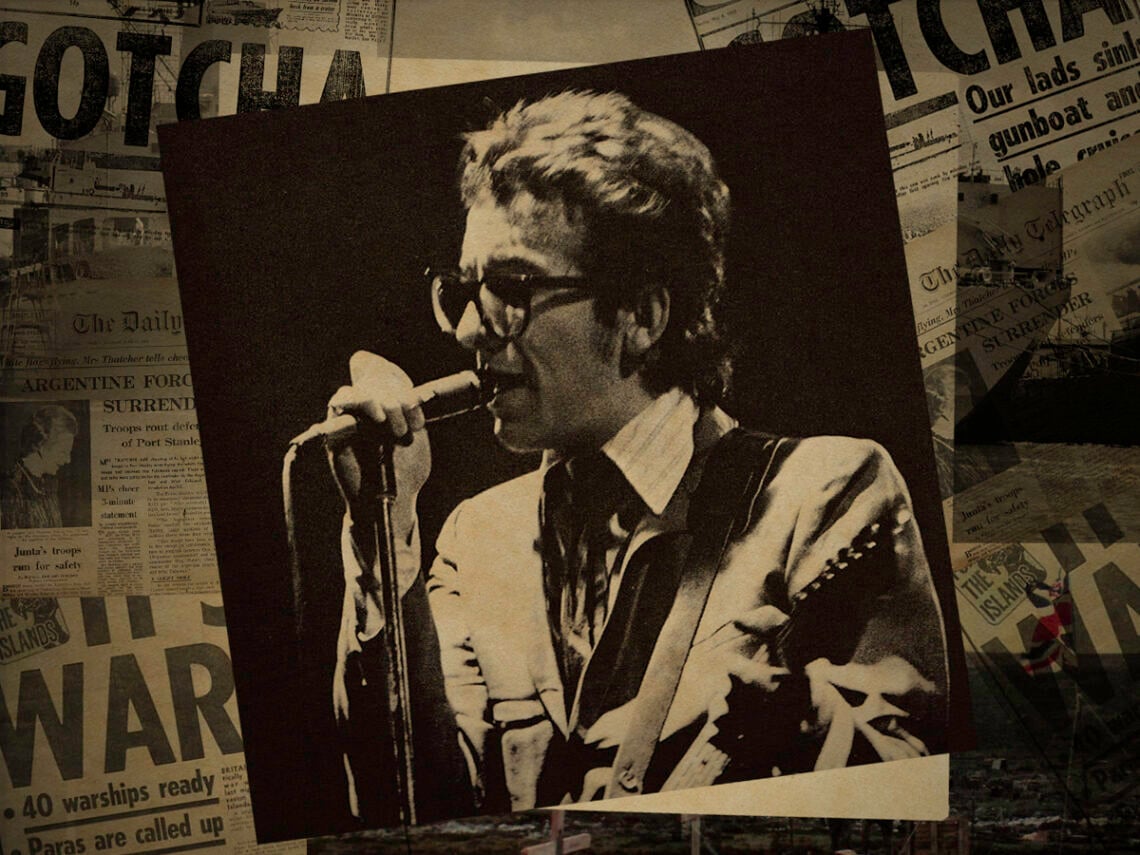
The 1982 Elvis Costello song that exposed the uncomfortable truth behind the Falklands boom

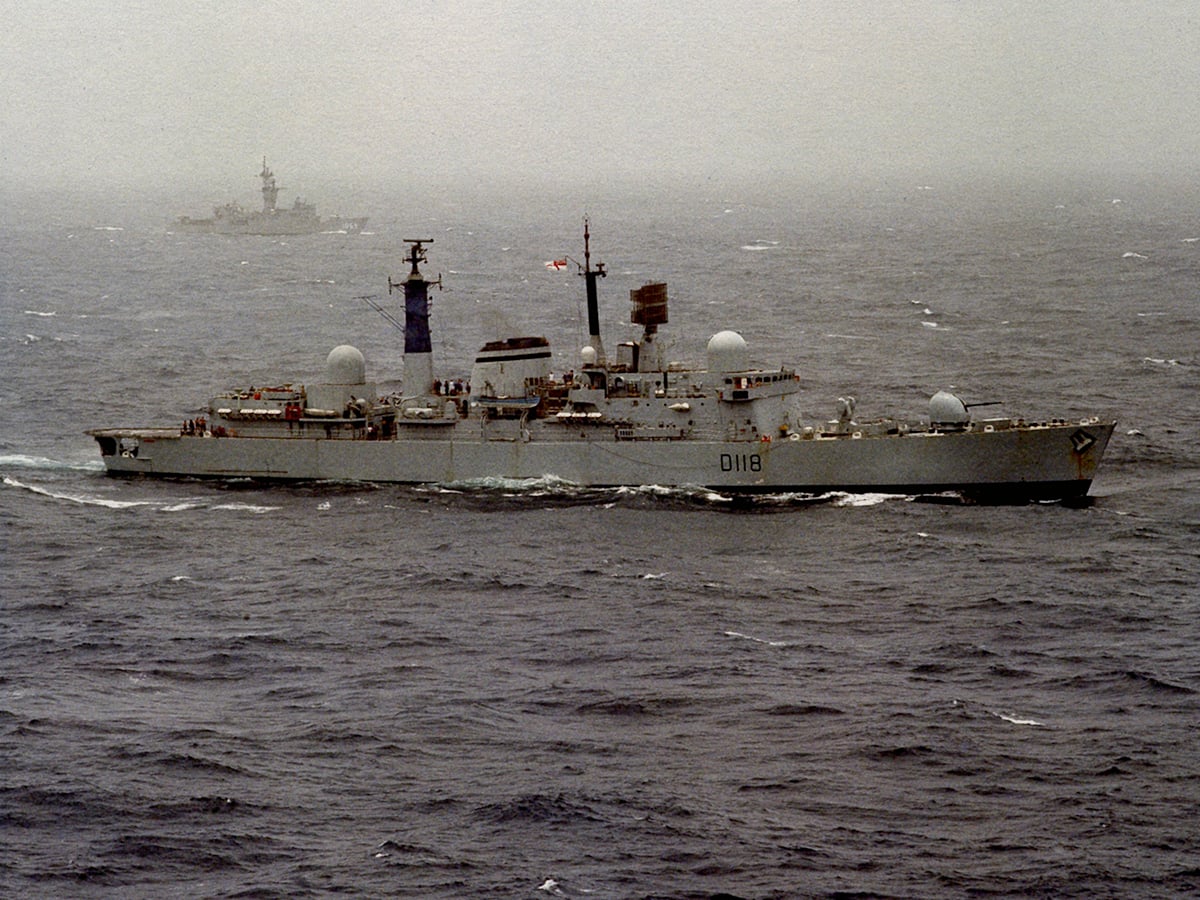
On May 25th, 1982, the Royal Navy destroyer HMS Coventry was attacked by Argentine aircraft while operating near the Falkland Islands. The ship sank in minutes, killing 19 sailors and wounding 30 more.
Constructed less than ten years earlier in Birkenhead, HMS Coventry was said to have been among the most state-of-the-art in our entire naval fleet. But as it slipped beneath the South Atlantic waves, beyond the immediate lives lost, it served as a reminder that the vessels keeping the country’s shipyards afloat were also ferrying its sons towards danger.
For the struggling communities that relied on the construction of these vessels, the Falklands War created a strange contradiction. The conflict brought work back to yards that had faced dreary decline for years, driving up unemployment, but the undertow when the so-called “boom” returned was as unmistakable as it was uncomfortable.
As Elvis Costello saw it, people in the impoverished neighbourhoods where shipbuilding once thrived now had two employment options: join the navy and risk dying in the conflict or build the vessels that bring that about. It was an economic choice for what was largely an economic war. As Costello humanly summarised with the lyrics, “Is it worth it? A new winter coat and shoes for the wife, and a bicycle on the boy’s birthday”.
It’s the relatable and resonant notion of that lyric that truly defined ‘Shipbuilding’, and, to some extent, the realities of the conflict. The politics of Westminster and Buenos Aires were vague, but the human impact was much more lucid. Caught in the middle of the two were the workers in areas like Belfast, Liverpool, Portsmouth, and the northeast.
These workers might have been thousands of miles away from the conflict, but their friends and the product of their craft were not. So, alongside the record producer Clive Langer, Costello looked to bottle the emotional weight of this paradox.
While the reaction to the war had largely been one of national pride, the response was far more nuanced in these dockland areas, where its repercussions and moral questions were more harshly felt. Prior to the war, it wasn’t just shipbuilding that had seen a vast decline, but many traditional areas of employment for the working-class labour force. By 1982, unemployment had even surpassed three million for the first time since the Great Depression.
So, when a film crew travelled to Sunderland to gauge the reactions of those finding the docks thriving once more for the film We Make Ships, they were informed, ”It’s not a question of pride any longer. It’s more a question of survival.” Naturally, when word reached home about HMS Coventry plunging 19 young lads to their deaths, the “question of survival” became uncomfortably literal on two fronts.
That tension was also captured by the documentary maker, Tom Pickard. He was also a writer and had travelled to Sunderland expecting to capture life on the faltering docks, but despite the temporary “boom”, he ended up documenting what he described as “the death throes of Sunderland, once the biggest ship-building town in the world.”
That wider demise sits at the heart of Costello’s words that Robert Wyatt would later sing into one of the most emotional, profound, and exacting top 40 tracks that Britain has ever heard. In truth, long after the fleeting Falklands War, Sunderland is still ravaged by the loss of its primary industry that was pulled away without an alternative in place under Margaret Thatcher’s ‘inevitablism’.

Lesser anti-war songs would’ve disregarded this element, but Costello even places himself, as the protestor, within it. The voice of protest against the war-driven return of industry gets “filled in” in the song, “for saying that people get killed in the result of this shipbuilding”. The stance of the protestor is, of course, a virtuous moral objection, but that is, in the context of the song, just one verse in a whole story.
For communities like Sunderland, the question was not simply whether their labour being integrated into the ways of war was right or wrong, but why a nation that could mobilise billions for conflict had so little answer for the industrial decline that bookended a “boom” inevitably tethered to death and impermanence in more ways than one. Or as Costello put it:
“It’s all we’re skilled in
We will be shipbuilding
With all the will in the world
Diving for dear life
When we could be diving for pearls
When we could be diving for pearls
When we could be diving for pearls”.
‘Shipbuilding’ is a masterpiece that captures the uncomfortable space where economic necessity and moral unease collide, brought poignantly into focus by the deaths onboard the likes of HMS Coventry that linger out of the song’s sight, but evidently not out of its mind. In many ways, it reaches far beyond the Falklands with this outlook, capturing the political atmosphere for many regions right up until this day.
In actual fact, our current cover story stars, Yard Act, wrote a verse that could practically serve as a rather more blunt coda to ‘Shipbuilding’ with their song ‘Tall Poppies’ four decades later. As the Leeds band proclaim:
“So many of us just crabs in a barrel
With no feasible means to escape the inevitable cull
There are those that grow thick skins quick for the sake of their sins
And the savvy folk that just keep their mouths shut and take it all on the chin
We collide with each other, we submit, and we bare our teeth
Catch fish using giant metal ships and scream with laughter
At 4am staggering home down moonlit country lanes
We cry because children are dying across the sea and there is nothing we can do about it
Whilst we benefit from the bombs dropped which we had no part in building
We are sorry, truly we are sorry, we are just trying to get by too”.
