


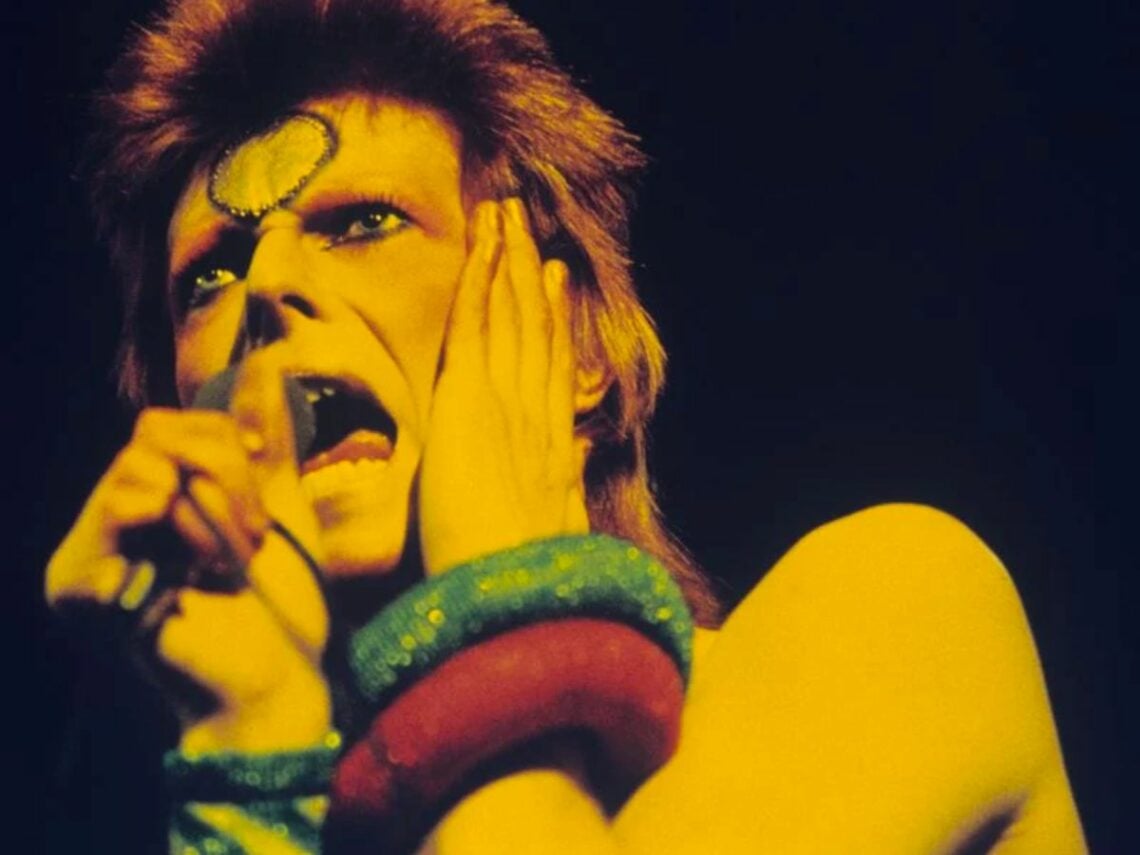
‘Rock and Roll Suicide’: The 1972 David Bowie song that truly saw the future

Throughout his career, David Bowie was always looking ahead, and such foresight would serve him well.
Right from his earliest days fronting Davie Jones with the King Bees, a restless creative intuition would see the hungry Bowie forever jumping across music’s myriad mosaic in the chase of the ‘new’, be it R&B stomp, acoustic dance trios, or celestial folk, when fame inched ever closer by the end of the 1960s.
Once ‘Space Oddity’ won Bowie the chart success he was craving, the resulting pop profile was never going to be enough for the restless artist. Across the 1970s, a trend of jumping out of his stylistic fancy just as the scene got stale ensured his perma-mystique throughout the decade. He was raiding glam’s dressing-up box before veering into Philly soul, forging post-punk’s smoggy electronic template, and then standing at the forefront of the new wave he proved instrumental in paving.
It’s tempting to defer to his Berlin era regarding Bowie’s future visions. Any one of Low’s haunted synthscapes offers an obvious abandonment of rock orthodoxy and a keen drive to soak up Germany’s krautrock scene, unconcerned with America’s musical DNA of blues and folk. However, while tethered to guitar convention, the dramatic finale to The Rise and Fall of Ziggy Stardust and the Spiders from Mars predicted the ultimate destiny of both the rock star and himself.
The future was in the air during the early 1970s. Amid a cultural plume of sci-fi obsession and Future Shock anxieties in the wake of Apollo 11 and 2001: A Space Odyssey, such anticipation for tomorrow’s new dawn was potently reflected in glam rock’s glitter early in the decade. A counter to the Woodstock idyll and its po-faced earnestness, spaceman clobber, exotic escape, artificiality, and an unabashed embrace of the pop charts all offered the suitably iconoclastic glow that received Bowie’s Martian messiah smack bang in the summer of 1972.
Ziggy Stardust’s tale of second-coming stardom’s collapse into ego and fame was afforded its perfect final act on ‘Rock ‘n’ Roll Suicide’. Exploring the fleeting ride of rock devotion, a washed-up Ziggy has both failed the world’s youth and the promises of his cosmic saviourship by succumbing to the trappings of rock cliché, a fate echoing the ossified crisis much of the 1960s rock generation had galumphed into, to the later punks’ seethe.
Atop a stirring chanson croon, with a little Baudelaire and Jacques Brel haunting its lyrical demise, ‘Rock ‘n’ Roll Suicide’ didn’t just bottle hippy failure, but dared to lay out a poetic pointer to the slow ebb of rockist primacy.
Bowie would kill off Ziggy the following year and wander the ‘Berlin Trilogy’s’ phantasmic avant-garde, but with fatalistic prophecy, he would ‘find fame’ in the 1980s, crash and burn in a commercial nadir of pop dross and sit atop a superstar elevation dominating MTV and playing stadiums around the world, hollowed by total, creative oblivion. He must’ve laughed at his life imitating his own art.
Now, rock has never been so unsure of itself, youth culture finds other genres or online means to express itself, and the sight of a guitar, for many, stands almost archaic. Rock and roll strutted, swaggered, and peacocked itself off the terminal hill, an inevitability Bowie spotted decades ago in ‘Rock ‘n’ Roll Suicide’s’ prophetic vision.
