


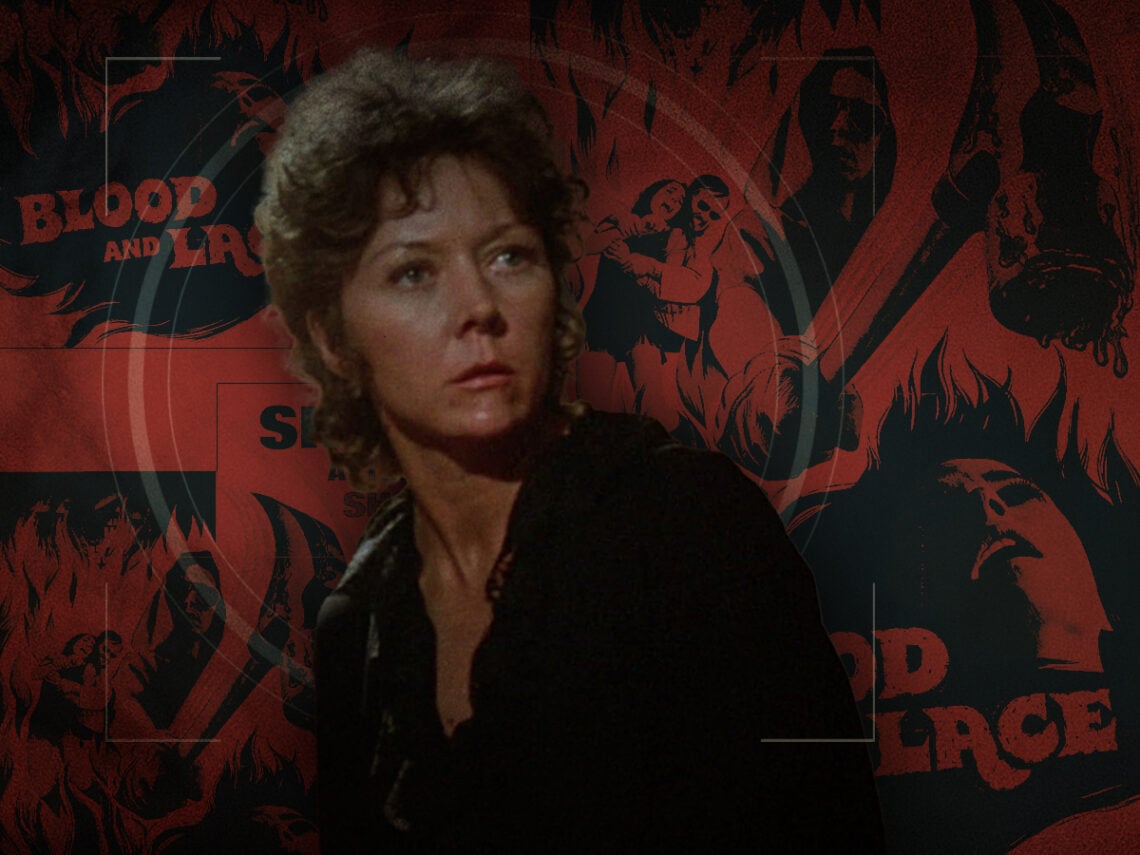
‘Blood and Lace’: the 1971 Gloria Grahame exploitation movie that paved the way for the slasher genre

The slasher genre sliced through the pop cultural landscape of the 1970s, bringing a unique kind of terror to the horror genre.
With the hippie movement of the ‘60s dying down and optimism seemingly fading, the genre bucked itself into the mainstream by emphasising the fears at the heart of society. Even in a post-war era, there was still a lot to be scared of, and threats were probably closer to home than people would’ve liked to admit.
Look at the horror genre pre-1970. Most commonly, monsters, ghosts, and ghouls were the main antagonists, and while there were certainly many spine-tingling movies made that would keep people up at night produced back then, there was a noticeable shift in the ‘70s as the masked human killer became the main new threat.
Early entries into the slasher genre saw the likes of The Texas Chain Saw Massacre, Black Christmas, and Halloween introduce us to mysterious weapon-wielding men who attacked people for no apparent reason. Seemingly just because they could. Halloween was a huge turning point, because for the first time, it was a perfect-looking suburban neighbourhood that was disrupted by the presence of a masked killer, who wouldn’t stop until he slashed as many people as he could confront, even if that meant breaking into their homes. The space people deemed most safe was suddenly at risk.
Before the slasher genre made its mark on the mainstream, though, its seeds were sown in earlier proto-slasher movies, which contained various elements that would come to inform the all-out gore-filled stalking and slashing flicks of the mid-to-late ‘70s and beyond.
Way back in 1960, movies like Psycho, Peeping Tom, and Black Sunday all served as early prototypes of the genre. They didn’t feature a ruthless masked killer violently barging into people’s homes, resulting in visible shots of excessive blood and gore – by today’s standards, these movies are pretty tame, at least visually – but they certainly paved the way for the mysterious murderer template that would come to inform classic slashers.
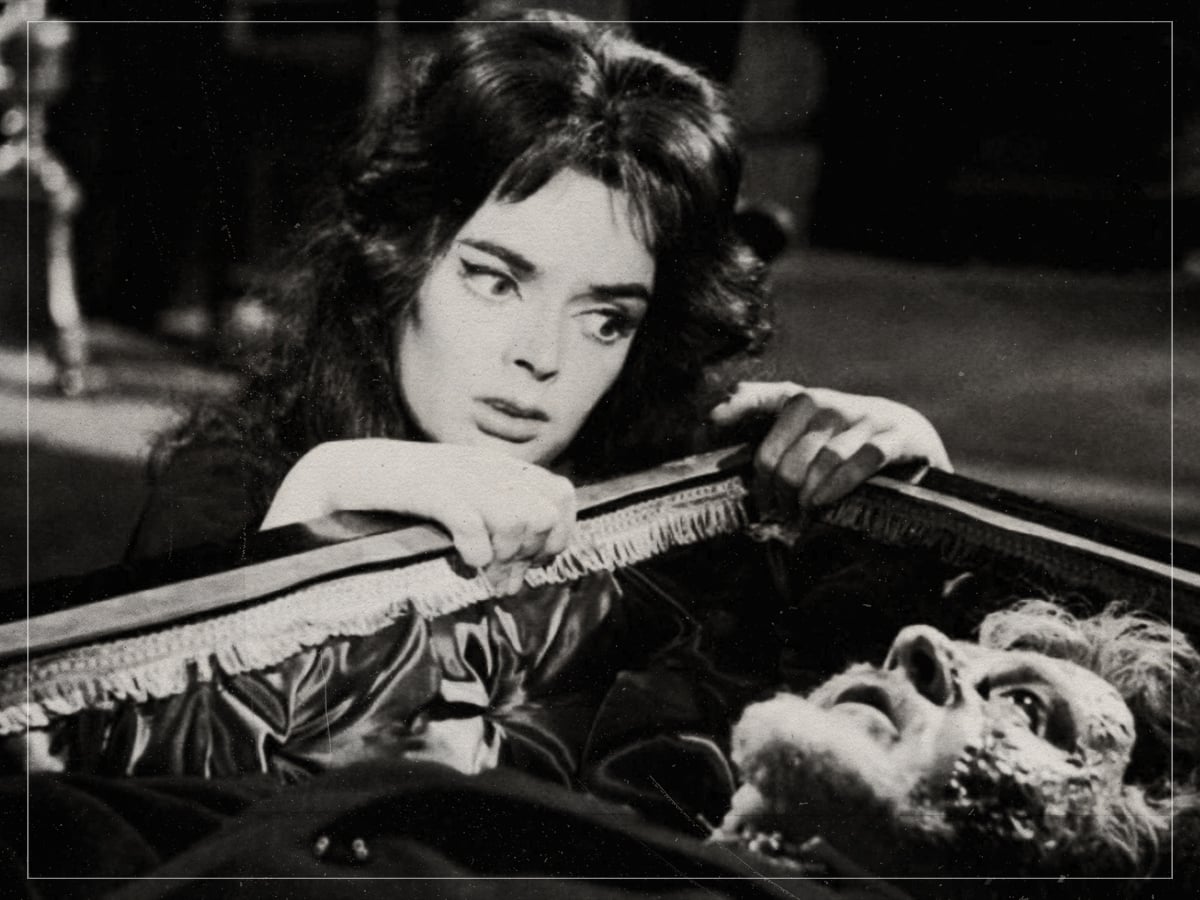
As censorship gave way and underground exploitation cinema began to indulge in more graphic content than ever before (don’t forget the splatter films of the decade by the likes of Herschell Gordon Lewis, for example), these low-budget movies also forged a path for the slasher genre to thrive.
One of these cheap exploitation movies, funnily enough, featured It’s A Wonderful Life star Gloria Grahame, although this proto-slasher was a far cry from the family-friendly Christmas flick… Rather, Blood and Lace (not to be confused with another proto-slasher giallo, Blood and Black Lace, from 1964) featured the actor as the abusive leader of an orphanage, like a more evil version of Miss Hannigan.
The story follows a teenage girl who is sent to the orphanage after her mother, a prostitute, is killed – as soon as she arrives, though, she witnesses a fellow orphan’s failed attempt to escape… His hand is hacked right off. During her stay, Ellie discovers that the place is run like a workhouse, and that several orphans have been killed but their bodies preserved in a freezer, ready to be cleverly posed within their beds in case of welfare checks.
Blood and Lace isn’t a slasher, then, because there’s much more to it than a crazed killer pursuing victims. In fact, there are various villains here, including a handyman who tries to rape Ellie, while Grahame’s Mrs Deere doesn’t hesitate to torture the children. A masked killer does eventually show up, but his presence isn’t the sole focus of the movie, nor is the movie actually that gory, as opposed to something like The Texas Chain Saw Massacre.
Still, you can see why it’s considered a proto-slasher, not least because of its depiction of obscured identities and ruthless slaughtering. Moreover, there’s a POV shot that opens the film, which gives us the perspective of the killer as he ascends the stairs with a weapon. If you know a thing or two about slashers, you’d know that this is a staple of the genre, appearing in both Black Christmas and Halloween, as well as Dario Argento’s 1975 film Deep Red, which sits somewhere between the giallo and the slasher.
Blood and Lace might not have been that good, with critics largely panning it, but it was a surprisingly influential film on the horror genre. It would quickly blossom into something even more explosive within the next few years, although Philip Gilbert’s film would soon be largely forgotten.
