


The 1964 disowned Bob Dylan song David Gilmour couldn’t live without

Bob Dylan is now in his mid-80s, but his non-conformist tendencies remain as strong as ever.
Most living musicians of his reputation and stature are either retired or exclusively playing money-spinning ventures like The Sphere. Instead, Dylan is choosing to spend his summer visiting towns off the beaten track, like Woodinville, New Braunfels, and Shakopee, which are left off the itinerary of high-profile tours.
It was only earlier this year that he inexplicably launched a strange Patreon, further proof that even in old age, it remains impossible to guess his next move.
Beating to the sound of his own drum has been all Dylan has ever known since he shed himself of being Robert Zimmerman and took up the mythical new persona upon moving to Greenwich Village in the 1960s.
Pink Floyd’s David Gilmour has a level of reverence for Dylan’s artistry that he reserves for very few. Both Gilmour and Dylan have infiltrated the history books in their own unique way. While Gilmour is more interested in evoking emotions by making atmospheric soundscapes, Dylan prefers to get his point across with direct lyricism, which can be beautiful and scathing in equal measure.
In fact, Dylan is one of the only subjects that Gilmour and his former bandmate turned enemy, Roger Waters, are on the same page, both recognising that he is among the best to pick up a pen.

While Waters is one person that Gilmour would happily never discuss again, the same can’t be said for Dylan, who the Pink Floyd maestro could wax lyrical about until the cows come home.

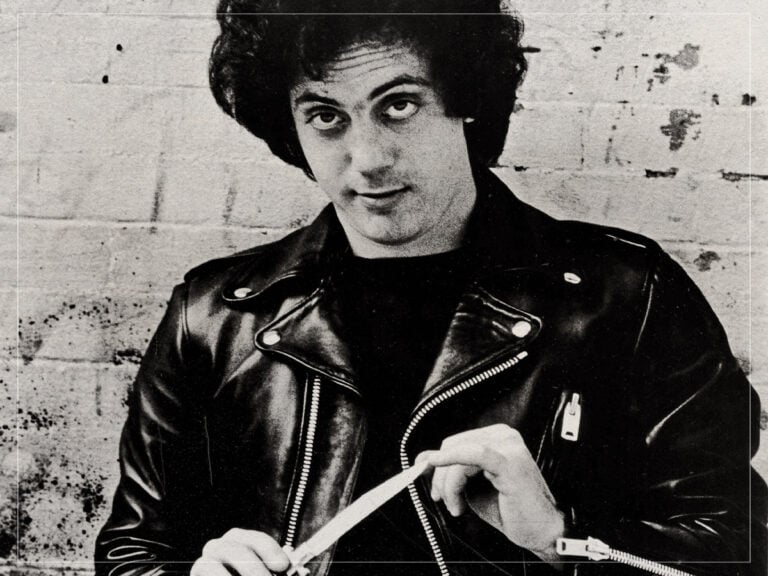

In 2003, Gilmour opened up about his love of Dylan when he appeared on the BBC radio programme Desert Island Discs. The long-running radio show, which began during World War II, invites guests to pick the eight songs they’d choose for company if stranded on a desert island, and unsurprisingly, Gilmour elected for a Dylan song.
The Dylan song he opted for was 1964’s ‘Ballad in Plain D‘ from Another Side of Bob Dylan. Gilmour explained of his decision, “I lived through a lot of his heavy protest stuff, and this was another side I’m very keen on. This sort of love song approach.”
‘Ballad in Plain D’ is a one-sided autobiographical version of events surrounding a domestic argument that doesn’t reflect kindly on the singer-songwriter and paints him in an unflattering light.
Even Dylan, who is not one for apologising, backtracked on the song in 1985, admitting: “I look back and say ‘I must have been a real schmuck to write that.’ I look back at that particular one and say, of all the songs I’ve written, maybe I could have left that alone.”
On the guilt-laden track, Dylan sings, “Myself, for what I did, I cannot be excused, The changes I was going through can’t even be used, For the lies that I told her in hopes not to lose, The could-be dream-lover of my lifetime”.
While Dylan is a man who lives with few regrets, he would rather forget the existence of ‘Ballad in Plain D’, which was, for many years, a painful reminder of how he treated Suze Rotolo. The unflinching honesty on display from Dylan, even if the man himself didn’t like the reflection in the mirror, is a sign of his strength as a songwriter and ability to go places most would be afraid to visit.
On the other hand, Gilmour, who, unlike Dylan, has a distance from the composition, is extremely thankful that it exists. His love of Dylan is emotional and reminds him of his parents. Coincidentally, they moved to America while he was still in a formative stage in his life. They were located in Greenwich Village, where Dylan wrote songs like ‘Ballad in Plain D’ and created musical history.
“My parents moved to America permanently when I was 18, or 19, and they lived in Greenwich Village from 1965 onwards,” he explained in the BBC documentary Wider Horizons. “They could see the end of Bleeker Street out of their window, so I got Bob Dylan’s first record for my 16th birthday, which they sent me from Greenwich Village.”
Gilmour’s favourite Dylan song isn’t one that its creator cares to celebrate, but it encapsulates the romantic messiness of the Greenwich Village scene in the 1960s. While Gilmour wasn’t living in that world, his parents were, and songs like this allow him to dream about the idyllic life they lived in the Big Apple.

Never Miss A Tale
The Far Out Bob Dylan Newsletter
All the latest stories about Bob Dylan from the independent voice of culture.
Straight to your inbox.