


12 underrated films you might have missed in 2022

2022 produced its share of blockbusters. Every year turns out films which are worth seeing but largely overlooked. Due to the increasingly commodified landscape of modern cinema, it’s inevitable that many brilliant movies will be marginalised to the peripheries of film festival circuits.
Some are simply low-budget, under-promoted, or lacking big names. Others may be a little odd, experimental, too specific to their home nations, or featuring highly unconventional subject matter. Some may even be slightly substandard films, but with interesting themes or intriguing techniques that make up for it. All these categories may contain hidden gems.
In our selection of the 50 best movies of 2022, we included a mixture of big-budget productions such as Top Gun: Maverick as well as critically acclaimed independent films. However, the focus of this list is a bit different. As the year draws to a close, we take you through some of the essential and fascinating works that flew under your radar.
Ranging from interesting sci-fi films to relevant social commentaries and sports drama, our selection has something for each and every film fan around the world. Below are a dozen of this year’s films which didn’t make a splash but might be worth a look.
Check out the full list below.
12 underrated films from 2022:
Residents of Arcadia (Dom Cutrupi)
Residents of Arcadia has been featured at both science fiction and horror film festivals before being released online, suggesting some difficulty in nailing down its genre. To be fair, it does defy categories. There is, for example, the significant twist in which, as the director describes it, the two people we think are the protagonists are not really the protagonists. The concepts of identity and of living vicariously through others are explored in unusual ways.
The film begins with an attractive, wealthy young couple living a seemingly ideal life in a gorgeous house located in a perfect neighbourhood, enjoying their vaguely defined careers as an entrepreneur and an influencer. There is an unexpected disruption when a strange man is seen prowling in their yard, following which every screen in the house mysteriously begins displaying a digital countdown. What is being counted down to? What is going on? The film answers those questions in a truly unexpected way, in the course of a black comedy/drama storyline that takes on everything – from wealth to technology to immigration.
The Lost King (Stephen Frears)
Stephen Frears’ enjoyable biographical drama is based on the book The King’s Grave: The Search For Richard III by Philippa Langley. Its central event is the remarkable 2012 discovery of the remains of King Richard III beneath a car park in Leicester and Langley’s part in bringing it about.
Sally Hawkins plays Philippa Langley, a screenwriter who becomes fascinated by the history of Richard III and joins the local branch of the Richard III Society, an organisation dedicated to restoring the late king’s good name and correcting what they see as false historical accounts by the subsequent dynasty. When Langley is swept up in efforts to find Richard’s burial site, she deals with sceptics, red tape, funding problems, and credit-grabbing historians, finally succeeding with the reluctant support of her husband (Steve Coogan) and fellow Richard defenders.
While Langley’s book includes historical background on Richard III as part of the text, the film uses a more creative approach. It employs the ghostly presence of Richard himself (Harry Lloyd), who occasionally appears and talks to Langley, providing personal and historical details and bringing the controversial king to life. While the film would be best enjoyed by the many history-loving champions of Richard III, the well-told story is engaging and good fun for all.
Fire In The Mountains (Ajitpal Singh)
This debut feature by Indian director Ajitpal Singh is a cultural and family drama with many layers, addressing both the conflict between science and faith and women’s place in modern Indian society through the lens of politics, religion, business, and family life. The story is told from the perspective of the central character Chandra (Vinamrata Rai), whose family rents lodgings in a scenic, popular tourist area near the Himalayas. Besides taking on the greater part of the work involved, Chandra is searching for a way to help her son, who has lost the ability to walk for uncertain reasons. Her efforts are on three fronts: lobbying local officials to build a proper road to town so that she will not have to carry her disabled son down the hillside to the nearest doctor, saving money to pay for her child’s therapy, and keeping the family business profitable.
While dealing with dismissive or misogynist officials, doctors, and schoolteachers, Chandra is faced with an additional challenge. Her husband insists that their son’s problem results from a curse of some kind, calling for a spiritual solution, and confiscates Chandra’s savings to pay for an expensive shamanic ritual intended to cure the boy. As family and business problems add to her troubles, Chandra’s frustration at being surrounded by male bias, ineptitude, and superstition reaches a boiling point in the final act.
Director Singh based the story on a similar, tragic event in his own family, which inspired him to examine the harm misguided tradition can do. Incidentally, the film was given the alternate title of Switzerland, apparently referring to the setting being often called the Switzerland of the Himalayas, but possibly also a sly reference to the nation’s famous neutrality in war and to the ultimate, satiric quasi-reconciliation at the film’s conclusion.
Playground (Laura Wandel)
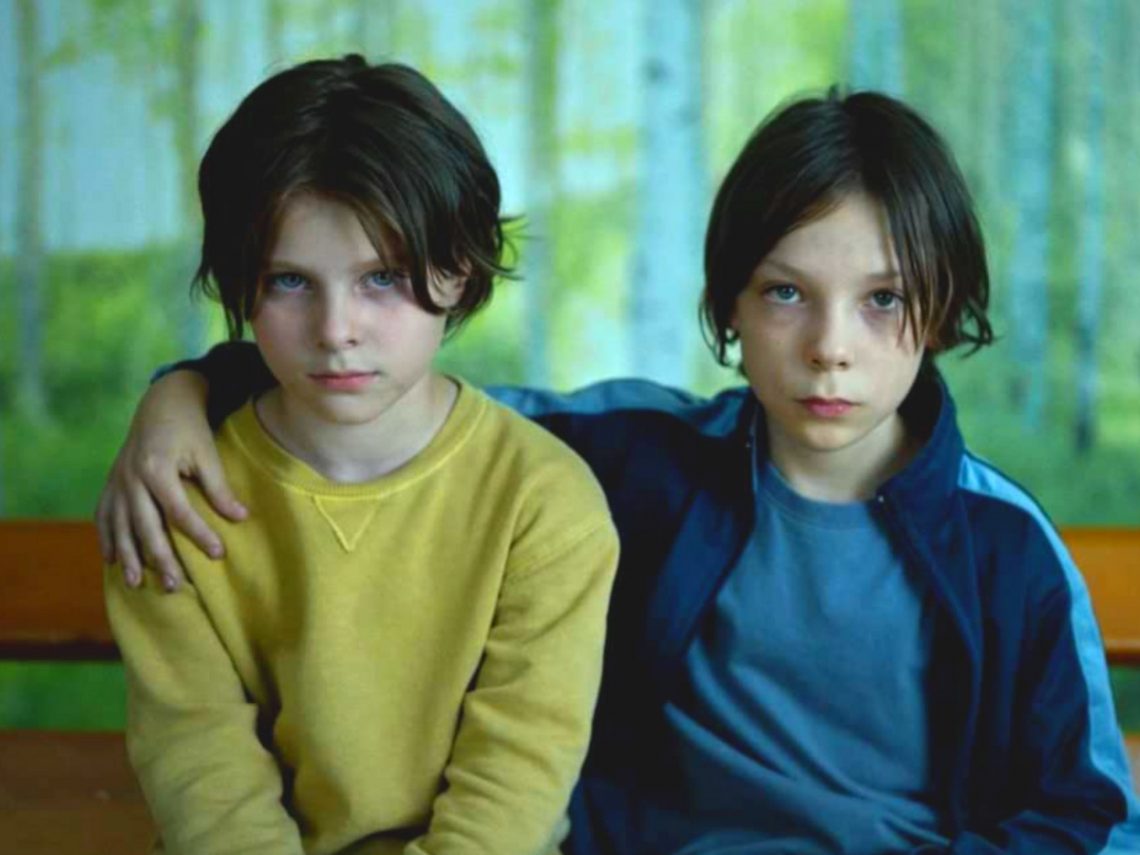
Children are not unusual in feature films, but it is uncommon to find child characters who are fully developed individuals whose point of view is respected, showing events entirely as the children would perceive them. There are noteworthy exceptions, such as Beasts of the Southern Wild, Bo Burnham’s Eighth Grade, A Monster Calls, and Sleeping Giant. Belgian director Laura Wandel’s first feature, Playground, has definitely earned a place on that list.
The cinema vérité style film follows five-year-old Nora, attending school for the first time, and secondary character Abel, her older brother. Nora’s introduction to the classroom is viewed exactly as a young child would experience it: some excitement, but a great deal more confusion over strange new rules and activities, ever-moving crowds, noise, and half-understood instructions from adults, as she struggles to make sense of her new environment.
Nora also finds friends and begins to settle in and make sense of school life. The film uses multiple cinematic techniques, including adjusting camera height and sound levels, to construct Nora’s own perception of events. It also follows much of the action with the hand-held camera fixed on Nora’s face, as noise and movement surround her in the blurry periphery, a technique that was incredibly effective in Son of Saul.
When bullies who entertain themselves by threatening younger children begin to harass Nora’s brother, the film once again portrays the situation as Nora and Abel would see it: terrifying, confusing, and genuinely dangerous. Nora’s indecision and fear are almost palpable, and her reluctance to report the attacks is painfully understandable. At the same time, Abel’s stress and eventual breakdown are made perfectly plausible and as horrifying as the characters themselves would have found it.
Director Wandel’s conclusion is emotional and dramatic while remaining faithful to the children’s perspective and respecting the choices they have made under duress. The story’s conflict is not a patronising junior version of drama but is made all too genuine. Wandel’s work allows adults to enter childhood and re-experience both the turmoil and courage to be found there.
Huda’s Salon (Hany Abu-Assad)
Described as “based on true events,” this multi-nation production takes place in Bethlehem in 2002, during a tense period between Israel and Palestine. Cannes and European Film Awards-winning director Hany Abu-Assad has turned these events into a suspenseful personal drama. The story begins as a young married woman Reem (Maisa Abd Elhadi), goes to a beauty salon to have her hair done. The outwardly friendly stylist (Manal Awad) drugs Reem, poses and photographs her unconscious body in a highly compromising situation, then blackmails her, demanding that she work as a spy for Israel’s secret service.
In the tense action that follows, Huda tries to find an escape, only to be caught between conflicting demands and threatened from many sides. She becomes aware of the greater network of unofficial spies on both sides. The film also provides a chilling look at the impact of constant mistrust, surveillance, and threat on neighbourhoods, families, and the nation at large.
Slash/Back (Nyla Innuksuk)
Director Nyla Innuksuk’s debut feature is a production from the prolific Inuit film industry of northern Canada. Slash/Back is an unusual alien invasion story set in Pangnirtung, a town close to the Arctic circle, featuring a mostly novice cast. A group of teenagers discover the covert invasion of dangerous alien beings and find their own way to fight back, drawing on their culture for inspiration.
The alien-hunting activity takes place over the backdrop of the teens’ normal personal issues: bullying, parental conflicts and forming friendships and alliances among themselves. This makes the film a mildly comic coming-of-age story as well as an extraterrestrial invasion drama. The storyline finds, unsurprisingly, metaphors for colonialism in the alien attack theme, but it also works well as a straightforward sci-fi/horror tale. The action is naturalistic, the characters believable, and despite a low special effects budget, the parasitic aliens are inventive and effectively creepy.
Hit The Road (Panah Panahi)
An Iranian family is driving together: a mother and father, their adult son, their lively, impudent little boy, and a dog in ill health. At first, it appears to be an ordinary family holiday or road trip, with perhaps a little underlying tension. The adults try to keep things light and pleasant, even as it becomes apparent that something is amiss: the father keeps checking for cars following them.
They stop not merely to discard but destroy and actually bury a sim card at the roadside. Director Panah Panahi tells the family’s story in the form of a slow-burning mystery, which allows us to become familiar with the family members, their affectionate relationship and mutual trust, as the real purpose of their trip is hinted at little by little.
The outspoken, inquisitive younger son asks innocent questions and makes observations that threaten to bring to the surface what the adults are carefully avoiding. The film winds its way eventually to an emotional conclusion, in which everything that has gone before, including the actions and changing emotions of the four passengers throughout the trip, is finally made clear.
Subject (Camilla Hall, Jennifer Tiexiera)
As documentary films have gained popularity and become more common, one other thing has increased in number: the people who have become subjects of documentaries. Subject, by co-directors Camilla Hall and Jennifer Tiexiera, takes on ethics in documentary making, the questions of privacy, impartiality, and of what a filmmaker owes to the people whose lives are being exposed. The film uses real-life examples to illustrate the problems that can arise and the damage that even a well-intentioned documentarian can cause.
Subject revisits past, critically successful documentaries to discuss, in retrospect, their effects on the subjects, beginning with the 2003 doc Capturing the Friedmans, a film about a middle-class family whose lives are disrupted when the father is arrested for a series of heinous acts. It also focuses on the family covered in the crime documentary Staircase, who feel the film crew invaded their privacy.
The film goes on to more complex questions: filmmakers taking sides at the expense of veracity, the challenge of treating all subjects respectfully, and the delicate matter of white filmmakers telling a story on behalf of minorities. It also examines the good a documentary can do by bringing corruption into the public eye or helping victims leave a dangerous situation while keeping in mind the potential for damage, humiliation, or even danger in making certain stories public. Director Bing Liu calls documentary making “an ethical jungle,” and Subject is a challenging preliminary topographical study of that jungle.
I Didn’t See You There (Reid Davenport)
Reid Davenport is a filmmaker and disability rights activist who has made a number of short films and podcasts on living with disability. His first feature-length film takes a very personal approach, with the director himself as the subject, narrator, and cameraman. Davenport, who uses a wheelchair due to cerebral palsy, brings his handheld camera along on his daily routines, taking the audience with him to experience, at his eye level, ordinary life for someone in his situation. The inspiration was a circus tent being set up near his home, calling up the spectre of the circus ‘freak show’ and the objectification that went with it. The title, on the other hand, refers to the opposite phenomenon: the way the disabled often become virtually invisible to the general public.
The director explained that he wanted to “film how I see the world”. Therefore, Davenport himself is rarely seen, except as the occasional shadow cast on the pavement or a mirror image in passing shop windows. Instead, we see through his eyes as he encounters a bank’s cash machine that is too high to be readily used from a wheelchair, road repair or construction areas that allow for pedestrians but require wheelchair users to make long detours, doorways that are difficult or impossible to get through.
We follow an angry Davenport through the needless complexity of getting on a train. We join the director on the finicky and publicly conspicuous process of boarding an accessible bus. It becomes clear that, despite current awareness of the need for accessibility, and a great deal of improvement, obstacles are everywhere – because, the director would suggest, the disabled are not routinely noticed or taken into account. There is a limited amount of talk concerning the issues that are raised, except in a brief conversation between Davenport and his mother about disability politics. The film makes its point through a mostly visual experience. It is a well-made and watchable film, informative and even enlightening.
Subtraction (Mani Haghighi)
Iranian director Mani Haghighi calls his latest feature a new twist on the doppelganger theme. Young Tehran married couple Farzaneh (played by Taraneh Alidoosti) and Jalal (Navid Mohammadzadeh) discover they have a joint doppelganger, a second married couple who seems to be their virtual duplicates. These doubles become involved in each other’s lives in odd ways in the course of a visually dim, shadowy drama taking place in almost constant, heavy rain.
The rain, according to the director, is simply an ongoing sign that something is wrong with the world at large. Suspense builds as they become aware of one another, work through suspicions of delusion, and an ultimate confrontation. The tension and underlying fear are sustained perfectly throughout the film.
Following the film’s premiere at the Toronto Film Festival, director Haghighi explained the concept was drawn from the way, in Iran, “everyone lives two lives, a public and a private.” He calls it a science fiction story, but one that avoids the usual sci-fi tropes in order to present a sci-fi story as if it were unremarkable reality. The dark story is beautifully presented, with every detail helping to set the necessary mood: the steady rain, the dim lighting, and the acting style all contribute.
The fact that characters spend so much time in cars, Haghighi explains, is because they provide a balance between public and private that works perfectly for the storyline. The increasingly dark plot ends in a surprising and equally dark conclusion.
Hear Me Out (Pascal Elbé)
This film has an unlikely premise, a romantic comedy about deafness. Still, writer/director Pascal Elbé has turned it into a sharp-edged but funny tale using human weaknesses, fears, and communication failures as the main source of humour. The story was inspired by director Elbé’s own experience of partially losing his hearing a few years ago, which he saw as material for a comedy. In the opening scenes, middle-aged history professor Antoine Serano (played by the director) experiences some baffling problems.
He is constantly oversleeping or late; angry neighbours pound on his door complaining that his music is too loud or that his alarm has been sounding continually for an hour; and he is constantly missing or misunderstanding what is said by colleagues at work. Antoine’s bafflement at these recurring problems, and his obliviousness, are amusing, but when a doctor confirms that Antoine has lost most of his hearing, new challenges arise.
Antoine goes to comical and self-sabotaging lengths to hide his hearing issues, fearing that a hearing aid will make him seem old and unattractive, which complicates his life absurdly. A developing romance with a widowed neighbour, Claire (Sandrine Kiberlain), a sweet and mutually beneficial friendship with Claire’s traumatised daughter, and breakthroughs with the students in his class eventually encourage Antoine to be open about his deafness. The film is entertaining, as well as insightful and touching.
Kacchey Limbu (Shubham Yogi)
The first feature by director Shubham Yogi is a sprightly sport-themed comedy-drama centred on cricket, with a well-done ‘plucky underdog’ theme. The central story, of a minor Mumbai ‘street’ cricket team finding artful ways to win a place in higher-level matches, is enlivened by amusing sub-plots: a romance, a sibling rivalry, family disputes, a young woman with superlative cricket skills of her own and dastardly attempts to thwart the small team’s efforts.
The story is light but fun, with likeable characters and a jubilant, drawn-out David-and-Goliath sports competition. The film’s one difficulty is that it would not be greatly enjoyed by anyone unfamiliar with cricket.
