


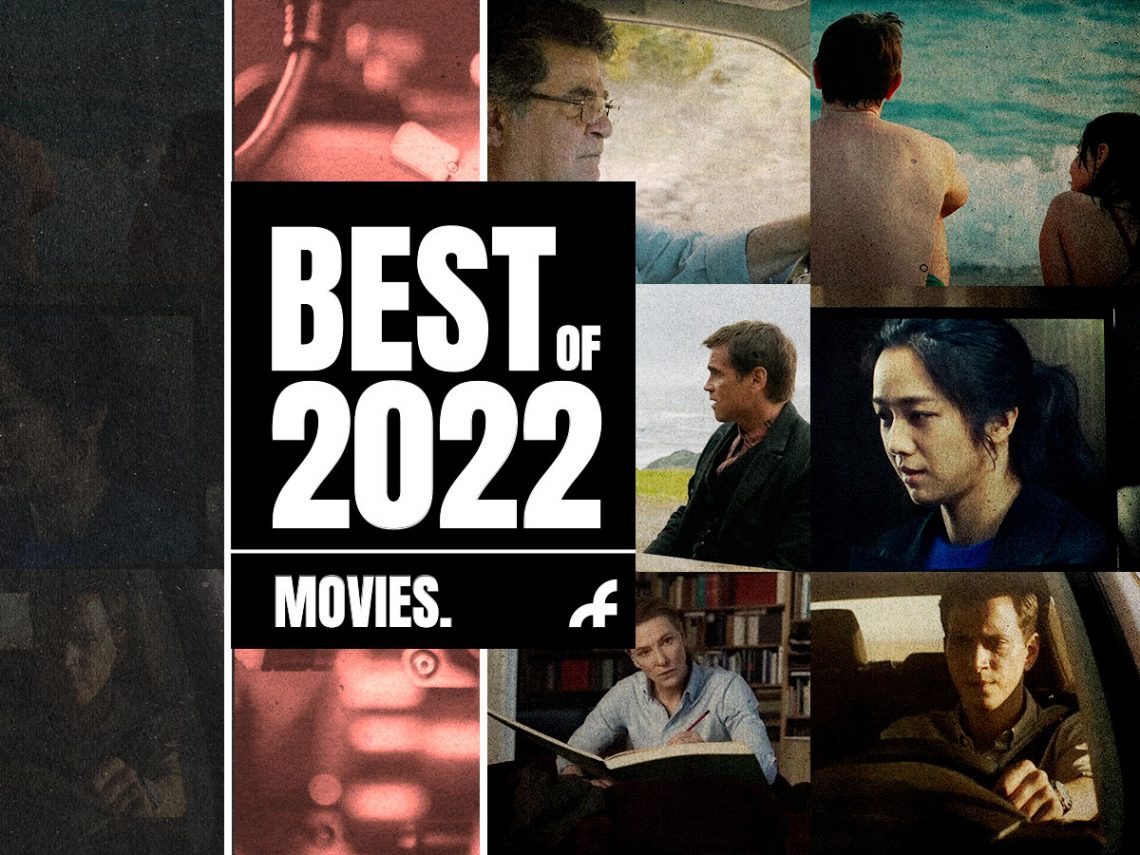
The 50 best movies of 2022

2022 is a difficult year to summarise in the context of the movie industry, with independent cinema once again thriving in the face of big-budget disappointments. In many ways, it has been a year of familiar hardship as the industry struggles to get back onto its feet after the disastrous impact of the Covid-19 pandemic in 2020. Yet, several movies and filmmakers have offered a way out of the creative rut of superhero fodder.
Indeed, unlike years prior, even Marvel and DC are struggling to get bums on cinema seats, with such releases as Doctor Strange in the Multiverse of Madness, Thor: Love and Thunder and Black Adam failing to drum up any kind of real critical and commercial excitement. Has the appetite for such high-flying movies run out? With a full course of superhero flicks to come in 2023, there’s definitely some milk still left in the cash cow, even if things are starting to taste a bit sour.
Whilst superheroes floundered, horror thrived, with a diverse range of filmmakers from across the globe providing great promise for the future of the genre. From Ti West, who surprised the industry with back-to-back horrors X and Pearl, to Jordan Peele, who brought the allure and class of the dark Hollywood blockbuster back to the fold with the UFO sci-fi tale Nope, the genre’s success in 2022 reflects the catharsis of such tales in a bleak year for global politics.
So, as 2022 enters its twilight, it’s time to take our annual look back on the year in cinema. This is a year when documentaries, horror and independent cinema thrived while movie studios continued to panic and streaming services kept on stealing their thunder.
The 50 best movies of 2022
50. The Menu (Mark Mylod)
The Menu is, without doubt, one of the star showings of the year, led primarily by the exquisite acting of Anya Taylor-Joy, Ralph Fiennes and Nicholas Hoult. On the surface, Mark Mylod’s film is a satire of high-concept dining shows like Chef’s Table, which is actually referred to in its well-paced hour and three-quarters. The narrative centres on a group of unsuspecting diners who visit Julian Slowik’s Hawthorne restaurant on a mysterious island to experience his tasting menu.
However, most of them are in for more than they initially bargained for, as Slowik himself is on the borderline of being utterly demented and intends to take his food to the conceptual limit. The film majestically manages to comment not only on cuisine culture and the middle class who indulge in it but also on the oversaturation of pop cultural choice in sum.
49. Smoking Causes Coughing (Quentin Dupieux)
Quentin Dupieux is known for his absurdist films, and this year’s Smoking Causes Coughing was certainly one of the most peculiar but brilliantly hilarious cinematic offerings. The film centres on a group of spandex-clad avengers who are forced to go on a team-building retreat to restore their powers and prepare for their next mission.
However, that mission comes sooner than expected when an enemy named Lezardin decides to try and destroy Earth. It’s all genuinely absurd but admittedly light-hearted, taking influence, no doubt, from the likes of Power Rangers and Teenage Mutant Ninja Turtles. A brilliant and quick (just over 70 minutes) watch that provides a welcome respite from the serious and sometimes dour landscape of contemporary cinema.
48. Men (Alex Garland)
It’s certainly been an excellent year for horror, and we were treated to a fine British offering this year in the form of Alex Garland’s Men. While the film toys with the well-worn conventions of pagan/folk horror and all the eerie countryside landscapes and uncongenial rituals that go with it, Garland’s film puts a contemporary spin on the proceedings and examines masculinity through the horror lens.
When Harper Marlowe (Jessie Buckley) seeks solace following the supposed suicide of her husband, she takes a retreat to a small countryside village in Hertfordshire. Harper has already been the subject of unacceptable masculine behaviour from James, but things get worse in the village when its male inhabitants continue to emotionally and physically threaten her. A hopeless portrayal of the inescapability of that deep-seated social patriarchy, perfect for our times.
47. Broker (Hirokazu Koreeda)
Korean cinema has enjoyed great success recently, and the hits kept coming this year with Hirokazu Koreeda’s Broker. Narratively, the feature focuses on a number of individuals who are tied to baby boxes – small hatches in which newborn infants are placed anonymously with the hope of them being taken into care by other people.
However, two of those individuals are caught up in using the baby boxes for illicit purposes. Ha Sang-hyeon and his partner Hyung Dong-soo (played by Song Kang-ho and Gang Dong-won, respectively) take babies from the baby box at a local church and sell them illegally. Broker is therefore concerned with questions of childhood, care, morality, family and love.
46. Noktah Merah Perkawinan (Sabrina Rochelle Kalangie)
Sabrina Rochelle Kalangie has worked on a number of projects in film and TV, but Noktah Merah Perkawinan is definitely the most interesting product yet. Based on the popular eponymous soap opera that aired in Indonesia during the late 1990s, it conducts a moving exploration of human relationships and, consequently, the human condition.
Parental interference in the domestic lives of adults is quite a common phenomenon in Asia. Kalangie’s film examines such an incident, chronicling the deterioration of the relationship between Ambar and Gilang after their parents start butting into their personal affairs. For Asian audiences, Noktah Merah Perkawinan’s recreation of that social suffocation will appear to be all too familiar.
45. The Beasts (Rodrigo Sorogoyen)
In light of Alex Garland’s Men, horrific and thrilling events in a rural setting are the order of the year. The Beasts also uses the countryside to elevate its themes significantly. Rodrigo Sorogoyen wrote the film in partnership with Isabel Pena and shot the production in France, Spain and Galician. The film centres on a French couple who settle in the countryside in Galician but are met with hostility from the village’s residents.
The Beasts had actually been inspired by real-life events that occurred in Petin in the Spanish province of Ourense between 2010 and 2014. When the couple moves to their new home with the desire to live a simpler life, closer to nature, they come into conflict with a pair of local brothers and are embroiled in the sale of the land to a wind farm energy company. All the more poignant considering the global housing crisis.
44. Lullaby (Alauda Ruiz de Azúa)
Lullaby is a tenderly-moving mother-daughter drama in which Laia Costa plays Amaia, who returns to her parent’s home after giving birth. Her partner has had to leave town for several weeks, and she experiences heightened anxiety from being left alone to raise her child. She, after all, does not yet know how to be a mother. Through spending time with her mother in her Basque hometown village, she also learns that she has forgotten how to be a daughter.
Beloved Spanish director Pedro Almodovar has highly praised Alauda Ruiz de Azua’s film, saying it is “undoubtedly the best debut in Spanish cinema for years” and “a portrait of the role of women within the family, which is truthful, devoid of sentimentality and that does not exclude humour”. Who better to confirm the justification of Lullaby’s place on this list, then?
43. Argentina, 1985 (Santiago Mitre)
Argentina, 1985 is Santiago Mitre’s excellent historical drama starring Ricardo Darin and Peter Lanzani and was selected as the Argentine entry for this year’s Academy Awards. It focuses on the 1985 trial of the Juntas, in which the heads of Argentina’s last civil-military dictatorship were tried, and the film toys with the conventions of truth, memory and justice, perhaps in a nod to Akira Kurosawa’s Rashomon.
Darin and Lanzani, respectively, play Julio Cesar Stressera and Luis Moreno Ocampo, the prosecuting heads of a tirelessly working group of lawyers. The group went after those responsible for one of the most violent and inhumane dictatorships Argentina had ever experienced. A brilliant watch with close attention to historical accuracy and delivered in a moving, almost vitriolic fashion.
42. Sick of Myself (Kristoffer Borgli)
Sick of Myself is a Norwegian comedy-drama by Kristoffer Borgli starring largely unknown actors – at least in this part of the world. Narratively, the film focuses on a competitive and essentially toxic couple – Thomas and Signe – whose relationship takes a dramatic turn when Thomas suddenly has a breakthrough as an artist.
Naturally, this creates an unbridled sense of jealousy in Signe. After seeing a dog attack a woman outside the café in which she works, Signe creates a new persona in which she demands attention and sympathy, hoping that this will, in turn, make Thomas jealous of her once again. Signe goes to utterly drastic lengths in this sharply witty portrayal of contemporary narcissism, exposing everything wrong with modern society’s complete and utter obsession with the self.
41. All Quiet on The Western Front (Edward Berger)
All Quiet on the Western Front is a refreshing take on the 20th Century War film – at least in English-speaking countries – in the fact that it is told from the perspective of German soldiers rather than those in the Allied forces. Edward Berger’s film is based on Richa Maria Remarque’s 1929 novel of the same name and focuses on a young and naïve soldier called Paul Baumer.
However, Paul’s idealism is soon brutally shattered when he arrives on the battlefield and confronts the reality of conflict. Before his enlisting, he and his friends are told by the German government that they are practically ensured hero status upon their return. Of course, that return is not guaranteed. The film is an intense and sometimes uncomfortable watch that sticks admirably close to its source material. Apt for the global conflicts of 2022.
40. Top Gun: Maverick (Joseph Kosinski)
In this action sequel, Tom Cruise returns as Captain Pete ‘Maverick’ Mitchell. The naval aviator must confront his past as he trains a group of younger Top Gun graduates, one of which is the son of a late companion.
Top Gun Maverick was the highest-grossing film of the year, earning over $1.4 billion, making it the highest-grossing film of Cruise’s career. The movie topped its predecessor, released 36 years prior, through its edge-of-your-seat thrills and captivating style, with the flying sequences taking centre stage as Top Gun Maverick’s most breathtaking visuals. Kosinski’s film is a streamlined and eventful blockbuster full of commanding performances and bursts of nostalgia, making for a sequel that was well worth the wait.
It’s precise in its action and thorough in narrative exposition, attracting old and new fans alike. Through a balance between engaging action and developed characters, this film is one of this year’s strongest contenders.
39. While We Watched (Vinay Shukla)
This documentary profiles Ravish Kumar, an NDTV news editor and his journalistic independence against the backdrop of general media bias in India. While We Watched examines India’s mainstream media and developments throughout the last decade, such as ownership and prejudice.
Shukla’s film is as insightful as it is poignant, exploring the issue of miscommunication in the press and propaganda, emphasising the prevalent figures in the process. The movie has a riveting approach and centres Kumar’s everlasting hope at heart. It establishes the binary oppositions of fact and fiction as a source of progressive dialogue, stressing the urgency to distinguish the two when engaging with media. While We Watched is well aware of its representation of the media’s power of education and is a piece of informative media itself.
The film transcends into a layered realm, which is only elevated by the harmony between its contextual examination of contemporary issues and its character study of Kumar.
38. The Janes (Tia Lessin, Emma Pildes)
This biographical documentary tells the story of The Janes, a group of women activists who, in the wake of Roe vs Wade, orchestrated an underground network to help women who needed the medical assistance of abortions. The group provided unauthorised low-cost abortions to an estimated 11,000 women.
The Janes is a historical documentary that opens up an immense emotional landscape, conveying womanhood’s perseverance against injustice and the political power that has attempted to restrain it. The film dignifies all affected by the abortion ban and helped by the organisation – women, people of colour and those from low economic strata. Its structure presents an incredible and insightful archive of footage from the era, alongside interviews of the activists and Jane members, portraying the socio-political climate and the personal stories.
Thus, this juxtaposition of political and personal accounts depicts the brutal and cruel reality, lightened by the immense courage and allyship these women exhibited to one another.
37. Return to Seoul (Davy Chou)
A 25-year-old French woman called Freddie travels to South Korea, her birthplace, to track down her biological parents. However, her trip goes differently than planned. The film stars Ji-Min Park, Oh Kwang-rok and Cho-woo Choi.
Chou orchestrates the themes of alienation, identity and displacement through an arthouse style and moody atmosphere. Return to Seoul is stylistically attentive and distinguished, accentuating the story’s boldness and honesty. It also has an impressive nostalgic soundtrack to complement the visual palette, constructing a distinct stylistic identity for audiences. Return to Seoul racked up 11 award nominations upon release, with critics falling in love with its devoted imagery and intuitive portrayal of its protagonist. Freddie can be read as a vehicle to express the concepts of an identity struggle and loss of belonging.
A juxtaposition between character and culture, the film encompasses its story material effortlessly, assuring the audiences are attached to Freddie. It’s slick, fresh, emotional and captivating.
36. Close (Lukas Dhont)
Two pre-teen friends, Léo and Remi, share an unbreakable bond. However, they are soon torn apart by harsh judgements and insecurities.
Close knows no boundaries in tugging on the heartstrings. It’s a sentimental and beautiful story that explores various aspects of life, childhood, growth and humanity. Toxic masculinity attempts to overwhelm and eliminate the platonic intimacy between the two characters, reflecting boyhood struggles with the conflict contrasted by the beautiful cinematography. There is a tenderness in its portrayal of sacrifice, with a clear spirit residing in its examination of bigotry and contrast between childhood innocence and adulthood judgement. Dhont’s direction and story exposition earned Close the best film title at the 2022 Cannes festival.
The film was also announced as Belgium’s submission for the Academy Award for Best International Feature Film at the 95th Academy Awards.
35. The Swimmers (Sally El Hosani)
In this biographical sports drama, two Syrian sisters flee their worn-torn country, with one hoping to compete in the Rio Olympics as a swimmer. The sisters are exposed to the brutal realities of migration and learn their dreams may not be as easy to reach.
Based on the truly inspirational story of Yusra and Sara Mardini, The Swimmers is bittersweet, harrowing, insightful and magnetic. Hosani exposes the brutal hardships migrants face; hopelessness, bigotry, the fight, all of it. These factors are then contrasted with heart, soul and a passion for a dream, that dream being the one shred of hope the characters have. The Swimmers reads as a sports montage and survival drama, splitting its narrative and visual exposition between the two.
Although the film has some faults in pacing at some points, the story shines through and leaves a lasting impression.
34. Joyland (Saim Sadiq)
Saim Sadiq’s Pakistani drama follows the Rana family, overseen by a patriarch who dreams of having a son. Another family member secretly joins an erotic dance theatre, and a yearning for sexual liberation takes over the family.
Autonomy and identity take centre stage in this powerful drama that was the first Pakistani film to premiere at Cannes Film Festival. An internal turmoil is juxtaposed against the exterior landscape, where judgement and restraints dictate. Sadiq makes daring moves with Joyland, crossing boundaries and telling a neglected story that captures audiences’ hearts. Emotion and raw energy immerse practically every sequence, each framed in a slow, dream-like movement. It explores the journey from innocent hope to a harrowing sense of loss. Family issues are outlined and analysed in a poetic and insightful technique, with the screenwriting exhibiting artistic poignancy.
Magnetic performances and vibrant visuals carry the heartfelt tale with grace, emphasising cinema’s strengths as a storytelling medium.
33. Holy Spider (Ali Abbasi)
A journalist becomes immersed in the seedy underbelly of Iran’s holy city Mashhad. Her investigation into the tragic murders of several sex workers leads her to the potential culprit, the Spider-Killer.
Holy Spider is a compelling and shocking piece of filmmaking, portraying a grim experience through a harrowing and dark style. It’s all visceral, dramatic and heightened in its depiction of some severe incidents. The film spares no expense in illustrating its social critique, showing the horror many have overlooked. Holy Spider examines the systematic oppression many women in the world are forced to submit to and does so in a way that grabs hold of audiences and refuses to let go until the conclusion. Actor Zar Amir Ebrahimi won the Cannes award for Best Actress for her film work, and Abbasi won the Fantastic Fest award for Best Director.
These accolades emphasise the film’s effect, one that is brutal, lethal and long-lasting.
32. Alcarràs (Carla Simón)
The Solé family lead a tranquil life thanks to the summer harvest of their peach orchard, which brings in their living. However, the property owner tragically passes away, and his heir reveals her plans to sell the land.
Alcarràs is a visually ambitious and slow burner of a film, being the first Catalan-language film to win the Golden Bear at the Berlin International Film Festival. It presents a contextual scope of societal issues of economic struggles and the fight for change. Simon’s film upholds a series of relevant values, including modernity, revolution and perseverance, with the camerawork emphasising the restraints and sacrifice these concepts bring. Simplistic performances given by non-professionals contrast the narrative’s complexities and conflicts, exhibiting a layered approach to cinematic storytelling.
The cinematic factor washes against the realism and authenticity Alcarràs strives for, compromising a precise harmony; however, the subject matter shines as the film’s anchor.
31. Happening (Audrey Diwan)
This French drama tells the story of Anne, a bright and promising student attending school in 1963. Once Anne discovers she is pregnant with her final exams on the horizon, she decides to take matters into her own hands.
Diwan tells a bleak yet moving story here, exemplifying how controlling and overbearing the ’60s were for people who dared step outside the norm. Happening is painful and uncomfortable, as it anchors itself in a realistic approach and attentive technique, earning the Golden Lion award at the Venice Film Festival. The subject is presented through a perspective many have tried to silence, one that clashes against societal traditions and expectations of femininity and young girls’ aspirations.
These factors make for a challenging yet rewarding viewing experience that is direct and candid, as Diwan doesn’t allow any eccentric camerawork or editing to overwhelm the difficult issues. Instead, the story and performances carry the audience’s engagement.
30. Showing Up (Kelly Reichardt)
In Showing Up, Michelle Williams stars as a struggling artist, Lizzy, nervously preparing for a career-changing exhibition whilst balancing distractions from her family and friends. Chaos is a huge source of inspiration for the sculptor’s work in this gentle and humourous reflection on the process of creating art directed by Kelly Reichardt. The film marks the fourth collaboration between Reichardt and Williams, who first worked together on Wendy and Lucy in 2008, proving them to be an indomitable duo of contemporary indie cinema.
The film features a brilliant ensemble cast, including Andre 3000, Hong Chau, Judd Hirsch, and Maryann Plunkett. Showing Up is a rare depiction of a hardworking artist who doesn’t already have a successful career, despite her dedication. The film acts as a quiet slice of life, where the question of what it means to be human and an artist hovers over Lizzy.
29. This Much I know to be True (Andrew Dominik)
Andrew Dominik released two films this year – This Much I Know To Be True and Blonde. Although the latter was a highly divisive and problematic depiction of Marilyn Monroe’s life, Dominik’s talents shone brighter in This Much I Know To Be True, a documentary that depicts Australian musicians Nick Cave and Warren Ellis as they play songs from their albums Ghosteen and Carnage. Filmed in the spring before their 2021 UK tour, the pair bring their songs to life with the help of string quartets and backing singers, making for a transcendent experience.
The film features appearances from friends and family of the musicians, such as singer Marianne Faithfull and Cave’s son Earl. We are granted access to the pair’s world, including Cave’s writing process for his blog, The Red Hand Files, and a tour of his homemade sculptures. Dominik’s meditative approach is simple yet powerful.
28. Everything Everywhere All at Once (Daniel Kwan, Daniel Scheinert)
Daniel Kwan and Daniel Scheinert released their second feature this year, Everything Everywhere All At Once, which became A24’s highest-grossing movie of all time. The film blends various genres, including science-fiction, black comedy, fantasy, martial arts, drama and animation. It follows a Chinese-American immigrant who discovers she can connect with other versions of herself in parallel universes. With music provided by Mitski, Randy Newman, Talking Heads’ David Byrne and Andre 3000, Everything Everywhere All At Once is a showstopping cinematic experience.
The film has recieved high praise for its exploration of Asian-American identity, existentialism and nihilism, alongside impressive visual effects, humour, and direction. Since its release in March, the movie has grossed over $103.1 million worldwide and has been nominated for countless awards, such as seven Independent Spirit Awards. Everything Everywhere All At Once is a unique film that blends humour with plenty of heart.
27. The Novelist’s Film (Hong Sangsoo)
Shot in stunning black-and-white, The Novelist’s Film is the first of two films released by South Korean director Hong Sang-soo this year. Executive director Carlo Shatrian described the film as a celebration of “the beauty of chance encounters while talking about the importance of authenticity in the dishonest world of cinema.” The film follows a woman suffering from writer’s block who decides to relaunch herself as a filmmaker. As she suffers self-doubt and a period of crisis, The Novelist’s Film explores what it takes to achieve artistic aims.
The film won the Silver Bear Grand Jury Prize at the Berlin International Film Festival, the fourth time the director has recieved the prestigious accolade. Not only is The Novelist’s Film a story of filmmaking, but it’s also a story of personal connection and how it shapes our art. Although the film is Hong’s 27th feature, it feels like one of his most personal.
26. Aavasavyuham (Krishand)
Aavasavyuham: The Arbit Documentation of An Amphibian Hunt is the latest film from writer and director Krishand, starring Rahul Rajagopal, Sreenath Babu, Sreejith Babu, and Zhinz Shan.
The Indian Malayalam-language movie blends genres, acting as a mockumentary, science-fiction, and comedy-drama. With a storyline inspired by Warren Beaty’s Reds and Christopher Nolan’s Interstellar, Krishand’s film is one of the year’s most unique releases. The director also cites inspiration from Franz Kafka’s Metamorphosis, A Very Old Man with Enormous Wings by Gabriel García Márquez, and comic book character Swamp Thing from 1954’s Creature from the Black Lagoon.
Krishand achieves his ambitious aims, including using TikTok as a form of narration, which could easily fall flat. Instead, the director creates a hilarious satire which has had a highly successful festival run in India, winning Best Film and Best Screenplay at the 52nd Kerala State Film Awards.
25. Retrograde (Matthew Heineman)
American director Matthew Heineman, who has been labelled as “one of the most talented and exciting documentary filmmakers working today,” tackled the war in Afghanistan for his latest project, Retrograde. The Oscar-nominated director captured the final nine months of the war from differing perspectives, including both an Afghan general and his corps, a US Special Forces unit, and innocent civilians attempting to flee the terror. The film is a remarkable example of documentary filmmaking that highlights the destructive horrors of war. As the tragedy unfolds, Heineman’s camera conveys the palpable tension whilst also providing an empathetic look at the catastrophic events.
Heineman does an extraordinary job of conveying the terror and devastation of war, leaving people vulnerable, terrified, and helpless. Both necessary and tough to watch, Retrograde is another powerful documentary from the filmmaker, who won three Primetime Emmy Awards for his 2015 film Cartel Land.
24. X (Ti West)
Ti West paid homage to 1970s slashers like The Texas Chainsaw Massacre with X, the first in a trilogy that continued with Pearl, also released this year. The series is set to conclude in the near future with the release of MaXXXine, which follows Mia Goth’s character after the events of X. West’s ode to vintage horror follows the cast and crew of a pornographic film as they arrive at an elderly couple’s rural property to shoot their latest movie. Yet their filming is shortly disturbed by unlikely killers, leading to a series of gruesome deaths.
Acting as an exploration of ageing and youth and its intersection with beauty, West presents the elderly killer with an air of sympathy, giving the film a distinctive edge. X also bears influence from classics such as Boogie Nights, Psycho, The Shining and Alligator. Since its release, X has found particular success with the younger generation on platforms such as TikTok.
23. Riotsville, U.S.A. (Sierra Pettengill)
Documentary filmmaker Sierra Pettengill provides a bleak yet insightful look at police militarisation as a response to civil unrest in her new film Riotsville U.S.A. Using archival footage, the filmmaker depicts the fictional town of Riotsville, which was created by the US military in the 1960s as a place for them to perform exercises that mimicked rioting and how the police should respond. These demonstrations were kept quiet for a large number of years until Pettengill, also an archival researcher, read about them in Rick Perlstein’s book Nixonland.
She shared: “I immediately looked to see what I could find, which was very little, and then eventually found a record in the National Archives that sounded about right and got that film transferred and sent over. I then began a long process of trying to contextualise what this meant – literally within a historical context, but also where this fits in a metaphorical sense in how America treats race and equality.”
22. How to Blow Up a Pipeline (Daniel Goldhaber)
Following the favourably reviewed 2018 psychological horror, CAM, Daniel Goldhaber released his second feature this year, How To Blow Up a Pipeline. The film is based on Andreas Malm’s controversial 2021 non-fiction book of the same name, which argues that property destruction is a valid method of environmental justice via an examination of social justice movements. In Goldhaber’s film, we follow eight people as they attempt to blow up an oil pipeline. Starring Ariela Barer, Kristine Froseth, Lukas Gage, Forrest Goodluck, and Sasha Lane, Goldhaber’s film is both a thrilling heist tale and a poignant look at the climate crisis, which couldn’t be more timely.
How To Blow Up a Pipeline completely involves us in its world, which is simultaneously tension-filled, comedic and honest. To create the film, Goldhaber “interviewed a bunch of environmental extremists and political extremists, and then some climate journalists and people who kind of fleshed out our approach.”
21. Saint Omer (Alice Diop)
French legal drama Saint Omer saw documentary filmmaker Alice Diop make her first foray into narrative filmmaking. Based on the 2016 French court case of Fabienne Kabou, the film follows a pregnant novelist who attends the trial of a woman accused of murdering her child by abandoning it on the beach, with the novelist hoping to use the case as inspiration for a literary retelling of Medea. The movie won the Silver Lion Grand Jury prize at Cannes Film Festival and has been selected as the French entry for Best International Feature at next year’s Academy Awards.
Diop explained that when she was pregnant, she became obsessed with Kabou’s case and attended the trial. She stated: “I wanted to find answers to my own intimate questions that I had asked myself about my relationship with my own mother and being a mother myself. And I decided that since I shared those same emotions with so many women, if we were all so obsessed with that event, it meant there was something universal in the story, which had to do with motherhood.”
20. The Northman (Robert Eggers)
Robert Eggers continued to deliver his beautifully-shot intense cinematic works this year with The Northman, starring Alexander Skarsgård, Nicole Kidman, Claes Bang and Anya-Taylor Joy. Björk and Willem Dafoe also had minor roles in the film, heavily influenced by Norse mythology. The Northman’s story centres on a young Viking prince who assumes a lowly status after his father is murdered by his uncle. Amleth never forgets what happened to his father and vows to avenge him when the time comes.
When Amleth grows into an adult, he is jacked up, bitter and ready to take vengeance. What is most astonishing about Eggers’ most recent offering is its landscape cinematography, which is absolutely stunning in every respect. We, as the audience, feel every blast of cold through the barren landscape and every moment of warmth from the hearth’s fire. The Northman is simply a brilliant play on the classic revenge tale, only delivered with Eggers’ unique outlook on cinematography and mythic storytelling.
19. Bones and All (Luca Guadagnino)
When it was first announced that Timothée Chalamet and Luca Guadagnino were going to collaborate once again, fans could hardly contain their excitement. After the resounding success of their last project – Call Me By Your Name, Chalamet’s incredibly massive fanbase was convinced that Bones and All was going to be one of the best films of 2022.
It seems like they weren’t far off since Bones and All has proved to be a fascinating addition to Chalamet’s growing filmography. He stars alongside Taylor Russell in this crazy road movie from Guadagnino, featuring as a pair of cannibals who embark on a deadly journey which takes their love for flesh to its logical conclusion. With incredible performances and the fusion of multiple genres, Bones and All has caught the attention of critics and audiences alike.
18. Glass Onion (Rian Johnson)
Probably among the most anticipated releases of the year, Glass Onion is an impressive sequel to Rian Johnson’s 2019 thriller Knives Out. Daniel Craig reprises his role as Benoit Blanc, an eccentric detective who finds himself in the middle of a deadly plot once again. This time, the ensemble cast is even more stacked than its 2019 predecessor.
Starring the likes of Edward Norton, Kate Hudson and many more, Glass Onion is set during the Covid-19 pandemic and follows Blanc as he is hired to investigate a high-profile case. Edward Norton is fantastic as Miles Bron, the billionaire owner of a prominent tech company who seems to be modelled after other megalomaniacs like Jeff Bezos and Elon Musk. Many fans are convinced that Glass Onion is a significant improvement over the first film, and it’s hard to prove them wrong.
17. Fire of Love (Sara Dosa)
Many interesting documentaries have come out this year, but few have been as moving and powerful as Fire of Love. Directed by Sara Dosa, it follows the intriguing journey of esteemed volcanologists Katia and Maurice Krafft. The visual narrative consists of archival footage, providing audiences with authentic insights into their unique life.
There’s something very special about the Kraffts’ fearless quest to know more about one of the most volatile natural phenomena. Fire of Love is very effective in creating a compelling look at the couple’s activities and their trajectory, which unfortunately ended when they lost their lives in the 1991 eruption of Mount Unzen.
16. Godland (Hlynur Pálmason)
Hlynur Pálmason has been drawing attention to Icelandic cinema for a while now. This year, he returned with Godland – a sprawling drama about a Lutheran priest who is tasked with the establishment of a new parish in Iceland. A stunning exploration of organised religion and the paradoxical ambitions of the church, Godland is one of the most mesmerising films of the year.
Set in the late 19th century, Pálmason’s period piece was actually inspired by wet plate photographs taken by a priest during that time. Godland presents the harsh landscapes of rural Iceland in a beautifully cold manner, perfectly capturing the dichotomy between the church’s anthropocentric ambitions and the terrifying indifference to God’s creations.
15. Triangle of Sadness (Ruben Östlund)
A new Ruben Östlund never fails to spark heated discussions in the global cinephile community, and Triangle of Sadness has definitely stolen the spotlight. After winning the highly coveted Palme d’Or at Cannes, Östlund’s latest drama has been described by audiences as the latest entry in the trend of heavy-handed satires (such as Don’t Look Up) in the Covid era.
That description isn’t far off, especially because Triangle of Sadness is unapologetically blunt in its critique of the elite. Set on a luxury cruise which acts as a representation of social hierarchies, Triangle of Sadness uncovers the ugliness of economic inequality slowly but methodically. It’s a trenchant critique of late capitalism from a filmmaker who is undoubtedly growing increasingly disillusioned with each passing year.
14. Mars One (Gabriel Martins)
Given the wide-ranging impact of the recent elections in Brazil, there’s no doubt that Mars One is one of the most important films of the year. It revolves around a lower-middle-class family – marginalised in a Brazilian metropolis, harbouring dreams of a better life which are completely destabilised by their sociopolitical realities.
After a far-right extremist is elected as President, they soon realise that the political systems that govern their existence are designed to prevent any meaningful mobility. While Mars One approaches the subject with the right amount of emotional power and humour, its depiction of everyday life has been the dominant reality for the majority of Brazilians for a while now.
13. The Kings of the World (Laura Mora Ortega)
Due to the rapid commodification of the coming-of-age genre, it’s incredibly difficult to produce an honest and authentic vision while working within that framework. However, Laura Mora Ortega has achieved just that with The Kings of the World – a road film which tells the story of five teenage boys who survive on the streets.
Separated from their families, they stick together on the streets of Medellín to get by and create their own world with a unique set of laws. They embark on a journey into the depths of Colombia, searching for their roots and their own piece of land while navigating the dangers of the corrupt world they inherited from their ancestors.
12. A Tale of Filipino Violence (Lav Diaz)
Whenever Lav Diaz does a new project, it’s almost certain that he will end up on the year-end lists of most publications. One of the most prominent practitioners of slow cinema, Diaz’s examinations of Filipino history and society are some of the greatest cinematic masterpieces of the 21st century.
With a whopping runtime of 409 minutes, A Tale of Filipino Violence continues Diaz’s obsession with capturing the passage of time through the cinematic medium. A poetic meditation on the brutal regime of Ferdinand Marcos, it views the period of social unrest through the lens of Servando Monzon III – a man who finds himself on the precipice of becoming a feudal lord.
11. Moonage Daydream (Brett Morgen)
It’s always hard to make a faithful documentary about a larger-than-life figure, especially if that figure happens to be someone as heavily mythologised as David Bowie. However, Brett Morgen has created something truly special with Moonage Daydream, an impressionist documentary about one of the greatest icons of the 20th century.
This project has been in the works for a long time since Morgen actually met Bowie in 2007 to discuss a hybrid documentary about the icon. When asked about his impressionistic approach, the director said: “Bowie can’t be defined – he can be experienced – and there’s a reason for that. It’s like all art, if you unravel the mystery, it’s like, why? Just let it be.”
10. All the Beauty and the Bloodshed (Laura Poitras)
Surprising critics and audiences when it was released in autumn, this moving and incredibly impactful documentary from filmmaker Laura Poitras follows the life of the artist Nan Goldin. Whilst exploring the life of the photographer and LGBTQ+ activist, the film delves into the downfall of the Sackler family – the pharmaceutical dynasty that was responsible for the opioid epidemic’s unfathomable death toll.
Using archival footage, the profound documentary is a powerful piece of cinematic activism which stays with you long after you’ve peeled your eyes away from its allure.
9. A New Old Play (Jiongjiong Qiu)
Though originally released in 2021, Qiu Jiongjiong’s A New Old Play only reached UK and US shores in mid-2022, with the historical drama impressing critics with its distinctive theatrical presentation. An epic of contemporary Chinese cinema, the film follows a leading clown role in a famous theatre troupe who passes away and takes a trip through the underworld, reliving his memories against the backdrop of 20th-century history.
A memorable piece of idiosyncratic drama, A New Old Play from the celebrated Chinese filmmaker, is a special piece of cinema that shines in a year of relative creative conservatism.
8. Decision to Leave (Park Chan-Wook)
Rightfully known as one of the greatest filmmakers of the 21st century, Park Chan-Wook, the South Korean director behind such classics as Oldboy, Lady Vengeance and The Handmaiden, impressed once more with Decision to Leave in 2022. Starring Park Hae-il, Tang Wei and Lee Jung-hyun, the crime drama follows a detective investigating a man’s death in the mountains who meets the victim’s mysterious widow.
Celebrated at the Cannes Film Festival and by critics worldwide, Decision to Leave is one of the most enigmatic movies of the year, offering a new serving of emotional drama upon each new viewing.
7. Pinocchio (Guillermo Del Toro)
Two iterations of the classic fairytale Pinocchio were released this year, though you’d be forgiven for forgetting about Disney’s soulless release. Instead, it was Guillermo Del Toro’s spellbinding film that would take the critical and commercial plaudits, with the beautiful stop-motion animation being perhaps the best adaptation of the classic Italian story ever put to screen.
Elevating the movie beyond being a mere children’s story, Del Toro makes Pinocchio a profound tale of mortality and love, with excellent voice work from the likes of Ewan McGregor, Finn Wolfhard and Tilda Swinton, bringing the film to life.
6. Burning Days (Emin Alper)
World cinema has enjoyed quite the year in 2022, with Emin Alper’s Burning Days making its way to number six on our list of the greatest movies of the year. Helmed by Alper, a Turkish filmmaker, the frank drama follows Emre, a young prosecutor who is newly appointed to a small town and finds himself in the middle of a political conflict during a prickly murder investigation that involves the whole community.
Starring Ekin Koç, Selahattin Pasali and Hatice Aslan, Burning Days is already an award-winner thanks to its gripping tale of morality, headed up by a master filmmaker with a promising future in the industry.
5. Nope (Jordan Peele)
At this point in his career, following successive critical triumphs in Get Out and Us, Jordan Peele has been considered something of a pertinent horror filmmaker who focuses on the pervading issues of our time. Nope threw this notion out of the window, however, with Peele putting together a summer blockbuster that threw audiences back to the thrills of Steven Spielberg in 1980s Hollywood.
Once again collaborating with Daniel Kaluuya, Peele created a movie that splashes around in the joyous pleasure of cinematic innovation, devising a film so ingenious, so clever, and so creative that it left us baffled.
4. Tár (Todd Field)
Sure, Tár is helmed by Todd Field, the same director behind In the Bedroom and Little Children, but in practicality, this isn’t his movie at all; it’s Cate Blanchett’s. Playing Lydia Tár, a woman considered to be one of the greatest living composer-conductors of all time, the film is set in the international world of Western classical music and follows the protagonist’s emotional fragility as she retains her place at the top of the industry.
Though she is joined by supporting actors Noémie Merlant, Nina Hoss and Mark Strong, Blanchett shines as the title character, making a very good case for the Best Actress Oscar in this marvellous musical delight.
3. The Banshees of Ishernin (Martin McDonagh)
Despite having only directed four feature films, the Irish filmmaker Martin McDonagh has become an industry and commercial favourite for his irreverent crime comedies In Bruges, Seven Psychopaths and Three Billboards Outside Ebbing, Missouri. His latest film is slightly different in tone, however, sharing more in common with his brother’s dark 2014 movie Calvary that ultimately explored the complexities of being human.
Similarly, in The Banshees of Ishernin, McDonagh explores the friendship of two lifelong friends when their relationship begins to hit jagged rocks. Starring Brendan Gleeson, Colin Farrell, Kerry Condon and Barry Keoghan, the film is a touching, funny and profound exploration of relationships and friendship set in the beautiful backdrop of rural Ireland.
2. No Bears (Jafar Panahi)
Few contemporary Iranian filmmakers are as globally well-known as Jafar Panahi, the mastermind behind such national classics as This is Not a Film, The Circle and Taxi Tehran. Though, his latest film, No Bears, may just be his very best, with the romantic story following two parallel love stories in which the partners are thwarted by invisible and inevitable obstacles that keep them both from blossoming.
Helped by a fabulous cast that includes the likes of Mina Kavani, Vahid Mobaseri and Bakhtiar Panjei, No Bears is a special piece of Iranian cinema that is socially charged with a pertinent message that cuts deep given the dire political situation in the country.
1. Aftersun (Charlotte Wells)
Feeling like a memory extracted and projected, Charlotte Wells’ extraordinary debut film is a thing of utter beauty. A drama which yearns with melancholy, Wells makes us nostalgic for lives we’ve never lived in her story, which follows a young woman who reflects on the shared joy of a holiday she took with her father 20 years earlier. Recalling events with scattered accuracy, she tries to fill in the gaps between her memories, piecing together the father she thought she knew.
While Wells provides the platform for Aftersun to thrive, framing the whole story as if it were stuck within the remits of a time-bound photo album, it is the lead performances that make the film a joy to watch. Rising star Paul Mescal impresses as protagonist Calum, giving a complex and nuanced performance, but it is newcomer Frankie Corio as Sophie who perhaps provides the most surprise, giving her character several layers of intricacy.
In a time of nostalgia and melancholy, Wells manages to bottle the sentiment and make something quite beautiful from its ethereal fragrance.
