


10 of the most misunderstood songs in history

We talk a lot about the transformative power of music and its ability to resonate deeply, but rarely do we give credence to the way that it can also do the opposite, causing certain concepts to become misconstrued. Much like a manipulative lover, music has the terrifying ability to present misery as joy, darkness as light, sexualisation as romanticism, and so on. While many of us may learn intended meanings and understand the irony of specific listening experiences, songs that present contradictory elements are everywhere – infiltrating our safest spaces without us even knowing.
Although songs with such dichotomies don’t always mask sinister elements with more passably light façades, the ones that do are incredibly telling of the subliminal nature of art. We could probably be sat in a bar, enjoying light conversation with a friend we haven’t seen for five years, while Foster the People plays out subtly beneath the sounds of wine-induced conversation. Although ‘Pumped Up Kicks’ serves a radio-friendly groove of a tune, it doesn’t detract from the fact that a song about a child’s desire to become a school shooter is soundtracking a Friday night boozer.
On the flip side, music which presents itself under such veils, speaks to the inexplicably therapeutic quality of music as a medium – some pose as fantasy to cope with trauma, while others repurpose depression and anxiety as a tool for others to feel less alone and afraid. Although music is often layered, we embrace its various multifacets with more enthusiasm than we would a previous lover, enthralled by its ability to communicate the very things that our souls wouldn’t ever be capable of.
We let music charm us, allowing ourselves to gravitate towards its insatiable melodies and arrangements even if we understand that what lies beneath is repackaged deceit. We embellish the irony of The Smiths while dancing to the endearing beats of ‘Dancing in the Moonlight’. However, the beauty of such music is that we can choose whether we coast the surface or peel back the layers, revealing the truth within.
Songs that have a different meaning:
‘Dancing in the Moonlight’ – Toploader
Toploader did an incredible job at reimagining the words of Sherman Kelly, whose original composition came as a result of a tragic encounter with the same gang that would later become associated with the Fountain Valley Massacre. ‘Dancing in the Moonlight’ emerged as Kelly’s fantasies about a better world after he and his girlfriend were assaulted in St. Croix. Of course, the song is less deceitful and more hopeful, as “everybody’s feelin’ warm and bright” in an alternate reality where violence ceases to exist.
Toploader’s version added an extra layer to Kelly’s vision, adding more upbeat arrangements to evoke a heightened sense of joy and optimism. The song feels and sounds like authentic post-party energy, pandering to that moment where blissful existence takes over, and you’re left enjoying the “supernatural delight” of freedom, safety, and love.
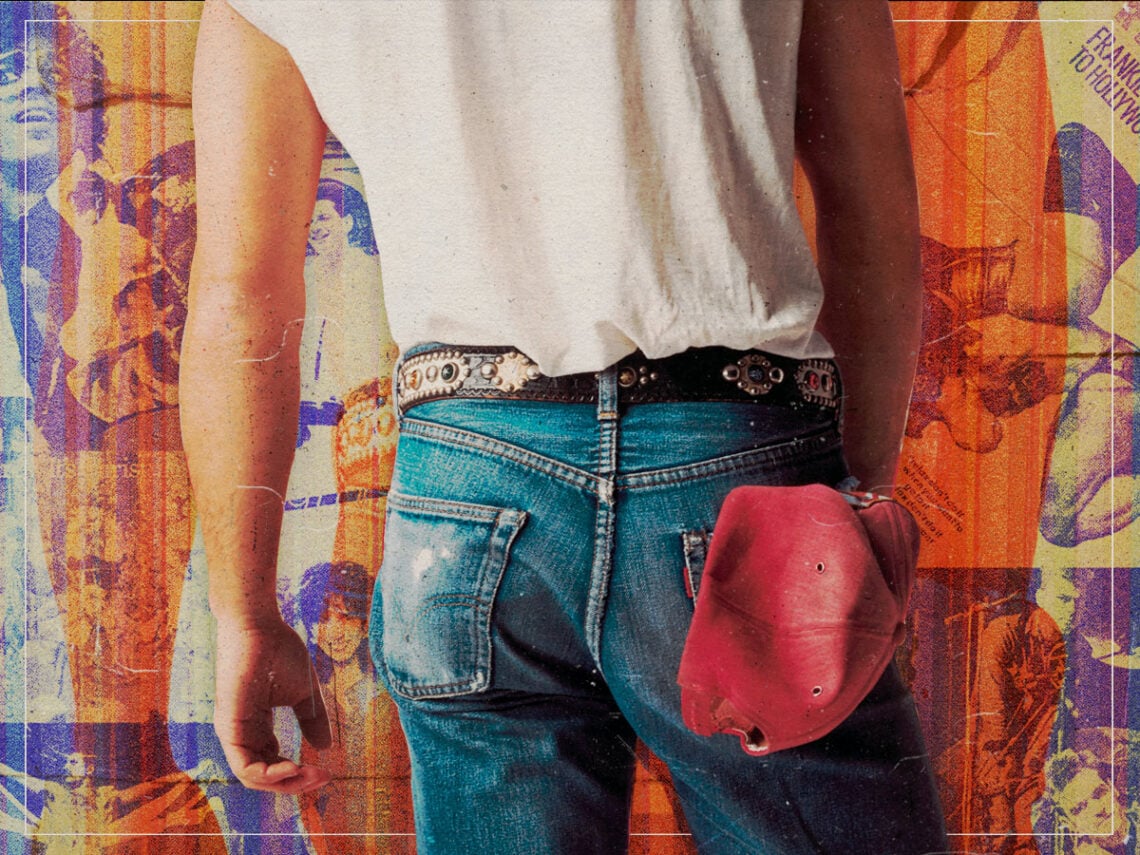
‘Born in the U.S.A’ – Bruce Springsteen
Bruce Springsteen penned a song called ‘Vietnam’, which criticised the poor treatment of soldiers returning to America after serving in the war. Moved by the hostility they received, Springsteen crafted an anthem that would both symbolise American patriotism while exposing its shortcomings, representing the paradoxical nature of the nation’s values.
“You can both be very critical of your nation and very prideful of your nation simultaneously,” he explained, discussing the track which he would later re-title ‘Born in the US.A’. Of course, many embraced the track, wrongly assuming that it was an ode to the US, while others deemed it controversial and called for a boycott due to its overt criticism. However, what Springsteen really set out to do – something that he succeeded in achieving – was challenge the ways the country refused to embrace its heroes.
‘Love Will Tear Us Apart’ – Joy Division
Joy Division released what is likely one of the greatest posthumous singles in history with ‘Love Will Tear Us Apart’. However, while the song sounds upbeat, its subject matter is quite the opposite. Even The Wombats pointed it out when they sang the words, “Let’s dance to Joy Division, and celebrate the irony.”
While those who understand its contradiction often bring attention to it in a rather tongue-in-cheek matter, laughing about the fact that you can dance to such a dark concept, what lurks beneath is actually quite unsettling. ‘Love Will Tear Us Apart’ was written by Ian Curtis about his marital struggles and problems with depression and epilepsy. The song became more poignant due to the time of its release, as everything Curtis presented in the song was seemingly fate.
‘In The Air Tonight’ – Phil Collins
The Cadbury ad aside, the popularity resurgence that ‘In The Air Tonight’ experienced was probably tied to its stark ambiguity, with conspiracist debates ranging from a witnessed drowning to a sinister impending doom. Although one of the misconceptions that was talked about so widely that it became viewed as truth centred around Phil Collins observing someone drown, the song seems to be too dense in meaning to represent one singular concept.
However, despite the various enduring conversations about the song’s real meaning, Collins once claimed the song came together organically. “I was just fooling around. I got these chords that I liked, so I turned the mic on and started singing,” he explained. His frustrations and sadness while going through a divorce were clearly an influencing factor, but for the most part, he wasn’t really sure what he was trying to say or if he was even trying to say anything at all.
‘Blackbird’ – The Beatles
“Blackbird singing in the dead of night. Take these broken wings and learn to fly.” While these may be perhaps some of the most well-known song lyrics in all of history, many read them as poetic advice for those who feel devalued or discouraged. However, this was actually The Beatles‘ way of addressing systemic racism while supporting those who helped to propel the Civil Rights movement.
When piecing together the song, Paul McCartney once said he envisioned a Black woman to symbolise hope and optimism during difficult times. “As is often the case with my things, a veiling took place,” McCartney explained, adding: “Rather than say ‘Black woman living in Little Rock’ and be very specific, she became a bird, became symbolic, so you could apply it to your particular problem.”
‘Landslide’ – Fleetwood Mac
When Stevie Nicks experiences pain or difficulties, she often writes, crafting songs that channel her inner, most personal thoughts and feelings. ‘Landslide’ was a product of Nicks’ defeatism during a time when she thought her career was over. Although the song comes across as romantic, it represents Nicks’ disappointment and desire to find the answers.
Throughout the song, she asks important questions like: “Can the child within my heart rise above? Can I sail through the changin’ ocean tides? Can I handle the seasons of my life?” Similarly, she muses upon such loss with romantic ponderings like “Well, I’ve been afraid of changin’ / Cause I’ve built my life around you.” As one of our greatest-ever wordsmiths, Nicks beautifully conceptualised despair while pivoting the mirror, prompting us to reflect on our own lives and shortcomings.
‘Pumped Up Kicks’ – Foster the People
Radio-friendly songs are often more upbeat pop ones which detail love or heartbreak through sugary and catchy melodies. However, Foster the People’s ‘Pumped Up Kicks’ quickly became a hit despite its somewhat divisive subject matter, as it narrates a schoolboy whose frustration drives him to fantasise about homicide.
The song’s popularity provided a major benefit for indie-pop music as it helped to bridge the gap between alternative and mainstream music. At the time, this was quickly becoming a bigger disparity, but songs like ‘Pumped Up Kicks’ succeeded in pandering to both fans of catchy pop music and quirky, indie audiences. We can appreciate the song for its grooviness, of course, but it yields a sense of unease when you attempt to get under its skin, particularly after Mark Foster explained his desire to “get inside the head of an isolated, psychotic kid.”
‘Paper Planes’ – MIA
In a similar fashion, ‘Paper Planes’ is often misunderstood as being a gun anthem, as M.I.A. seemingly entertains fantasies of shooting someone she feels frustrated with. However, this is all just a front, as the song actually delves into the singer’s arduous experience with immigration after she tried to enter America on a Visa. As someone who is of both British and Sri Lankan descent, the process was understandably exhausting, as we learn in ‘Paper Planes’.
After taking Diplo’s suggestion to sample a Clash song also about immigration, ‘Paper Planes’ emerged one morning after M.I.A. reflected on stereotypes of immigrants and the harmful profiling they can experience in places like New York. Although many channels attempted to censor the song’s gunshots, the meaning remained intact with lines like: “Aready going to hell, just pumping that gas.”
‘There She Goes’ – The La’s
In the realm of rock ‘n’ roll, it’s often difficult to decipher between authentic love songs and the odes to drug use. In the case of The La’s, the answer presents itself in the line: “Pulsing through my veins.” Although this meaning has been somewhat debated, “No one else could heal my pain” and “she calls my name” feel suspiciously similar to heroin addiction and the circular nature of substance abuse.
This theory is further fuelled by Lee Mavers’ avoidance of the question when questioned about whether it alluded to heroin. Moreover, bassist John Power has said, “I don’t know. Truth is, I don’t wanna know,” in previous conversations. Regardless, it seems to have garnered a pretty unseverable connection over the years, even if it was originally penned with the power of authority or endless love in mind.
‘Total Eclipse of the Heart’ – Bonnie Tyler
At the peak of her fame, Bonnie Tyler was a pioneer and a record breaker wrapped in one. Not only did she somehow break America, but she also managed to thread gothic elements into mainstream music, presenting the dark and sinister sides of love and romanticism that were only usually spotted in more niche circles.
With ‘Total Eclipse of the Heart’, Tyler delivered on two fronts: her unmatched vocal range and the song’s endearingly dark subject matter. Inspired by Nosferatu, ‘Total Eclipse of the Heart’ was an unconventional take on the mainstream love song as she sang with the kind of intensity that can only be matched in vampire movies. Her desire is for her lover to join her for eternity, and once he does, it’s a total eclipse of the heart.
