


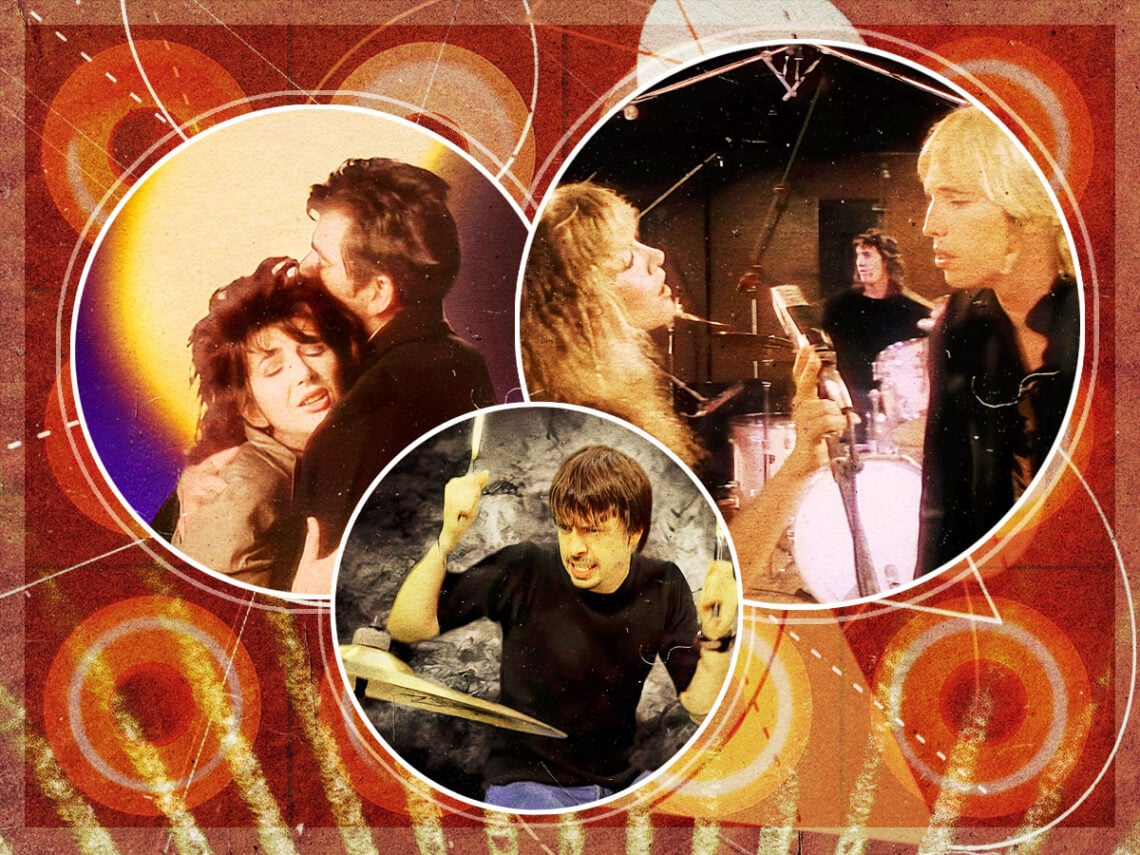
10 legendary guest musicians on famous songs

The biggest rock bands on the planet have been known to keep tight-knit units. Regardless of how many extensions are in a U2 song, usually, it comes down to all four band members creating the different textures on the final product. However acts like The Beatles and Oasis have benefited greatly from bringing in help behind the scenes.
While each act may have had more than capable people in the group to provide different instrumentation, some of the magic comes from bringing a different creative mind to the table. Instead of bouncing off the same people repeatedly, these artists can often offer insight that other musicians may not have been able to see otherwise.
Then again, occasionally, it’s just as easy to see artists do their thing in the middle of a song. Regardless of what they might be able to add that’s outside their wheelhouse, artists will always be known for their signature spark behind the instrument, and guesting on these songs was more or less an excuse to showcase why they were considered legends in the first place.
Even though certain songs may have worked just as well if performed by the band alone, a sprinkling of magic was caught within the grooves of the record when they decided to lay down another vocal track or strap on a guitar. The ‘Three Musketeers’ mentality might work in some bands, but getting fresh blood into the mix is never a bad thing.
10 iconic guest appearances on famous songs:
10. Elton John – ‘Whatever Gets You Thru the Night’ (John Lennon)
Towards the end of the 1970s, John Lennon would be one of the few Beatles without a number one hit. Although he may have written countless classics in the Fab Four, his plea for peace on ‘Imagine’ only managed to get to number three on the charts before tapering off. Although Lennon had thought that any chance of him having a chart-topper again was slim, one of his final monster hits came with the help of a piano-playing icon.
When thinking about ideas for a song, Lennon came up with the basis of ‘Whatever Gets You Thru the Night’ while channel-surfing late at night and coming across an evangelist with a similar sentiment in his sermon. Looking to spice up the arrangement, Lennon arranged for Elton John to come down to the studio, laying down the incendiary piano line and contributing an almost co-lead vocal.
This song would also become pivotal in Lennon’s history, with John betting him that the tune would go to the top of the charts and that Lennon would have to join him onstage if it reached the top. True to his word, Lennon got up onstage with John at Madison Square Garden, marking the first time he had been back to New York City after his “lost weekend” and the final time he would give any public performance.
9. Krist Novoselic – ‘I Should Have Known’ (Foo Fighters)
Any chance of Nirvana having an honest reunion didn’t seem in the cards after Kurt Cobain passed away. While Dave Grohl and Krist Novoselic eventually joined forces with Paul McCartney for the song ‘Cut Me Some Slack’, most fans knew not to get used to anything happening permanently. When making one of his most personal albums with Foo Fighters, Grohl actually managed to get the band back together one more time.
Writing about all of the struggles he went through that he should have seen coming, ‘I Should Have Known’ is drowning in sorrow reminiscent of the ‘90s rock scene. To make sure to get that swampy tone, Grohl asked Novoselic to come back into the studio to lay down a bass part for the song, which growls low in the mix of the final track.
Although Novoselic wasn’t looking to stay with the rest of the Foos for very long, his performance on the song is a reminder of why Nirvana was as heavy as they were, sounding like a feral animal that’s ready to unleash hell on the bottom of the song. Considering all of the pent-up anger in the lyrics, Novoselic could easily be quoting his own heart when playing, as if trying to make peace with how Nirvana came to an abrupt stop.
8. Kate Bush – ‘Don’t Give Up’ (Peter Gabriel)
Peter Gabriel records never tend to be ready…they just sort of come out. Compared to the usual major label attention paid to pin-up stars, the former Genesis frontman always did things on his own terms, crafting songs like alchemy as he made sure to get that one golden take. When talking about the heartbreak that comes with losing a job, though, Gabriel knew he would need a powerhouse to bring the song home.
After initially wanting Dolly Parton to sing the song, Gabriel asked Kate Bush to lend her voice to the track. While Parton’s version certainly would have been interesting to hear at the time, Bush takes control of the track from the second she starts singing, almost sounding like she’s acting in a play as she delivers the perfect lines of comfort to Gabriel’s defeatist attitude.
While the song is transparently about losing a job, Bush’s words may as well be a prescription for any type of depression, letting every listener know that things are going to be alright and to remember that there will always be a place where they belong. Gabriel may have written every word of this song, but it’s telling that he gives the song’s chorus to Bush to sing rather than himself.
7. Robert Smith – ‘All Of This’ (Blink-182)
Blink-182 was never going to be celebrated as the most intellectual band in the world. Coming from the realm of pop-punk, most of the songs that Blink spat out in their early days normally had to do with either sophomoric humour or complaining about how a punk kid couldn’t get the girl. While most of their music seemed reserved for the teen movie stripe of rock fans, their self-titled record threw everyone for a loop.
Leaving behind some of the humorous aspects of their sound, the band began toying with different styles on nearly every track, from razor-sharp punk ragers to toying with the sounds of new wave. In the midst of it all came ‘All Of This’, an achingly beautiful love song with Robert Smith leading the way.
While every band member claimed to be huge fans of The Cure, Smith owns this song, with every word shaking out of his mouth. As Tom DeLonge provides the countermelody, Smith takes the song to new heights, practically making his own Cure song with lyrics about not quite being over an old flame. Blink was progressing by leaps and bounds, but compared to their meagre attempts at love, Smith knows this kind of love song like the back of his hand.
6. John Paul Jones – ‘Nightswimming’ (R.E.M.)
There could be a whole separate instalment of this list comprised of the amount of music that John Paul Jones has contributed to rock. Before he had even gotten started with Led Zeppelin, his knack for arrangements on records by The Rolling Stones remains some of the most spellbinding pieces of their catalogue. Though ‘Jonesy’ got his fix of rock and roll in his solo career and with Them Crooked Vultures, his flair for arranging has never been more poignant than with R.E.M.
Facing their older age, Automatic for the People is one of the most reflective albums that the alternative Athens group have ever made, with Michael Stipe singing about the fleeting nature of adolescence. Although most of the band is gone except for Mike Mills’s piano, the real killing blow of the song is the arrangement by Jones with various classical instruments, from the gentle violins to the woodwinds coming in at just the right time.
From its original beginnings, Jones’ additions make it easy to hear this song as a memorial to one’s youth, cherishing past memories but knowing that they can never go back. Although the song works independently without any arrangements, Jones’s need to serve the song has always gone above and beyond what is expected of normal session players.
5. Paul Weller – ‘Champagne Supernova’ (Oasis)
There’s a good chance that no other musician is good enough for an Oasis record outside of the Gallagher brothers. From day one, their penchant for making some of the most arrogant rock and roll of the ‘90s was only matched by their egos outside the studio, claiming that the songs were good because they were the ones that wrote them. Behind the scenes, though, the Gallaghers were reverent to rock history and even gave one of their idols a spot on their magnum opus.
Regardless of how it was perceived then, What’s The Story Morning Glory would become a landmark piece of rock history, capping off with the colossal ‘Champagne Supernova’. Instead of Noel’s trademark solo runs, the solo towards the end of the song was actually contributed by Paul Weller of The Jam, having familiarised himself with the song when hearing the rough mixes.
While Weller’s solo cuts through the mix, the band recorded him alongside Noel’s lead guitar solo, which makes for a guitar duel at the end of the song as the chants of “Na-Na-Na” wash over the background. Oasis had already been heralded as one of the kings of Britpop, so why not bring in the man who practically kicked the trend off in the late ‘70s?
4. Dave Grohl – Songs for the Deaf (Queens of the Stone Age)
Bringing in a guest on a Queens of the Stone Age project almost feels like an oxymoron. When Josh Homme was first starting to put the foundation of Queens together, he had in his mind an ever-evolving lineup where he could make any kind of music with his friends. By the time he made Songs for the Deaf, his friends got a little more famous than most would realise.
After loving the first handful of Queens projects, Dave Grohl was pushing to perform on one of their projects somewhere down the line. Between a tour with Foo Fighters, Grohl played drums on the entire album, including the massive backbeat behind songs like ‘Go With the Flow’. Considering this was one of his first drum gigs since Nirvana, Grohl gets to flex his chops a lot more on songs like ‘No One Knows’ and ‘Hanging Tree’.
Then again, Grohl’s inclusion on the album would become a sore spot for the rest of the Foos, which erupted into a verbal spat between Grohl and Taylor Hawkins when he finally returned to the band. That was all under the bridge with time, though, and fans got two phenomenal Grohl performances for the price of one.
3. Stevie Ray Vaughan – ‘Let’s Dance’ (David Bowie)
David Bowie always looked at every single album as a new creative endeavour. Since he had already gone through some of the wildest right turns in rock history in the ‘70s, the ‘80s were going to be a lot different, moving into the MTV generation with ease with the video for ‘Ashes to Ashes’. With all those genres under his belt, the most unexpected move Bowie could make at the time was to go pop.
Working with disco mainstay Nile Rodgers, Bowie’s interest in dance music brought him to the song ‘Let’s Dance’, featuring some of the most outlandish chord changes in a pop song. While Rodgers had laid down the song’s backing track with different jazz chords, the solo had to be played by a hardened blues legend.
Instead of finding a studio veteran, Bowie called upon blues guitarist Stevie Ray Vaughan after seeing him play a festival, nailing down some of the most emotional guitar bends of the entire decade. While the door was open for Vaughan to join the band, he elected to stay in his own group before the release of his debut album, Texas Flood. Like the drifters before him, Bowie’s world would never be the same once Vaughan laid his licks down.
2. Stevie Nicks – ‘Insider’ (Tom Petty)
From the minute she heard his music, Stevie Nicks was smitten with the songwriting of Tom Petty. Even though she had her work cut out in Fleetwood Mac, Nicks has said time and time again that she would have much rather quit the band and joined The Heartbreakers if given the opportunity. While Nicks eventually worked with Petty’s producer Jimmy Iovine on her first solo records, ‘Insider’ began life as her first single.
Stemming from Nicks wanting Petty to write her a song, Petty contributed ‘Insider’ before growing too attached to the song. Since Nicks wanted something with a bit more tempo, Petty gave her ‘Stop Draggin My Heart Around’, with the ballad becoming one of the staples on his next album, Hard Promises.
Although Nicks would contribute backing vocals to the finished product, Iovine swore up and down at the time that ‘Insider’ was one of the best songs that Petty would ever write. It may have become a great album track after the fact, but Petty would always have a soft spot for the song that brought Nicks into the band’s life.
1. Eric Clapton – ‘While My Guitar Gently Weeps’ (The Beatles)
It’s hard to imagine any of The Beatles having any issues with each other. Regardless of who wrote which song, the band’s internal chemistry always worked wonders when bouncing off each other. Once George Harrison came to the table with ‘While My Guitar Gently Weeps’ though, the rest of the band didn’t seem to have their heart in it that much.
Considering most of the members were on their own creative pages during the making of The White Album, Harrison knew he would need something extra for his song to get the attention of John Lennon and Paul McCartney. Instead of backing down, Harrison returned to the studio the next day with his friend Eric Clapton, which helped the rest of the band behave best when crafting the song.
Aside from McCartney’s sublime backing vocals, Clapton’s solo is a tour-de-force of rock and roll grandeur, bending the life out of his guitar to make it sound like it’s crying out for help. Even though Harrison got one of his most celebrated tunes out of the deal, he could have easily been singing about the inner turmoil that was about to arrive in The Beatles’ world just a few months later.

Never Miss A Beat
The Far Out Beatles Newsletter
All the latest stories about The Beatles from the independent voice of culture.
Straight to your inbox.