


10 most underqualified musicians in rock

Every great rock band is based on having a specific balancing act between its members. When it’s all left up to one or two people to call the shots, things verge dangerously close to being a band with hired guns, and the mark of collaboration is making sure everyone pitches in. But even if artists like Lars Ulrich have left their mark on their respective acts, they aren’t necessarily the most experienced players in the world.
At the same time, musicians are always more than their technical ability. Some of the greatest artists of all time were built from those who had tried to make a name for themselves by learning on the spot, but whereas that results in something like The Velvet Underground, there are more than a few times where people have to start questioning whether or not some of the musicians behind their favourite bands actually knows how to play their instrument properly.
But there’s more to being in a band than simply playing an instrument correctly. Some of the best names in music have been able to do great work in arranging songs or seeing which tunes are most cut out to be singles, and even if they left a lot to be desired behind the fretboard, drumkit, or microphone, it was a lot more interesting hearing them try their best and provide a few stunning moments along the way.
So, if you take anything away from this list, just know that there’s more to being a rock star than playing an instrument right. It’s about everything from networking to arranging to living and breathing every aspect of the business, and even without proper technique, each of them has done their job at making these respective acts an integral part of rock and roll history.
10 most underqualified musicians in rock
Vince Neil – Mötley Crüe

No one playing hair metal in the early 1980s could claim to be the best musician in the world. These were still the years of virtuosos like Eddie Van Halen, but outside of maybe a few key players in the scene, the majority of the bands across Sunset Strip were more interested in making the greatest party song in the hopes that they would become rich and famous. Whereas Mötley Crüe could claim to be one of the originators of that sound, Vince Neil was never considered Freddie Mercury when he stepped behind the microphone.
Compared to every group member, Neil seemed more interested in pushing his voice than relying on proper vocal technique. Even if not everything he sang was in tune when he played live, that strange rasp in his voice became their calling card, whether that was ‘Shout At The Devil’ with its sinister edge or him going full-on Southern rock style on ‘Same Ol’ Situation’. This kind of singing shouldn’t work in any context, but once it was gone, things started going haywire.
Despite Mötley Crüe being one of the band’s most musical efforts in their discography, everyone thought that replacement singer John Corabi ended up ruining the band for the crime of actually being able to sing in tune. While The Crue still tear up any stadium that will have them today, it’s safe to say that most people are coming to hear the songs rather than listening to what sounds like Neil either passing a kidney stone or trying to run a marathon while he’s singing.
Screamin’ Lord Sutch

In the world of rock and roll, meeting people might as well be its own superpower. Even if someone like Rick Rubin never bothered touching an instrument when performing with different bands, his ability to work with everyone under the sun is what makes him a Swiss Army knife-style producer. And as it turns out, with Screaming Lord Sutch, some of the biggest names in music can put together an adequate album out of the worst singer in the world as well.
Even though the frontman’s attempts at blues rock and R&B are laughable, what’s even more insane is the number of guest stars he has worked with. He can barely carry a tune to save his life, but some of the guest stars on his Heavy Friends album would be any other artist’s dream, including Jimmy Page and Jeff Beck providing some guitar parts and John Bonham turning up on a few tracks. This kind of call sheet shouldn’t be possible, and yet some of the songs are musically resurrected because of the star-studded cast.
It’s far from being the most nuanced take on blues rock and roll, but it’s about as close to a bizarro-world version of Led Zeppelin as one could get, only this time, we know what it would have sounded like if Robert Plant were born tone-deaf. While it’s not looking to change rock and roll history by any stretch, it’s still a testament to the members of Zeppelin that they still managed to make someone like this sound halfway decent with the bare minimum.
Anthony Kiedis – Red Hot Chili Peppers

The entire career trajectory of Red Hot Chili Peppers has always felt like it happened by accident. Even though they have exhausted themselves to the point where they have become the musical patron saints of California, there’s still a bit of magic whenever anyone hears Flea’s bass locked in with Chad Smith’s drumming. But when Anthony Kiedis is left to his own devices, he wouldn’t have been anywhere close to the punk rock James Brown that he claimed to be back in the day.
In fact, the only reason Kiedis became a singer was as a goof. The band formed as a joke when Hillel Slovak and Flea were improvising at a club one night, and once Kiedis started reciting his poetry over everything, they were having too much fun to quit. If you look at how Kiedis developed, though, it’s a lot harder to take him seriously when only looking at his older material.
Even if he was going for a funk rock take on Run-DMC, it would take years before he could sing mellow tunes like ‘Under The Bridge’, only managing to turn himself into a frontman once John Frusciante came in and figured out where to put the melody to suit his voice. While he’s not going to win any singing competitions by any stretch of the imagination, Kiedis turning himself into a rock and roll frontman is the perfect example of a team working together to sharpen up its weakest link.
Andrew Ridgely – Wham!

Wham! was never a band destined to be one of the biggest in the world when they got the ball rolling. From the start, George Michael and Andrew Ridgely were the kind of kids who were making music for their own fun, but as soon as they started gaining traction, the venues started to get a lot bigger, almost by accident. Once people heard what Michael was capable of on Make It Big, though, Ridgely started to fade into the background after a while.
That’s not to say that Ridgely sometimes doesn’t deserve his flowers. He was the one who came up with the idea for ‘Wham Rap’ and named the song ‘Wake Me Up Before You Go-Go’, but looking back on the more mature takes on pop music that came later, it was all on Michael’s shoulders to create everything, whether that was him writing their Christmas classic ‘Last Christmas’, quoting his own heart on ‘Freedom’ or being the only member at the front of the stage at Wembley Stadium singing ‘Don’t Let The Sun Go Down On Me.’
Still, there’s something to admire about Ridgely’s attitude towards everything, normally looking to live a quiet life and never once being resentful of anything the two of them went through together. Anyone else in his position would have grown bitter at being the odd man out, but Ridgely has always seen Wham! as a part of his childhood that happened to be a bit more high-profile than everyone else’s.
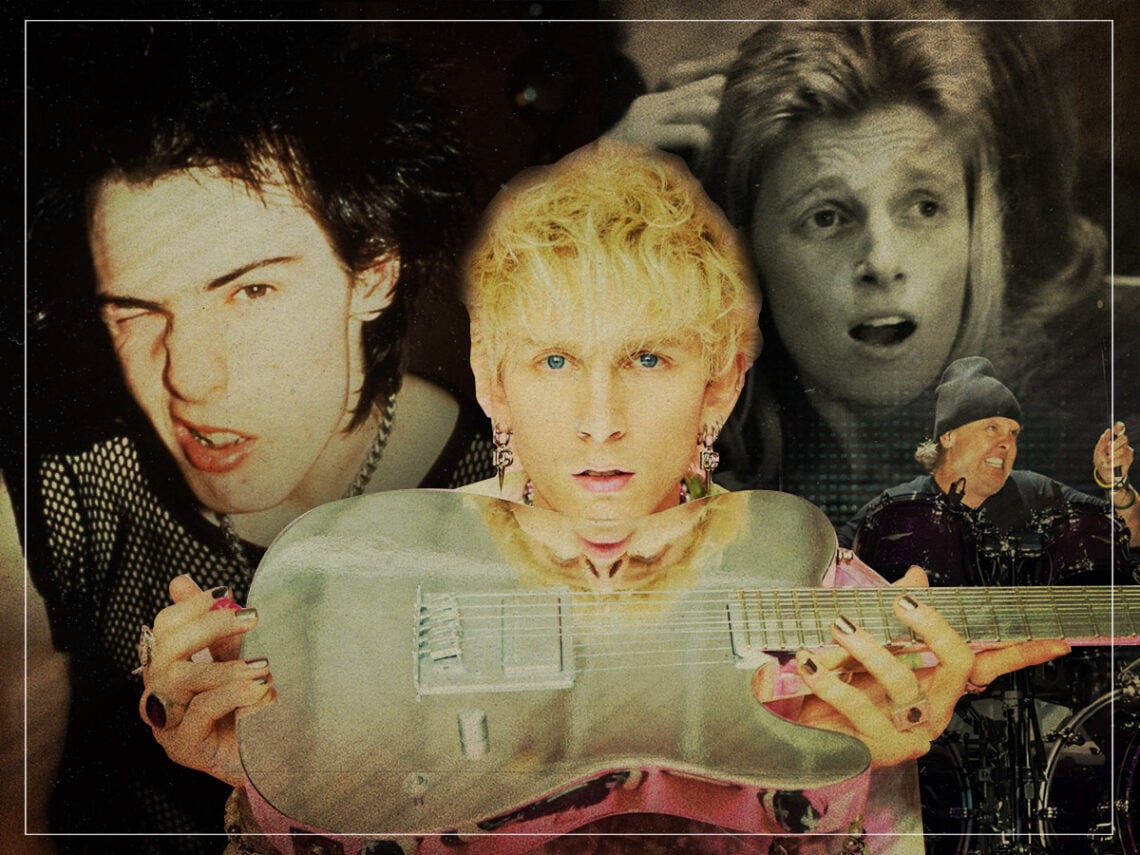
Machine Gun Kelly

In the world of rock and roll, it’s usually easy to pick out when someone is only in it for the posturing. Being able to take photos well and give interviews is the easy part, but making songs that people can relate to years after they first listen to them is a strength that even the most experienced musicians have yet to figure out. While being an earnest songwriter would be enough for most people, Machine Gun Kelly knows that it’s better to stir up as much controversy as possible and hope someone notices.
Because outside of his first major dust-up with Eminem, the rapper-turned-rocker has done everything he can to look like someone who values style over substance. From his half-hearted attempts at lovelorn lyrics to his using a guitar as a prop onstage, it’s a wonder whether most of his rock-adjacent albums should be credited to him or to Travis Barker’s impressive ability to turn virtually anything into solid gold.
That’s before getting into his extracurriculars, where he spends his spare time picking fights with other musicians, playing up his depressive angle that feels almost manipulative to younger music fans, or butchering artists who have more talent in their big toe than he has in his entire body. Given his history of controversial behaviour, I’d be willing to call him the biggest fall from grace since Kanye West, but even Yeezy had something worthwhile to look back on.
Lars Ulrich – Metallica

When it comes to the pecking order in any band, the drummer is usually the last person in line regarding importance. Despite John Bonham and Keith Moon changing the game every time they got behind the kit, the idea of someone getting paid to hit stuff for a living has always garnered drummers the ‘dumb one’ tag in any rock and roll act. But Lars Ulrich has always known exactly what he was doing; it’s just that what he was doing didn’t always include playing drums.
From the moment Metallica started, James Hetfield was always the better timekeeper in the group playing rhythm guitar, with Ulrich’s chaotic drum fills becoming too chaotic for everyone else. Even if he eventually got locked into a signature groove during the days of The Black Album, there are still moments where he plays out of time live, either missing distinct drum rolls or being so energised that he forces the rest of the group to speed up whenever they are going through something already pretty fast, like ‘Creeping Death’.
But Metallica probably wouldn’t exist today if it weren’t for Ulrich. He has been known for keeping their name alive as a brand and as a cultural juggernaut, whether that means expanding into weird areas like S&M or fighting for their right to be paid for their work during the Napster era. So while it’s easy to clown him for his drumming, the only reason why Metallica is still standing today is because of the work Ulrich put in behind the scenes.
Scott Stapp – Creed

With years of hindsight, it’s easy to look at most post-grunge as a terrible mistake. The entire world may have been suffering after Kurt Cobain tragically passed away, but once acts like Bush started to become the biggest names in music, it was hard to see everyone trying to form their own group in some strange way of playing on the world’s emotions. But out of all those acts, Creed did have some solid chops behind them, only to have it ruined by one of the worst Eddie Vedder impersonators on the planet.
Whereas a band like Stone Temple Pilots got tagged as Pearl Jam wannabes back in the day, this is the most egregious example of that signature yarl getting out of hand. Stapp may have the potential to sing a coherent melody every now and again, but hearing him warble his way through songs like ‘With Arms Wide Open’ or ‘My Sacrifice’ is like listening to the greatest rock and roll band ever that happens to have a walrus who can sing in tune at the lip of the stage.
And despite having various reunions throughout the years, it makes sense why everyone in the group eventually ditched Stapp to form Alter Bridge. Because when you put Stapp’s voice up against a powerhouse like Myles Kennedy, why the hell would anyone want to go back to hear the original version rewrite ‘Jeremy’ for the hundredth time?
Tony McCarroll – Oasis

Oasis never had aspirations of being the greatest musicians of all time. They knew they were the best band in the world because of the songs first and foremost, and no amount of Led Zeppelin-style guitar solos were going to make them any better than they were. While Noel Gallagher was already on the verge of musical history with Definitely Maybe, Tony McCarroll managed to be the one kink in the wheel that needed fixing.
Although McCarroll’s drumming was serviceable to the punky attitude of their debut, it’s pretty clear why they had to ditch him for Alan White one album later. The tracks are by no means poor, but the road to getting them was a nightmare, including the band members pointing to where he should hit the cymbals during the recording of ‘Slide Away’ or on the early versions of ‘Cigarettes and Alcohol’ where he goes out of time with Noel.
Even though it was clear that McCaroll was never going to go the distance like his bandmates, he’s still earned his place in the more innocent chapters of the band’s playbook. Because even if he wasn’t the most adept drummer back in the day, there’s a certain naivety behind the drum groove in ‘Bring It On Down’ that’s a lot more endearing that someone playing everything right on the beat.
Linda McCartney – Wings

There was no real explanation for what any of The Beatles were supposed to do after they broke up. The world had collectively begun mourning their favourite band calling it quits, and while John Lennon was off to undergo primal therapy, Paul McCartney was spending his days at home making strange recordings for his own pleasure. Once he had the courage to put a group together, bringing in his wife, Linda McCartney, has been a sticking point with some fans ever since.
On the one hand, having Linda fill out the keyboard parts and play off of Paul is still so endearing to watch in retrospect, especially when they start singing in silly voices in the background of songs on Red Rose Speedway. When left to her own devices, though, hearing tracks like ‘Cook of the House’ out of context with zero irony is more than a little bit piercing, knowing that Macca could make a track like ‘Silly Love Songs’ on the same album.
However, Linda never strove for proper vocal technique. She was there to help McCartney through the darkest days of his life, and while she may no longer be with us, her determination to stick by her other half through every facet of his career is enough to put her up for musical sainthood in some respects.
Sid Vicious – Sex Pistols

The entire punk ethos always revolved around not playing everything exactly right. That kind of playing was reserved for those prog-rock types, and the majority of bands born out of CBGBs would have gladly taken an axe to any Emerson, Lake and Palmer record than try to learn from it. But being a punk does include learning a bit of music theory, and from the looks of it, Sid Vicious had never heard of such a thing before.
Granted, it’s hard to tell what pieces of Vicious’s career were genuine incompetence and which were drug-addled. Since a lot of his most outrageous moments revolved around him being strung out on heroin or carving words into his flesh before he started playing, it’s safe to say that learning to play in time wasn’t his number-one priority, hence why Steve Jones is credited with playing everything guitar that turned on Nevermind the Bollocks.
And while Vicious’s version of ‘My Way’ has become an ironic classic in the world of punk rock, it doesn’t help the case that Vicious became more of a rock and roll martyr than a proper musician. He definitely looked the part, but outside of being the punk rock answer to James Dean, Vicious has always been a punk trying desperately to be a musician, only to be too strung out to perform anything.
