


The 10 most overqualified musicians in rock bands

In every band, there’s almost always an undisputed leader. Whether it’s the lead singer or the guitar player leading the charge, there’s always at least one musician who acts as the de facto mouthpiece of the entire group. However, every one of these musicians in acts like Fleetwood Mac and Rush did their job perhaps a bit too well.
To be overqualified for a role usually means an upcoming promotion, but if you are in a rock band, such a ladder rung doesn’t exist. So, what that means is you end up taking on the load of creativity even more than before, not that it was beyond those mentioned in our list.
Although every single one of the bands listed below has achieved success through raw talent, some people in the group pulled their weight more than others, being more highly qualified and willing to showboat their talent whenever they get the chance. For all of the radio hits that these acts might be known for, all eyes will shift towards the people onstage, either delivering some of the meanest grooves imaginable or tearing your face off on guitar while the rest of the band just chill out in the background.
These artists’ skills are always more felt than heard. Despite not having their fair share of classic riffs all the time, the parts in every one of their songs tend to be hidden in the background. Then again, those little details are what keep listeners coming back again and again.
Even with all of their talent, these musicians get different treatment than the band leaders, either being looked at as disposable or having to go the extra mile to be heard when they play live. Rock music has never solely been about being the most proficient on your instrument, but every one of these entries has done their homework when it comes to ripping your face off.
10 overqualified musicians in rock bands:
Joe Hahn – Linkin Park
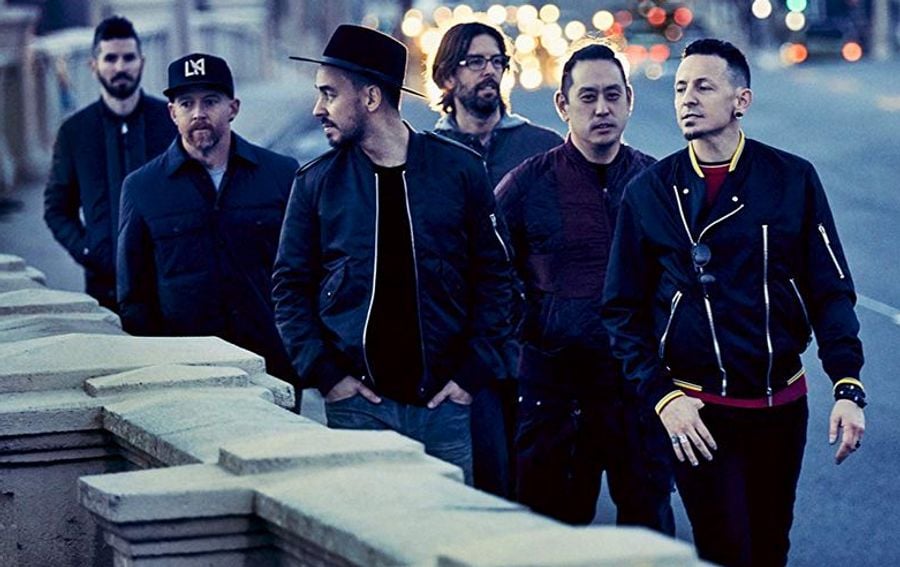
There has never been a more dated instrument in rock and roll history than the DJ position in nu-metal. If people thought that the sound of detuned guitars and singers with tortured pasts sounded a little out of touch these days, imagine what the band members labelled ‘media’ had to do once the JNCO jeans era of rock ended. It’s hard to be musical behind the soundboard, but Joe Hahn had much more going for him than scratching.
Throughout Linkin Park’s tenure, part of the reason they could innovate was because of what Hahn could bring to the table, laying down different soundscapes in the mix and making the song sound like it’s glitching on the song ‘Points of Authority’. Even when they had full-on DJ scratch tracks on their albums, songs like ‘Session’ and ‘Cure for The Itch’ are miles above what DJs should have been doing, even earning Hahn a Grammy in the early 2000s for ‘Instrumental Performance’.
As the genre started to die out, Hahn innovated even further on A Thousand Suns, bringing electronics to the forefront and having a more hands-on approach to production. Linkin Park may sound dated, but Hahn’s breaks still feel like the future of music.
Eric Carr – KISS

No member of KISS could claim to be one of the greatest musicians in the world. Though Paul Stanley and Gene Simmons had their respective moments, they got some teeth when Eric Carr came up from behind the kit.
Without dragging original drummer Peter Criss through the mud, with a jazz-influenced background and a strong sense of rhythm, he propelled the first handful of KISS records. As the band had released a series of lacklustre albums, Carr’s fascination with rising metal bands like Metallica made for some of the most forceful songs the band would ever make, with the drums on Creatures of the Night sounding like cannons going off in the background.
Then again, Carr may have been the one constant member of KISS to do the impossible by actually seeming like a good person when off the stage. Between the larger-than-life stage production, Carr was always the most down to Earth human being in the world, always revelling in his love for playing music and doing everything he could to hang out with those who loved his music. Though Carr’s life was cut tragically short when he passed from cancer in 1991, he was practically the mascot for all the goodwill this band had to offer.
Ray Toro – My Chemical Romance
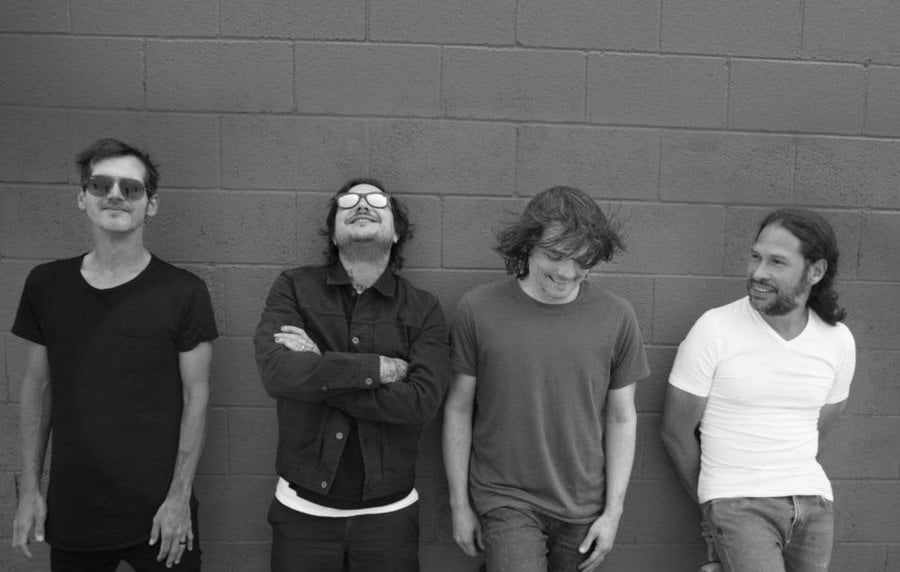
Pop-punk music isn’t a genre that lends itself well to musicians who like to shred. However, My Chemical Romance were cut from a different cloth, and Ray Toro gave the emo generation a guitar hero to aspire to be.
Although he may have been the mild-mannered kid underneath all of that curly hair, Toro was one of the fiercest guitarists on the scene, putting together solos in the same way that Brian May would when he was in Queen, layering different harmonies and approaching the guitar the same way a lead singer would. Even though there’s a definite punk edge to an album like The Black Parade, Toro put some added edge into everything, like the fantastic runs on ‘Welcome to the Black Parade’ or the playful sounds on ‘Dead!’.
MCR was always about innovating, and Toro was always up to the challenge, going from the classical guitar that opens their debut to turning ‘Na Na Na’ into any shredder’s dream, leading the charge in the breakdown by running down different scales. Frank Iero may have been the punk spirit of the band, but Toro always found other ways to incorporate a shredding guitar into any genre that would fit him.
Mike Dirnt – Green Day

The common misconception is that the bass is standard guitar playing in easy mode. The entire premise of the instrument may have seemed pretty straightforward, but imagine how much someone needs to learn when they take two strings out of the equation.
Although Dirnt’s stuck to the fundamentals in many of Green Day’s recent material, the golden age of his playing in the ‘90s made for rhythmic hooks by themselves. Billie Joe Armstong might be responsible for writing ‘Longview’ or ‘Welcome to Paradise’, but Dirnt deserves a writing credit on both songs, with the former’s driving bass riff leading the way and the breakdown in the latter pulling the listener down to the seedy underbelly of California.
Dirnt’s talents weren’t overnight successes either, with songs like ‘No One Knows’ off Kerplunk having a bass line that Paul McCartney could have easily written had he been inspired by a bit more of Rancid than Brian Wilson. Even with his basic playing these days, he occasionally lets the bass take centre stage, like the breakdown of ‘Holiday’ or the main riff in ‘Peacemaker’. Green Day’s songs can normally be figured out with just a few power chords, but Dirnt is practically a lead guitarist who picked up the wrong instrument one day.
Christine McVie – Fleetwood Mac

Half the time, the fanbase for Fleetwood Mac seemed to only focus on their romantic relationships. Even though albums like Rumours revealed three distinct songwriters operating at the height of their powers, the main draws were the fact that these songs were being used as weapons against other members of the band. While fans could cut the tension between Lindsey Buckingham and Stevie Nicks with a knife, Christine McVie was always in the back writing perfect pop tunes.
Outside of Buckingham and Nicks, McVie was the true professional, having played with the band all the way back in their bluesy days with Peter Green. From there, the group’s incarnations with Bob Welsh gave McVie the perfect person to bounce off of, always providing a soft piano accompaniment or a funky blues jam, depending on what suited the song. The most important instrument in her arsenal, though, was her voice.
Despite Nicks sounding somewhere between a spirit and a banshee, McVie’s voice was filled with the emotion of a woman far beyond her years, writing songs of heartache that made the listener weep in tender moments like ‘Songbird’ and settle for something less than bliss on ‘Little Lies’. Although the later era of Fleetwood Mac brought out the mediocre sides of every one of their members, there’s no one in the band who had a songwriting streak as perfect as McVie’s.
Les Claypool – Primus
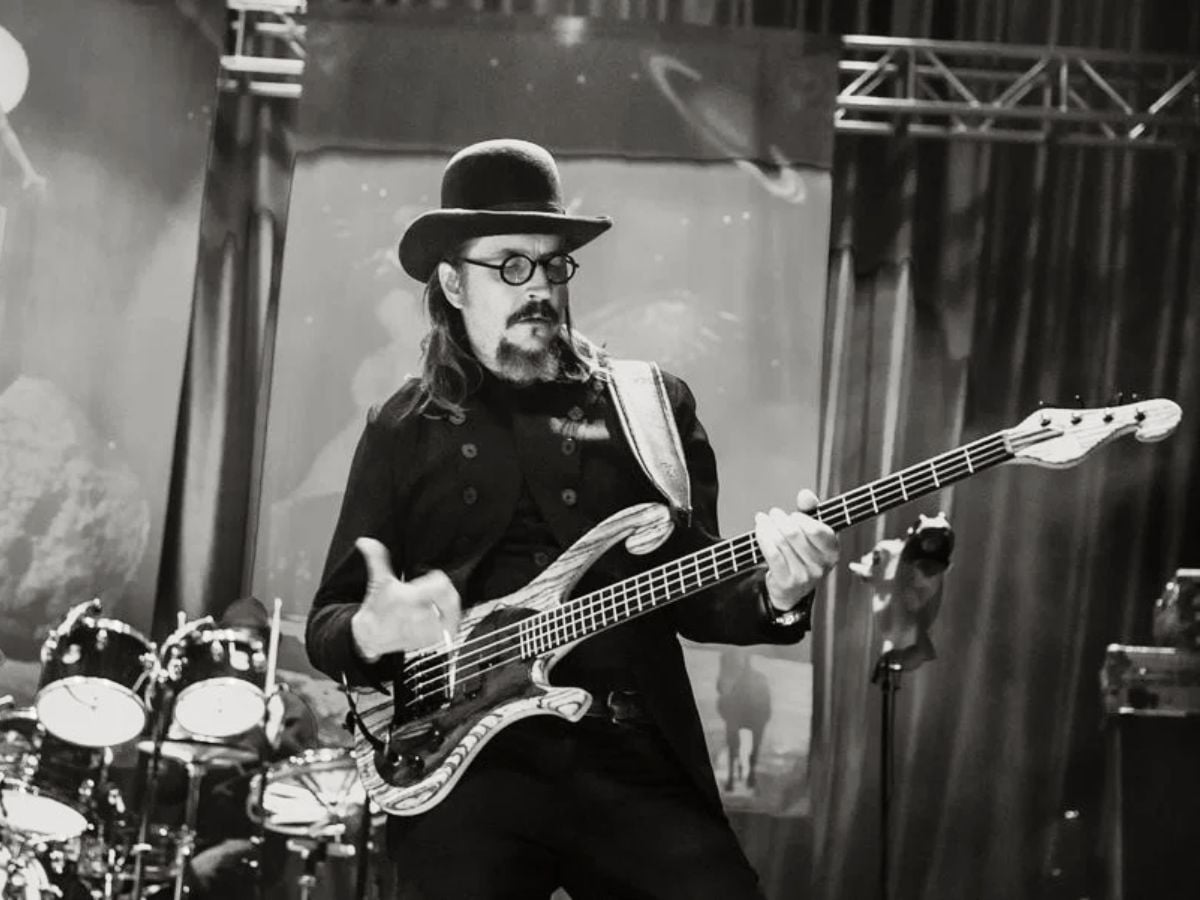
Rock always has eccentric characters. For every larger-than-life persona like Gene Simmons or David Lee Roth, just as many people reach the top of the charts for just how strange their music seems. And when talking about weird artists, Les Claypool practically picked up the torch that Frank Zappa left back in the ‘70s.
Though Primus might have one foot in metal and one foot in funk, the only accurate description for their music is wacky, provided by Claypool’s god-tier-level bass playing. Being a huge fan of progressive rock giants like Chris Squire and Geddy Lee, Claypool’s approach to the bass almost seems like a lead guitarist half the time, even going so far as to make his own interpretation of ‘Master of Puppets’ as a goof whenever they play live.
When you strip away some of the gimmicks behind his music, the low end on every one of Primus’ albums is practically a masterclass in bass playing, with Larry LeLonde just trying to keep up with him however he can, using his guitar as a way to build ambience in the song rather than try to compete with Claypool. Primus might not have had the kind of radio-friendly singles or anything like that, but they didn’t need to.
Dave Grohl – Nirvana

Growing up in Seattle, Nirvana started off as a much different outfit than what they became. Instead of radio-friendly singles like ‘Come As You Are’, Kurt Cobain’s initial vision was more of a dissonant punk outfit, with ‘Paper Cuts’ a good indicator of their original sound. However, they always needed someone behind the kit, and one day, they were sent a miracle transplant from the DC hardcore scene.
Although Cobain’s songwriting was the most valuable asset to Nirvana in the early days, Dave Grohl’s way of interpreting those songs was the glue that held every one of their classics together. Coming from the same school as every other punk rock drummer, Grohl’s intensity on every one of these songs is half the battle, having a more human feel behind the kit than what you would see out of the rest of the Seattle area.
Grohl wasn’t all about intensity from back to front, always knowing when to serve the song just right, either laying back on a song like ‘Something in the Way’ or beating the life out of his drum set on songs like ‘Territorial Pissings’ or ‘Scentless Apprentice’. Grohl might not have seen himself as a frontman while he was in Nirvana, but his drum tracks are as essential to the songwriting as anything Cobain did. ‘Smells Like Teen Spirit’ may be a masterpiece, but nothing comes alive until you hear those opening jolts from Grohl’s kit.
Cliff Burton – Metallica

Most metal bass players are more about serving the guitar player than doing anything too flashy. While you will occasionally have players that fly off the handle when they want to, metal always comes back to the riff, and bass players are more than happy to just lead the charge from behind by pumping out the same thing the guitar player is doing. Cliff Burton was always looking for something different, though, and his impact on Metallica is still felt to this day.
Not being the biggest fan of metal music, Burton had far more eclectic tastes than the rest of the band, being as indebted to everyone from Bach and Lynyrd Skynyrd as he was to The Misfits and Black Sabbath. While there’s no denying Metallica’s metal pedigree, the riffs that Burton contributed had more musicality to them, whether that meant interpreting classical pieces like the beginning of ‘Fight Fire With Fire’ or making off-the-wall hooks like the leading bass on ‘For Whom the Bell Tolls’.
His biggest asset was his knowledge of music theory, which he helped teach James Hetfield and Kirk Hammett, turning into their signature harmony sounds like the middle section of ‘Master of Puppets’ or the final charge of the song ‘Creeping Death’. Metallica may still be the elder statesman of all things metal, but it’s insane to imagine what Burton could have brought to the band had he lived past that fateful bus crash in 1986.
Travis Barker – Blink-182
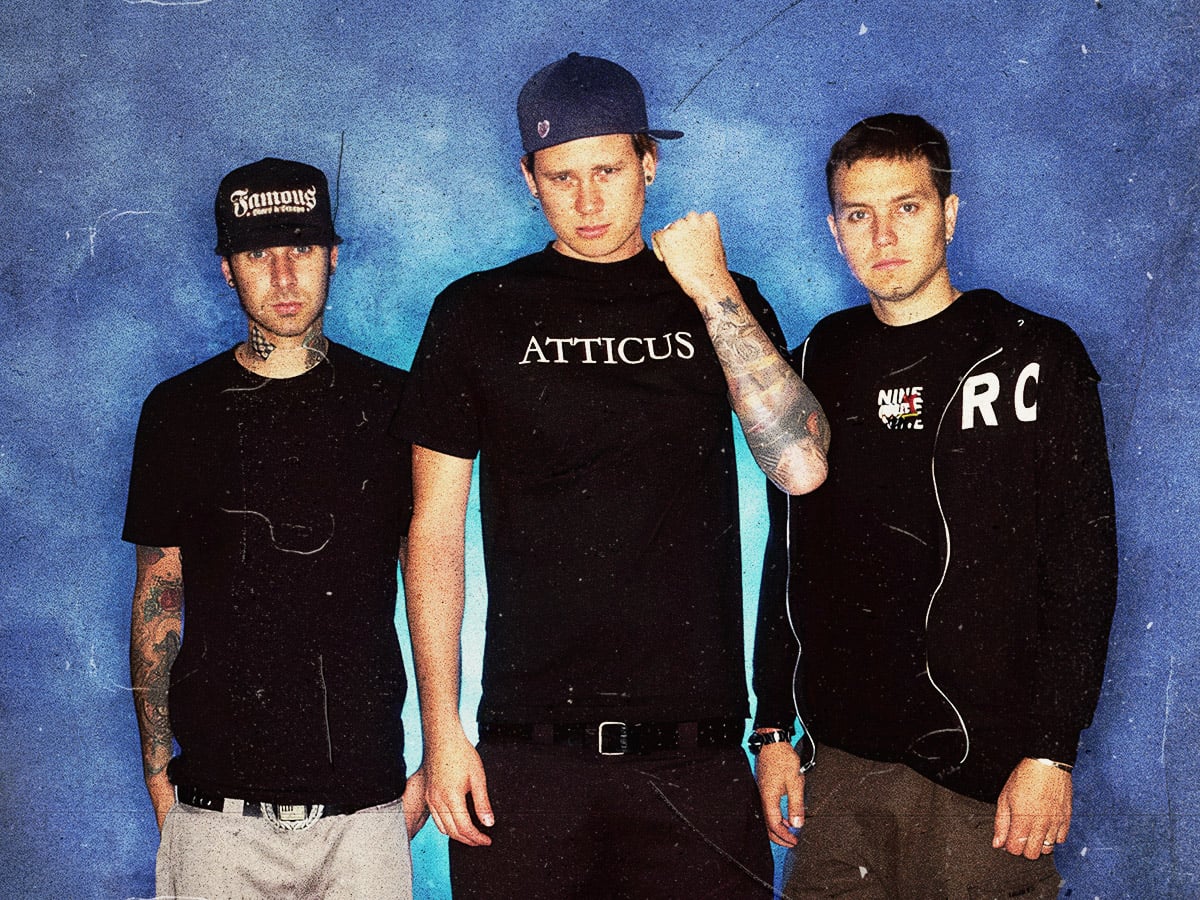
Many of the mechanics of punk rock drumming rely on stamina. Even though the Ramones may have some pretty rudimentary parts in their songs, playing along to the drums for those few minutes is practically an endurance test. Now, imagine that same intensity with a drummer who knows who can handle more complex sounds.
While Blink-182 were an adequate pop-punk band on albums like Dude Ranch, the difference in getting Travis Barker behind the kit was like night and day, bringing a ferocious energy to songs like ‘Dumpweed’. Even when playing the poppy songs in their catalogue, Barker seems to put every ounce of his being into the music, like the reckless abandon on ‘All the Small Things’ or the drum groove that kicks off ‘The Rock Show’.
It doesn’t matter what kind of kit he’s playing on, either. ‘Always’ sees Barker produce some of the most fantastic stick work that has ever turned up on a punk record, getting the most out of his percussion without even needing drums. If you look under the hood, Barker also has a hand in many of Blink’s songwriting sessions, working with the rhythm to ensure the song flows nicely. He might not be the most talkative person in rock and roll, but the real Travis is never in an interview. The real Travis appears whenever he gets on the stage and crush his drum set.
Neil Peart – Rush

The version of Rush fans know today was a much different beast going back to their debut record. Though they may have had an inherent love for bands like Yes and Genesis when they were starting, their initial first steps seemed more in line with bands like Bad Company and Led Zeppelin, influenced by blues and trying to write the next radio rock anthem. They had a lot more potential than, and the first proper Rush album started to take shape once ‘The Professor’ got behind the drum kit.
After letting go of original drummer John Rutsey for health reasons, Neil Peart’s arrival in the band gave us one of the greatest drummers the world had ever seen, having someone just as interested in the drum fills as he was with serving the song. If the band were looking for someone with Led Zeppelin intensity, Peart had enough stamina to match John Bonham, only focusing on a more prog rock approach to drumming, taking songs like ‘La Villa Strangiato’ and turning them into an endurance test for any drummer who even dares try to touch it.
His stamp on the music wasn’t just in the rhythm, penning almost every lyric for the band after he joined and bringing a more sophisticated slant to their songs, looking to focus on the nature of humanity and more intellectual topics than tales of rock and roll decadence songs. Peart may have said that he always felt like the new guy in the band, but as for his legacy, it’s safe to say that he settled into his role pretty well.
