


The 10 most confrontational rock songs

No artist can write exceptional songs without a level of emotion attached to them. Even though seasoned songwriters might pull melodies out of thin air, it doesn’t mean anything unless it stirs something in the listener’s soul once they hear it for the first time. Although some of the greatest artists have made songs that evoke love and happiness, artists like Guns N’ Roses and Pearl Jam had their teeth out when writing their signature tunes.
Although songs might start in a particular lane in the rehearsal room, it can often go haywire when the band has a target in mind. Rather than make a song that’s meant to uplift their audience, every musician had a specific agenda when putting together their masterpieces, either putting someone in their place in their personal life or lashing out at those who have done them wrong behind the scenes.
Just because someone writes a song about being wronged doesn’t make them safe from retaliation, though. For all of the bad blood that may have been spilt on record, specific musicians got severe pushback to their songs, either getting called out by fellow musicians for being preachy or getting into hot water legally.
Even though the art of diss tracks is nothing new these days, not every artist has to have one of their contemporaries in mind when lashing out in anger. While all of the subjects behind these songs may have a real name, it’s a little more complicated when they don’t have the musical chops to defend themselves.
The 10 most confrontational rock songs:
10. ‘You Oughta Know’ – Alanis Morrissette
No breakup is safe from at least a little bit of confrontation. Even though some artists might be able to take the diplomatic approach to relationships, some of the best breakup songs come with taking some sorry excuse for a partner to task for what they did wrong. And when Dave Coulier decided to call things off with Alanis Morrissette, the alternative rock queen wouldn’t go quietly.
When putting together her breakout album, Jagged Little Pill, Morrissette created a song all about her previous relationship, playing the role of the bitter ex treated like trash by Coulier. With the help of Red Hot Chili Peppers Flea and Dave Navarro, Morrissette created a song that sounded like she was at her wit’s end, especially towards the end, where she attempts to compose herself.
Even though the song does have pent-up aggression, Morrissette wanted to make her ex feel her sorrow, hoping that Coulier would know the pain that she feels whenever she scratches her nails into the back of someone else. While the world was given a great breakup song, Morrissette may have left a piece of her soul in between the grooves of the record.
9. ‘I’ll Stick Around’ – Foo Fighters
By the time Nirvana ended, it was anyone’s guess what Dave Grohl would do afterwards. Even though he was a part of one of the greatest bands of the 1990s, the shroud of Kurt Cobain’s death led to Grohl not wanting to play any music for the rest of his life. While he soldiered on with Foo Fighters a few months later, he had one target in mind when putting together his debut’s most feral tune.
While Grohl would admit that much of the band’s debut was made up of utterly gibberish lyrics, ‘I’ll Stick Around’ would be one of his most vicious attacks on Cobain’s widow, Courtney Love. After many news outlets pictured her as the mournful widow to Cobain, Grohl let out all his passive aggression for Love in song, talking about how no one else can see the rehearsed insanity that she puts on for the camera.
The song would only be the tip of the iceberg for the rift between them, though, with Grohl and Love coming to blows in the courtroom over Nirvana’s royalties before having a handful of public reconciliations. Although Grohl may have a reputation for being one of the nicest guys in the music industry, the sound of his screams on this song is a good reminder of what he can look like when you get on his bad side.
8. ‘Bulls on Parade’ – Rage Against the Machine
The entire ethos behind Rage Against the Machine was built on anger. Even though the band had their set of radical beliefs, the best way they could channel their political ideas into the real world was by making songs that catered to their problems, whether it was the injustices of the music industry or the system at large practising racist programs under the public’s noses. While Zack de la Rocha never minced his words, ‘Bulls on Parade’ is the sound of the entire band about to explore.
Featuring the kind of massive riffs that wouldn’t be out of place on a Led Zeppelin record, de la Rocha spends most of the song getting out everything that’s on his mind, from the practices of the corrupt to those who suffer at the expense of their decisions. The vocalist also talks about the injustices these practices mean for future generations, wanting to brainwash the public by only letting them believe what they see and keeping the prisons open around the world.
By the time the band gets to the end of the tune, de la Rocha is screaming the title through his teeth, wanting everyone to stand in opposition to those who feel that it’s better to conform and ask questions later. Rage didn’t have to be one of the biggest bands in the world, but by the time those final riffs came to a halt, the revolution had officially begun.
7. ‘American Idiot’ – Green Day
For a brief moment, it looked like Green Day was about to become yesterday’s news. After turning in a commercially disappointing album in their creative epic Warning, Billie Joe Armstrong was starting to lose touch with the initial sounds he helped pioneer at the beginning of the pop-punk movement. Although the plan was to release the album Cigarettes and Valentines, Armstrong got a flash of inspiration to spite the kind of news he was seeing every day.
As the Bush administration plunged the US into the Iraq War, Armstrong wrote the song ‘American Idiot’ in direct opposition to what he was seeing on television. Looking at the kind of redneck demographic that Bush was catering towards, Armstrong said that he wanted to be anything but the misinformed American, looking to tear down the kind of authoritarian method of journalism that Bush was employing throughout that period.
Once the title track was done, Armstrong knew he needed to make something that could equal it, putting together the rest of American Idiot with a detailed story about kids looking to find their way in a post-9/11 America. The US may have been tense in the mid-2000s, but Green Day was one of the few pop-punk acts willing to make a song that captured those feelings in real-time.
6. ‘Joe’ – Tom Petty
Tom Petty has gone through enough rock history to know what the industry is like. If there is any opportunity for the business to make a profit with as little effort as possible, chances are they will take that gamble by any means necessary. Once the value of music started to decrease both on the charts and in the songs themselves, Petty wrote a song about what those corrupt businessmen were really like.
Operating as the villainous voice of reason on the album The Last DJ, ‘Joe’ is Petty painting a picture of what a music executive is supposed to look like, trying to get any sorry kid with a guitar to sign their souls away. Compared to the usual rock star shenanigans, ‘Joe’ is the kind of person who is more interested in making the machine roll at any cost, with artists often prostituting themselves to make the sound of the cash register ring.
Even though Petty held firm in his beliefs, it didn’t go over very well with the record companies, with some of the radio stations around that time refusing to play the song on the air. While Petty may not have been able to make the biggest splash that he could with the song upon release, the track is a lot closer to the world that we’re living in now than many would like to admit.
5. ‘Blood’ – Pearl Jam
Pearl Jam never had the greatest relationship working with the mainstream. As much as they may have wanted to be one of the biggest bands in the world, the amount of fame coming all at once sent shockwaves through the band, with Eddie Vedder having trouble adjusting to the fame. Rather than see his art as a corporate commodity, though, Vedder channelled his anger at the suits into his next album.
Looking to get their heaviness out, most of Vs. revolved around the band making heavier music that would suit their signature style. In the middle of the tracklisting sat ‘Blood’, which features Vedder singing a song through gnashed teeth, as he brought up the various ways that his label has jerked him around looking for a successor to a song like ‘Even Flow’ or ‘Jeremy’.
Since Vedder always did what came naturally, ‘Blood’ is a good indicator of how he saw his music, looking to make songs that were more in line with how he was feeling rather than trying to satisfy some executive who couldn’t tell their usual sound from the hair metal bands that came before. The experimentation with different styles would come later, but ‘Blood’ was the first indication that Vedder would not go along with the program.
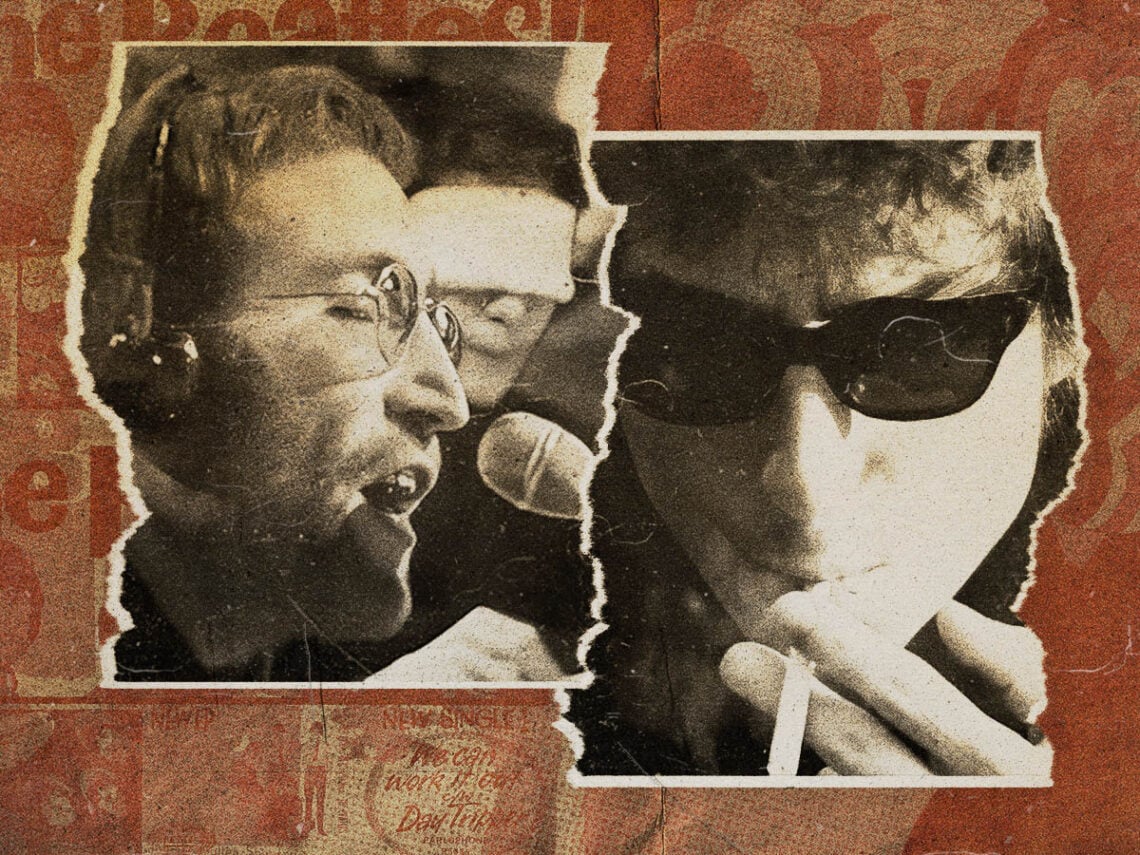
4. ‘Gimme Some Truth’ – John Lennon
Of all The Beatles, John Lennon was never one to mince words when it came to his songs. Throughout the group’s glory years, Lennon was always the one willing to push the envelope every time he stepped up to the microphone, riding the line of cynicism and compassion whenever he wrote his later material. While he tore through himself on his solo debut Plastic Ono Band, ‘Gimme Some Truth’ would be the first time that he turned his focus to the leaders of the world.
Started while The Beatles were still working on Get Back, Lennon finetuned the song to be about the corrupt politicians of the world, thinking that they could dictate what the rest of the world was supposed to think. Rather than capitalising on their claim to help the world, Lennon saw most of these politicians as pawns looking to get the public to agree with the more significant problems in the world, like The Vietnam War.
The song would eventually do its job a little too well, with Lennon being spied on by the FBI after they thought his words could sway an election if the time called for it. Even though Lennon could write various protest songs that suited his mood, ‘Gimme Some Truth’ was the beginning of him turning his self-referential songs outward towards the public.
3. ‘Get In the Ring’ – Guns N’ Roses
No artist is safe from the pen of a music critic. Even though artists might claim not to worry about what the music press has to say, there will always be those subpar reviews that get under people’s skin and make them want to rage against anyone who thinks their life’s work isn’t all that great. While most artists deal with it diplomatically, Guns N’ Roses came in with all guns blazing on ‘Get in the Ring’.
Written as part of the band’s Use Your Illusion double album experience, Axl Rose created the song to get back at every critic who tried to tear them down before. Rather than taking the snide approach by putting metaphorical language into the mix, Rose doubled down by calling out various reviewers by name throughout the song, eventually telling them to go to Hell or challenge them to a fight.
While the song is still a decent slice of hard rock, the track does get a bit over-the-top towards the end, when Rose depicts the sound of a boxing match where the band go up against the rest of their critics and pummels them to death. Even though Rose may have claimed to be the tough guy of rock and roll throughout the early 1990s, the amount of abuse in this song indicates how thin-skinned the frontman could be.
2. ‘Welcome to the Machine’ – Pink Floyd
By the end of 1973, Pink Floyd had become one of the biggest bands in the world. While most of their songs didn’t fit within the realm of the traditional rock single, tracks like ‘Time’ and ‘Money’ became some of the foundational songs of the 1970s, with Dark Side of the Moon turning into the biggest albums of the decade regardless of genre. When the band settled down to figure out what the hell happened, Roger Waters was pissed at what he had seen while in the middle of the media machine.
Making Wish You Were Here as a reflection on the loss of founding member Syd Barrett, ‘Welcome to the Machine’ is the moment where Waters warns his fans about what the lifestyle is really about. Speaking as a disembodied voice, Waters sounds like a dystopian version of a music executive, talking about planting the rock star dreams in people at birth and having everything planned down to the last detail.
Even though the rock star lifestyle may seem alluring, Waters claims it’s a lot more lonely than one would realise, taking the dreams that most people think of and moulding these musicians into the cheap version of a pinup star. While many artists still like to chase their dreams of becoming famous, ‘Welcome to the Machine’ is one of the most educational songs regarding what someone can expect going into the music industry.
1. ‘Ballad of a Thin Man’ – Bob Dylan
Bob Dylan‘s music has been picked apart from the first moment he stepped before a microphone. Even though Dylan never claimed to be the voice of a generation that everyone heralded him as, that didn’t stop fans and critics alike from constantly bombarding him with questions about his poetry, thinking that he had discovered the meaning of life through music. While Dylan would never reveal his true identity to the public, ‘Ballad of A Thin Man’ is where he started to have a go at what the media expected out of him.
Since most of the biggest media outlets wanted Dylan’s perspective on the world, the rock legend imagines himself conversing with an unknown ‘Mr Jones’, who wants nothing more than to pick him apart. Throughout the song, Dylan tears this reporter apart mentally, thinking that he is a scum of the Earth who wants nothing more than to get a good quote out of an artist before slicing their head off and destroying any kind of goodwill that they have.
Then again, Dylan ended up giving the media exactly what they wanted, with many media outlets claiming to have journalists who were actually ‘Mr Jones’. When listening to what Dylan refers to in the song, though, the version of ‘Mr Jones’ out in the wild is far from the savoury character that most would think.

Never Miss A Tale
The Far Out Bob Dylan Newsletter
All the latest stories about Bob Dylan from the independent voice of culture.
Straight to your inbox.