


10 massive albums with one fatal flaw

No album can claim to be perfect. As much as some fans put their favourite artists on a pedestal and award their records the highest accolades possible, there’s a good chance that many people can be giving their favourite acts a little too much credit some times. And while there’s no denying that certain albums by Metallica have been transcendent, there are little elephants in the room that no one wants to discuss.
Whether it be a certain song or even an instrumental performance, every one of these projects was doomed by just one thing out of place. Despite having the world at their feet a lot of the time, many of these acts ignored the finer details behind the tunes, which led to everything sounding either scattershot or downright insulting when heard as the supposed finished product.
Then again, it’s more than just one line or lyric that puts something over the edge. No, to earn a spot on this list, people had to go the extra mile, and that normally having something that makes you question what they were thinking every time a song comes on or wince in pain as they keep bashing the idea into our brains.
There’s nothing wrong with trying to experiment with something new, but a lot of the most flawed albums in history did set out to be the greatest thing since sliced bread and fell flat on their faces regardless. It’s one thing to make something everyone can be proud of, but sometimes when reaching for the stars, there are little details that get lost along the way.
10 albums with one fatal flaw
10. Traveling Wilburys Vol. III – Traveling Wilburys
There’s already a ton of expectations that come with anything by The Traveling Wilburys. No one just stumble upon a supergroup of this calibre by accident, and when the stars aligned to have them all work together on a project together, the fact that it contained some of the breeziest middle-aged rock and roll was almost expected. Despite Roy Orbison’s tragic passing, it still looked like they could salvage enough material for a follow-up, but did Bob Dylan really need to take his place in front of the microphone?
Make no mistake, there are a ton of strengths to Dylan’s work, and what he contributed to the group’s first album resulted in the strongest tunes like ‘Tweeter and the Monkey Man’. When he’s left to his own devices singing, though, it feels like the greatest backup singers in the world are being asked to harmonise with him on tracks like ‘New Blue Moon’.
Since the group’s heart wasn’t really in this project, to begin with, though, a handful of decent rockers like ‘Inside Out’ and ‘Wilbury Twist’ at least make the record a decent look into the last few moments of the Wilburys’ golden age. Still, if there are people like George Harrison and Jeff Lynne sitting right beside you, why the hell would you pick Dylan to be the one to try on his best frontman impression?
9. Sonic Highways – Foo Fighters
The golden rule of Foo Fighters is never repeating the same idea twice. Ever since the 2000s, none of Dave Grohl’s grand visions has sounded alike, and even when they moved into their recent arena rock phase, hearing them get raw on But Here We Are was one of the most moving performances given by a mainstream rock act in recent memory. But while Sonic Highways is a great idea, the very definition of the album meant that it was going to be a bit of a mess.
To be fair, it’s not like it didn’t have merit. Going to different iconic studios around the US and making a story out of every city’s approach to music sounds like a great idea, but there isn’t nearly enough of each city’s trademark sound to go around. Despite having a fantastic guitar break from Zac Brown, ‘Congregation’ could have fit on any other Foo Fighters album and doesn’t really have the same authenticity that comes from recording in Nashville.
While the bombastic production and execution make this somewhat of the definitive Foo Fighters record, it does get kneecapped by the fact that they didn’t go whole hog on the premise they were given. All of the pieces were there to go from a country song to a hardcore punk tune to an art-rock masterpiece, but outside of a handful of decent tunes, all of it falls into this weird dead zone of Foo Fighters-lite.
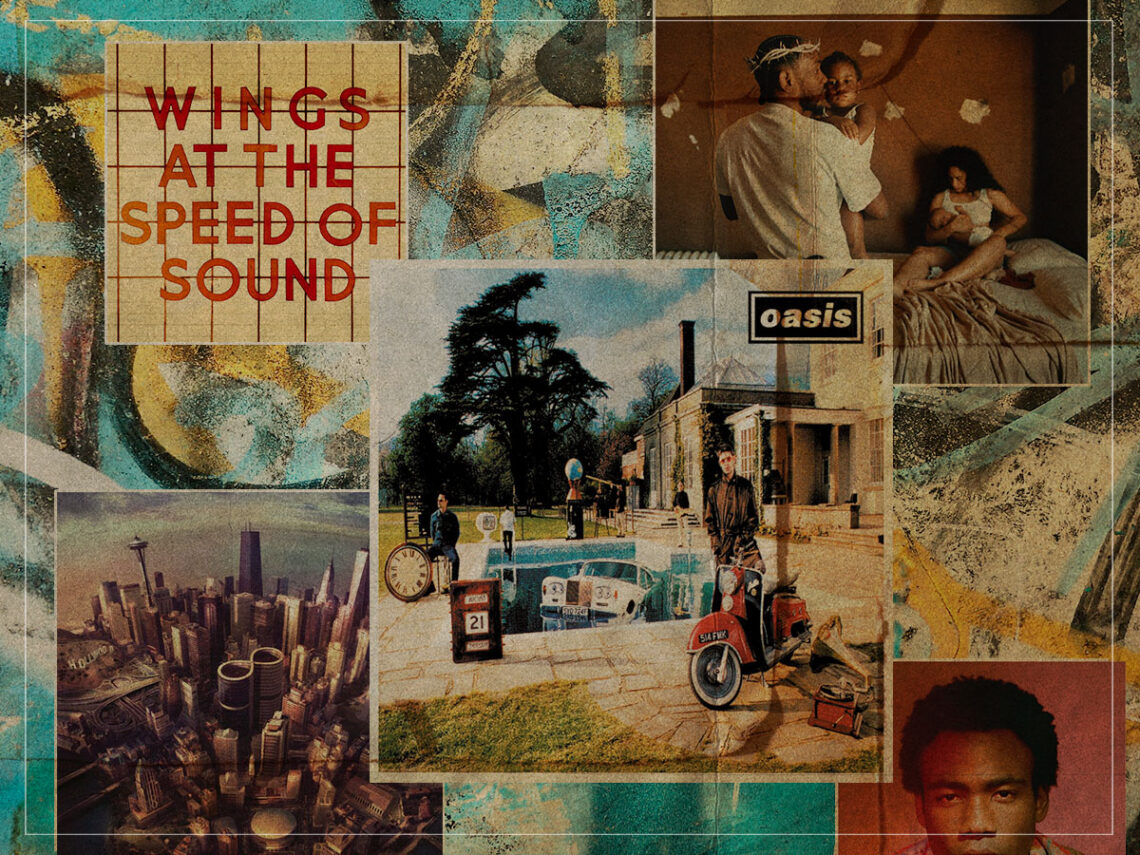
8. Wings at the Speed of Sound – Paul McCartney
After 1973, it looked like Paul McCartney had finally outrun the critics, who said he had tarnished his name since The Beatles. No one could argue with the strength of Band on the Run, and while Venus and Mars didn’t have the same bulletproof hooks, the arena-rock flair made every one of its tunes impossible to ignore if you tried. Now that they established themselves, Macca knew it was time to stretch, and Wings at the Speed of Sound is the moment where you’d have to wonder if he pulled something.
Because, for all of the flashiness that comes with having a literal Beatle in any band, McCartney’s choice to bestow vocal and songwriting duties to every member is a bit of a misstep. Sure, there are still the McCartney favourites like the rocking ‘Beware My Love’ and the pop staple ‘Silly Love Songs’, but Denny Laine’s ‘The Note You Never Wrote’ and Jimmy McCullough’s ‘Wino Junko’ are a bit too mellow to get themselves out of the lame 1970s era of rock.
And when it’s not being boring, the downer moments include songs like ‘Cook of The House’, which is where many would have had to wonder why Linda wanted to get out front so much with a borderline-novelty tune. Every member of Wings made them what they were, but if you have the closest thing to pop-rock Beethoven in a band, why were they going to demote him to backup singer on a few tracks?
7. Mr Morale and the Big Steppers – Kendrick Lamar
For the last years of the 2010s, hip-hop fans all over the world were left in stunned silence, wondering where the hell Kendrick Lamar was. He had sculpted some of the greatest albums of the modern age, and yet, for the last few years, when we seemed to need him the most, he left the limelight to work on himself. A worthy goal, to be sure, but when Mr Morale and the Big Steppers dropped, it was the classic that everyone heralded it to be, with the exception of Kodak Black thrown into the mix.
While it’s hard to deny that Lamar lays into himself on this record and details his struggles to recover from years of abuse, the idea of having a legal abuser on the project did turn a few heads. ‘Mother I Sober’ has one of the biggest gut punches of Lamar’s career in tow, but did we really have to sit through some kid with a record of sexual assault towards women to make that point?
Elsewhere on the album, Lamar says that he sees a bit of himself in Kodak, but there may have been a better way to interpolate him into the album than giving him a prime spot. Because even if he doesn’t agree with anything he says, chances are there’s a lot of money going into his pocket for every copy that this record sold.
6. Artpop – Lady Gaga
From day one, Lady Gaga never claimed to have a set pattern for any of her releases. Most people just knew that they would be getting some of the most extravagant pieces of artistic pop music that they had ever heard, and given the fact that she framed herself as a motorcycle in Born This Way, it wasn’t like she was being subtle about it, either. Whereas pop music was seen as disposable, Gaga knew that it could be used as art, but Artpop feels more like a half-formed idea than a proper change of scenery.
Compared to the glittery music that Gaga had been used to, seeing her songs fed through a bunch of different production filters makes them feel neutered. Although there are pieces of tunes that sound like they are close to finished, it’s hard to even make them out over the more pretentious sides of the record.
And when Gaga tries to strip back everything and get more authentic, the decision to include R Kelly in a song all about him doing what he wants with someone’s body is still one of the most uncomfortable decisions made on the pop charts. Artpop set out to reinvent what most people think of when they hear about an album rollout, but when looking at her recent activity on projects like Chromatica, one can’t help but think that her latest era was what she was trying to do in 2014 but done properly.
5. A Different Kind of Truth – Van Halen
By the end of the 1990s, Van Halen seriously needed a break. Van Halen III had bitten the dirt unlike anything that the group had done before, and even when they got back together with Sammy Hagar for a tour, it was clear that Eddie was not taking care of himself and needed some time away to recuperate. Not many people expected him to make a full recovery with David Lee Roth in the meantime, though, and when we got that one last album, we got 60% of the way there to a Van Halen classic.
Because, in theory, the concept behind the record is bulletproof. After all, a lot of the licks that turn up on the album were leftover guitar tracks that never got fully fleshed out, so getting to hear them would be like hearing a Van Halen album lost in the archives. That’s before you get to Roth’s voice, which has gone through a lot of problems since his glory years. He manages to make the album sound a bit squawky from time to time.
But it’s hard to really hold that against him, either. Roth was trying his best, but no one that is close to senior citizenship should expect the same things that they did in their 20s, and this is firm proof of why he needed to reinvent his style. Still, if it was good enough for Eddie to be happy with towards the end of his life, that was more than enough.
4. And Justice For All – Metallica
By the end of the 1980s, Metallica had become more than just another metal band. No, this was finely cut steel by comparison to other metal acts, and since every other band on MTV was about how much product was in their hair, hearing the thrash legends bash away on their instruments for minutes left most people stunned by how a human being could even play for that long. And Justice For All may have put a firm stamp on that decade of metal, but did we really have to delete the bottom end out of spite?
Granted, there’s hardly anything wrong with the actual songs on Metallica’s fourth outing. If anything, it’s probably their most accomplished record from an instrumental standpoint, but since Jason Newsted was the new kid in town after Cliff Burton’s sudden death, their decision to drop him down so far in the mix left most of the tunes sounding like they’re taking place at the bottom of a well.
That does mean that the tone on the guitars sounds absolutely massive, but if this is what ‘Blackened’ sounds like in its finished form, it’s a crime that we didn’t get to hear the beefed-up version of the tune. All the pieces were there to make a great album, but the end result meant that Lars Ulrich, in his infinite wisdom, figured that everything would sound way better if it had a demo-level quality of sound.
3. Say You Will – Fleetwood Mac
The number-one rule when recording any Fleetwood Mac project is to not rock the boat. The lengthy process of making Rumours was bound to be horrible, with everyone’s egos and relationships falling apart, so everyone was usually on their best behaviour when trying to get Lindsey Buckingham and Stevie Nicks into a room together. While The Dance proved they still had it, Say You Will gave them the songs to back it up. It’s just a shame that it wasn’t two separate albums.
Rather than just take the best songs, their comeback record has way too many tunes holding it back to be considered a true classic. There are still some spellbinding moments like ‘Bleed To Love Her’, but the more you listen to it, the more it starts to feel like a Stevie Nicks and a Lindsey Buckingham album forced into one coherent whole than it does its own fleshed-out project.
And now that Christine McVie is no longer with them, chances are it’s going to be the final project that they will ever release. Still a solid way to finish, but if not causing drama means putting a few more songs on the record, then it might be better to just scrap the concept and flesh them out over a few years.
2. Because the Internet – Childish Gambino
Donald Glover has never taken the easy route regarding his music. From his first handful of EPs all the way to his recent work, Childish Gambino had always felt like an expanding idea that only occasionally had a few regular album tracks sprinkled into the mix. And while the upcoming movie around Bando Stone and the New World is shaping up to be a trip, one can’t help but think of the first time something like this happened on Because the Internet.
Picking up right where his debut Camp left off, the whole album was meant to be the soundtrack to a massive storyline surrounding someone called ‘The Boy’ as he tries to figure out who he will become later in life. The entire storyline sounded like it was shaping up to be a massive undertaking, but since no concrete film was made, all that we were left with was the screenplay, which feels more like a series of moments than something with a distinct start and end.
Then again, the ending of the album is entitled ‘Life: The Biggest Troll’, so I almost want to give the lack of closure kudos in a strange way. When it’s an album, Because the Internet is fine for what it is, but when an artist promises so much more to be gleaned from a project, it does tend to feel like a letdown when nothing happens.
1. Be Here Now – Oasis
By the time Oasis got around to making Be Here Now, the hype surrounding them had skyrocketed higher than any group in the world. Despite their smart-ass comments in interviews and their claim to become a big enough group to rival The Beatles, it looked like the Gallagher Brothers were actually going to deliver on that promise or that third album. The press and the public at large reacted to it with monstrous praise, but it’s not like the record doesn’t have its fair share of flaws.
Regardless of the material enclosed, the runtime is far too much for a standard Oasis project. The beauty behind some of their longer songs back in the day was how hypnotic they could feel, but when stretching out weak songs like ‘Magic Pie’ to ‘Hey Jude’-levels of grandeur, all it did was point out how flimsy a lot of the hooks were, which gets especially annoying when the production doesn’t do tracks like ‘It’s Getting Better (Man!!)’ any favours.
Be Here Now is still up there with some of the most monumental releases to come out of the 1990s, but there tend to be a few cracks that even Noel acknowledges were rubbish looking back. There are still legions of fans who got on board with an album like this because of how excessive it was, but once people start taking a step back and looking at how history treated it, it’s fair to say that this is probably the closest Britpop has to a Star Wars prequels. It’s far from the trainwreck that people say, but not nearly good enough to put next to the classics, either.
