


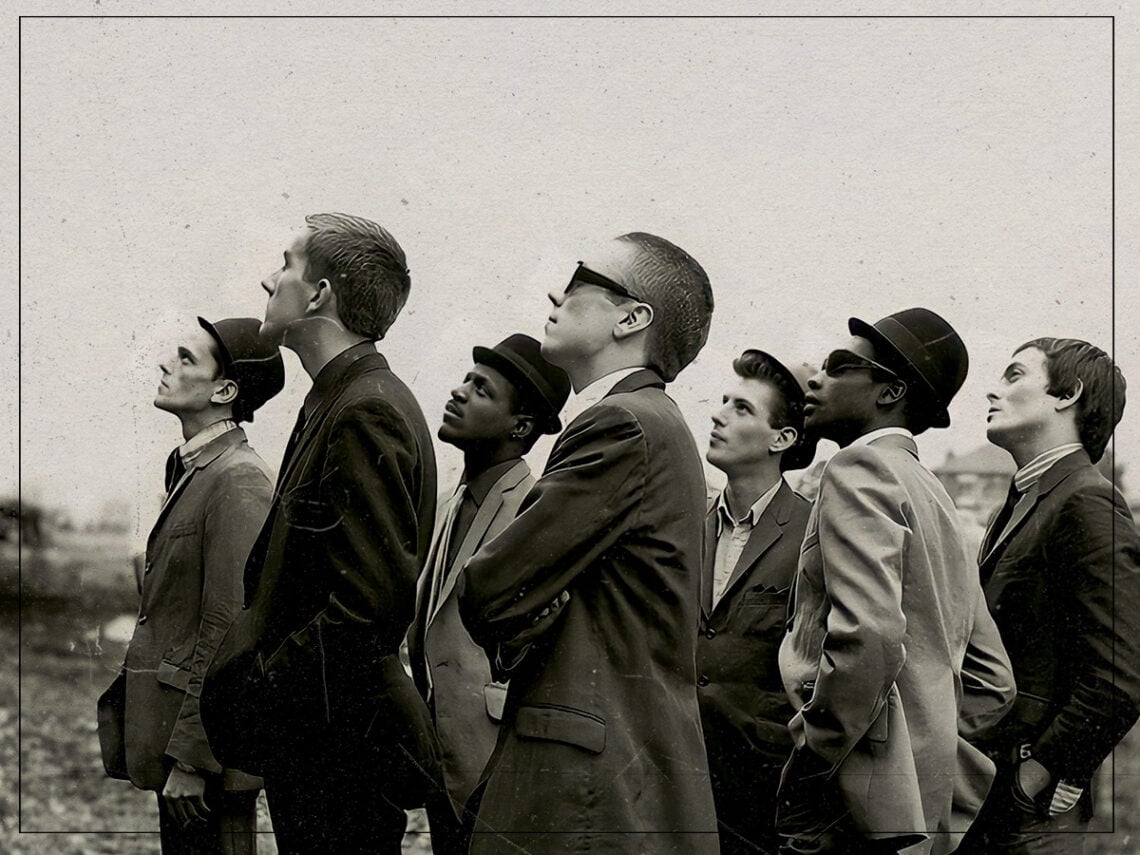
‘This Town’: The 10 greatest songs by The Specials

Coventry, 1979, was a city in decline. Decimated during World War II and struggling to rebuild, the city’s only glimmer of hope came in the form of its automotive industry, but that also meant that, for entire generations of young people, their only prospects entailed working long hours in a factory for little pay. What’s more, the sudden influx of immigrants, particularly from the Caribbean, had exposed the racist underbelly of British society, and far-right hate groups immediately sought to capitalise on those prejudices.
In other words, Britain in the 1970s was an endlessly depressing place to exist, particularly for working-class people living in cities like Coventry. In the wake of the punk rock revolution, however, increasing numbers of young people were turning to music to express their disillusion with society. A young group in the Midlands, The Coventry Automatics, were reflecting the realities of life in their city, blending punk rock with the influence of ska and rocksteady, which had been introduced to the nation by the Windrush generation, who came over from the Caribbean to help rebuild the nation post-war.
Before too long, The Automatics renamed themselves The Specials, and leader Jerry Dammers quickly set about orchestrating a cultural revolution. Built upon the idea of blending white working-class culture with Jamaican music and style, The Specials (and their own independent label, 2-Tone) presented black and white musicians onstage together for the first time in Britain. Within their music, they spoke openly about issues of racism, teen pregnancy, the National Front, knife crime, and so much more.
Tirelessly supportive of causes like Rock Against Racism, The Specials were key in deterring many young people from being corrupted by the far-right, uniting young people of all different backgrounds and races through a shared love of great music. As they progressed, the band took on a much more diverse range of influences, moving towards muzak with their sophomore record before going their separate ways after the release of ‘Ghost Town’ in 1981.
Although the band only lasted around three years together, their impact was colossal. Even today, many of their songs and lyrics remain incredibly relevant to modern-day society. So, join us as we look at some of the band’s greatest efforts. Many of their popular tracks were covers of old-school ska songs, updating them for punk audiences, but here we have focused largely on their original compositons.
The 10 best songs by The Specials
‘Do Nothing’ (1980)
The Specials first found an audience for their high-energy, largely optimistic anthems, which appealed to the blossoming ska and mod revival movement. As they developed, however, the band found that their energetic mix of punk and ska could not always reflect the turbulence and depression of society during the early years of Margaret Thatcher’s government. Penned by Lynval Golding, the 1980 single ‘Do Nothing’ sees the band move away from their early sound in favour of something more expansive and often downbeat.
After all, being young in Thatcher’s Britain was no picnic. The feeling that “Nothing ever changes” was unavoidable, and many people could relate to the idea of “living in a life without meaning”. Couple that with the single’s B-side, a pointed cover of Bob Dylan’s ‘Maggie’s Farm’ aimed directly at Margaret Thatcher, and the single became a definitive anthem against the Tory government, capturing the perceived futility of life under Thatcher’s regime.
‘Why?’ (1981)
Racism was rife in society throughout the 1970s and 1980s, both institutionally and within everyday society. One of the predominant aims of The Specials was to deter young people away from being corrupted by these racist attitudes, presenting black and white musicians on the same stages and discussing issues of prejudice and discrimination throughout their discography. 1981’s ‘Why?’, featured on the B-side of ‘Ghost Town’ is without a doubt their most harrowing exploration of racism.
Written by guitarist Lynval Golding after he was hospitalised in a racially motivated attack in London, ‘Why?’ pleads for racial tolerance and an end to the violence which permeated through society. “I have fought all my life, battled all my life to say my life matters,” Golding said in a 2020 interview, exploring the continued relevance of anti-racist activism in the present day. Months after the release of ‘Why?’, Golding had his neck slashed in another racist attack, reflecting the importance of this song and its message.
‘Concrete Jungle’ (1979)
Borrowing its title from the opening track of Bob Marley’s Catch A Fire, ‘Concrete Jungle’ is one of the few Specials tracks written by lead guitarist Roddy ‘Radiation’ Byers, who said, “You write about what you know” when asked about it in the 1980 film Rudies Come Back. The song, which also features Byers on vocal duties, is an account of walking home in the dark in Coventry and the various dangers incurred along the way.
Its frank account of the dangers facing young people on a daily basis and how those fears are – wrongly – dealt with (“I have to carry a knife because there’s people threatening my life”) still rings true today, decades later. ‘Concrete Jungle’ also sees the band lament the National Front in its lyrics. The far-right hate group managed to infiltrate the skinhead subculture during the 1970s, and its racist output was corrupting many young people. Not only was ‘Concrete Jungle’ a reflection of the ugly side of life in Coventry, it let listeners know that the NF was not the answer to their problems.
‘Friday Night, Saturday Morning’ (1981)
It is well-documented that the 2-Tone tours were essentially month-long parties which saw The Specials and their peers travel all over the globe preaching the gospel of ska. However, the band never lost their ability to relate to their audience or forgot their roots in Coventry. ‘Friday Night, Saturday Morning’ is among the most honest and accurate portrayals of a British night out that has ever been put to tape. A somewhat depressing track, ‘Friday Night’, also reflects the band’s innate sense of humour, which endeared them to fans (“Wish I had lipstick on my shirt, instead of piss stains on my shoes”).
Released as the B-side to ‘Ghost Town’, along with ‘Why?’, the song was largely overshadowed by its flip-side upon initial release. In the decades since, however, ‘Friday Night, Saturday Morning’ has become a firm fan-favourite for its social realism and sense of humour.
‘Nite Klub’ (1979)
If ‘Friday Night, Saturday Morning’ is a true reflection of a night on the town for most ordinary people, then ‘Nite Klub’ represents the excitement and energy of the idea of a night out. Inspired by nights at Tiffany’s ballroom in Coventry (now the home of Coventry Central Library), the song was initially released as the B-side to the Dandy Livingstone-inspired ‘A Message to You Rudy’, but soon became one of The Specials’ defining anthems.
The excitement and energy within this offering capture the universal appeal of The Specials during their early period; it was an adrenaline-fueled musical revolution. What’s more, audiences found that they could relate to these frank tales of nightclub antics (“I won’t dance in a club like this, ‘cos all the girls are slags, and the beer tastes just like piss”) much more than they could to anything climbing up the singles chart at the time.
‘Rat Race’ (1980)<br>
The Specials were expertly trained in taking important, often divisive social topics and channelling them into catchy pop songs. ‘Rat Race’ is a prime example, lamenting the unavoidable class divide within Britain and, in particular, its education system. Throughout the song, Terry Hall attacks the population of rich, upper-middle-class kids, treating university as a holiday before going to work in high-paying jobs handed to them by their fathers. The Specials represented the underprivileged and disenfranchised, who could work hard for years and still end up in a low-paying, dead-end job.
Jerry Dammers reportedly based the song on ‘Me Wan’ Fi Go Rave’, a poem by the political activist and social commentator Linton Kwesi Johnson. However, the band managed to add their own unique influence to the work and exemplified the musical progression from their first album to its follow-up – though this single was only included on US copies of More Specials.
‘Too Much Too Young (Live)’ (1980)
By 1980, The Specials had amassed a colossal audience that stretched to the globe’s furthest corners. Realising their influence over Britain’s younger generation, the band sought to speak directly to these kids, offering them the kind of guidance and advice that teachers and parents would never give. Based on ‘Birth Control’ by Lloyd Charmers, ‘Too Much Too Young’ is a plea for young people to take joy in their youth and not to throw it all away by contributing to the ever-growing issue of teen pregnancy (“Keep a generation gap, try wearing a cap”).
This radical endorsement of contraception was first issued on the band’s 1979 debut album as a slow, somewhat sombre effort. However, the most prominent version of the song was recorded live at The Lyceum in London and released as a live EP in 1980. This faster, more anarchic version of the recording reflected the youthful energy at the heart of the song’s message and achieved The Specials their first number-one single.
‘Gangsters’ (1979)
This was the song that started it all. Recorded in January 1979 and released a few short months later, ‘Gangsters’ exploded onto the scene, introducing listeners across the nation to the black-and-white revolution occurring in the Midlands. Loosely based on ‘Al Capone’ by ska pioneer Prince Buster, the single represented the apogee of The Specials’ blend of punk spirit with old-school Caribbean rhythms. No matter how many times you hear it, the monotone vocals of Terry Hall still capture a sense of excitement not afforded to many songs.
‘Gangsters’ is also notable for its instrumental B-side, ‘The Selecter’ by Neol Davies. It was this unexpected effort that inspired the formation of the Pauline Black-fronted 2-Tone group The Selecter, spawning an entirely new angle of the 2-Tone revolution. The 1979 single certainly has a lot to answer for, but it has never lost its appeal in the nearly 50 years since its initial release.
‘International Jet Set’ (1980)
Two distinct eras are present within The Specials’ relatively short reign over British music. Their first album had captured the youthful punk spirit of the late 1970s, but Dammers’ group were moving towards something much more expansive and profound on More Specials. The muzak-focused ‘International Jet Set’ is perhaps the best example of this changing sound, seeing the band adopt haunting keys and Terry Hall’s typically monotone vocals becoming even more sinister.
Of course, the influence of ska and reggae is still overt within the 1980 track, but it is worlds apart from their early work. “‘International Jet Set’ is obviously not a rude boy crowd pleaser, but there again, it wasn’t supposed to be,” bassist Horace Panter once pondered. Perhaps as a result of this, the song’s lyrics are much more abstract than something like ‘Too Much Too Young’, which alienated certain sects of the band’s fan base. Either way, the song reflected the inventive spirit of the band and, aside from anything else, that bassline is to die for.
‘Ghost Town’ (1981)
What else could have occupied the top spot? The Specials’ 1981 single might have torn the group apart, with its muzak influences and distorted brass proving too much for some members to handle, but it was undoubtedly their magnum opus. Perfectly encapsulating the devastating, desolate reality of Thatcher’s Britain and the desertion of The Specials’ beloved Coventry, the track quickly became a definitive anthem of the 1980s. Even without the band’s groundbreaking reflection of society at the time, the music encased on this single reflects the inventive nature of the band’s offering, largely driven by the mind of Jerry Dammers.
Not content with continuing on in the ska-focused sound of their first album, Dammers sought to diversify the output of the group. These sonic changes weren’t popular with some of the band’s members or many of their fans. Still, this innovative spirit helped to set The Specials apart from every other group on 2 Tone and virtually every other mainstream group in 1980s Britain.
Following the release of ‘Ghost Town’, The Specials imploded. Some of the band stayed on, morphing into The Special AKA, while Terry Hall, Neville Staple and Lynval Golding splintered off to form the Fun Boy Three. ‘Ghost Town’ marked the end of the 2 Tone era, but it left with a truly revolutionary bang.
