


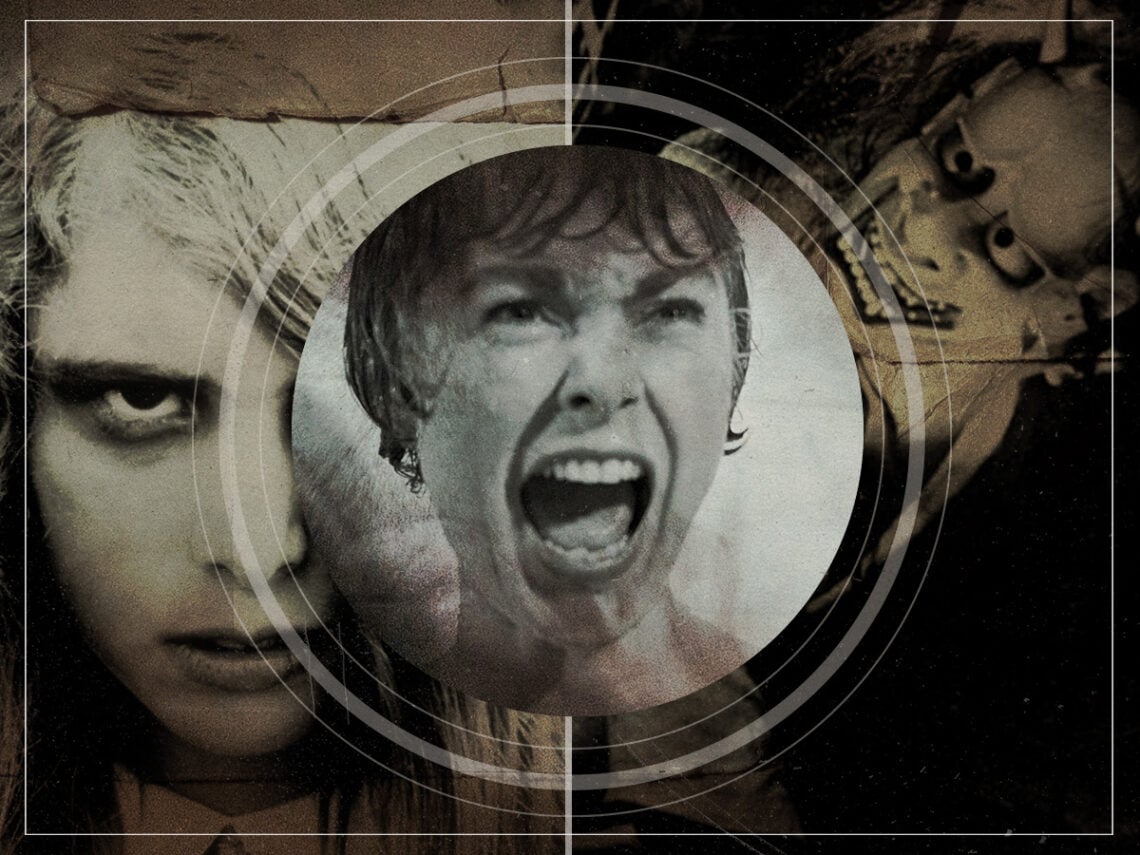
The 10 greatest horror movies from the 1960s

When horror fans discuss the best decade for the genre, the 1970s and 1980s are frequently mentioned due to their fostering of classics like The Texas Chainsaw Massacre, Halloween and Friday the 13th. However, these movies wouldn’t have been possible without the influence of horror films from the 1960s.
During the early days of cinema, horror began to flourish, but when Hollywood censorship prevented filmmakers from depicting explicit violence or anything remotely, the genre’s progression slowed down. As a result, many of the greatest horror movies made during this transitional period, when censorship was in the process of being eased but still active, were independently or foreign-made.
There were many developments during the decade, like the increase of explicit violence on screen, as demonstrated by Psycho, which was a watershed moment for horror. Italian filmmakers like Mario Bava helped spearhead this increase in gruesome and visceral imagery, while indie filmmakers like George A. Romero introduced zombies to the genre.
So, from Georges Franju’s Eyes Without a Face to Kaneto Shindō’s Onibaba, here are ten of the greatest horror movies from the 1960s.
The 10 best 1960s horror movies:
Psycho (Alfred Hitchcock, 1960)
Horror changed forever when Alfred Hitchcock, the Master of Suspense, released Psycho in 1960. Kicking off one of horror’s most influential decades, Psycho shocked viewers with its frank depiction of violence and sexuality, presenting these themes explicitly (although tame for today’s standards). People were thoroughly confused when the lead character, Janet Leigh’s Marion Crane, was murdered, leaving the rest of the plot at stake.
Made on a considerably lower budget due to Paramount’s lack of interest in the project, Hitchcock was forced to shoot in black-and-white, but this allowed more blood to be shown. With an iconic soundtrack and incredible performances, particularly from Anthony Perkins, Psycho is one of cinema’s most vital horror movies.
Peeping Tom (Michael Powell, 1960)
1960 was a big year for horror, with Peeping Tom joining titles like Psycho and Black Sunday to become some of the most era-defining titles. Violence was now becoming more common on the big screen – exciting some and angering others. Peeping Tom, directed by Michael Powell, was a hugely controversial release due to its exploration of a voyeuristic man who targets sexually attractive women and films their murders.
It helped pioneer the slasher genre alongside Psycho and has a similar Hitchcockian quality to it. Slashers, one of the most popular subsections of horror, wouldn’t bloom properly until the ‘70s, but without Peeping Tom, the development of the sub-genre might not have been the same.
Rosemary’s Baby (Roman Polanski, 1968)
By the late ‘60s, more female-led horror movies were cropping up, with Rosemary’s Baby centring around a woman’s paranoid beliefs that her neighbours are Satan-worshippers. When she becomes pregnant, she can’t shake the idea that her neighbours want to use her baby, who she is convinced is a supernatural being.
The movie’s exploration of religion and the supernatural is captivating, and it still holds up as a terrifying and haunting piece of cinema. Mia Farrow is fantastic in the leading role, but who can forget Ruth Gordon’s Oscar-winning performance as one of the bizarre neighbours?
Eyes Without A Face (Georges Franju, 1960)
You could call Eyes Without A Face a proto-body horror due to its concern with facial transplants. After a plastic surgeon’s daughter becomes disfigured because of a car accident he caused, he goes to extreme lengths to help her – even if that means stealing other women’s faces.
Édith Scob, as the quiet Christiane, wears a smooth mask to hide the character’s disfigurements, and this mask would soon come to influence movies like Halloween. It’s a fantastic film about guilt, emancipation, beauty standards, loneliness and patriarchal oppression. Christiane might be ghost-like in her uncanny appearance and penchant for long white nightgowns, but she is more human than anyone else in the film.
Carnival of Souls (Herk Harvey, 1962)
Made on a small budget, Herk Harvey’s Carnival of Souls remains one of the most important independent horror movies of all time. Mainly using non-actors, the film follows Mary Henry, who, after surviving a car accident, becomes so mentally unstable that she begins to have visions of a ghostly man following her around. It’s dreamlike and unnerving, and it’s hard not to become enraptured by the movie’s compelling atmosphere.
The movie was a significant influence on David Lynch and is often labelled a proto-feminist horror. The movie takes women’s mental health issues seriously at a time when they were often trivialised and emphasises the patriarchal issues that Mary faces during her period of emotional distress.
Night of the Living Dead (George A. Romero, 1968)
The most impactful and influential movies in any given genre are the ones that turn it upside down in one fell swoop, something George A. Romero managed when Night of the Living Dead served as the progenitor to the zombie flick as it exists to this day.
Of course, the filmmaker had no idea when he was assembling his micro-budget terror that he’d be forever altering the landscape of cinema, but every single piece of zombie-related media to have emerged in the last half a century owes at least a small debt of gratitude to the trailblazer himself.
It also helps that it’s an immersive, evocative, and chilling tale of the undead, and what Night of the Living Dead lacks in production value, it more than makes up for ingenuity, invention, and ultimately influence.
Onibaba (Kaneto Shindō, 1964)
Weaving together historical drama, war epic, romance, and horror flick is no easy feat, even if Kaneto Shindō made it look effortless when Onibaba terrified audiences the world over while deeply investing them in a thematically-rich and societally-conscious fable.
In the midst of a conflict, a woman and her daughter-in-law develop a lucrative side business of murdering samurai who wade into their territory and selling off their possessions. However, when a man comes between them, death and treachery arise.
In the broadest sense, the thrust of Onibaba is that war is hell. However, that does the film a major disservice for the way it uses its two protagonists to reflect a feeling that’s plagued humanity since its very beginnings: how far will people go in order to survive while their world crumbles around them?
Kwaidan (Masaki Kobayashi, 1964)
The Exorcist gets a lot of plaudits for being the first horror nominated for ‘Best Picture’ at the Academy Awards, but never let it go overlooked that Kwaidan made the shortlist for ‘Best International Feature’ a decade previously, in addition to winning the ‘Jury Prize’ at Cannes.
The anthology repurposes a quartet of Japanese folk tales for the screen, with each of them allowing director Masaki Kobayashi to display different skills, tricks, and techniques that make them sit distinctly apart from each other while still coalescing into a single, inimitable whole.
‘The Black Hair’, ‘The Woman of the Snow’, ‘Hoichi the Earless’, and ‘In a Cup of Tea’ each stand alone as individual masterclasses in nerve-shredding terror and lurching dread, but combined they exist as a landmark in 1960s horror.
Spider Baby (Jack Hill, 1967)
Hailing from exploitation favourite Jack Hill and boasting genre legend Lon Chaney Jr in the lead role, Spider Baby was never destined to become anything other than a stone-cold cult classic.
Audiences weren’t entirely receptive to its unique charms at the time, which might have something to do with the fact it’s a very strange film. Second-generation star Chaney’s chauffeur looks after three siblings suffering from an unusual genetic condition that sees them aging backwards mentally, with his fondness for the trio forcing him to cover up their oddball behaviour and nefarious deeds.
Leaning into the comedy to both bolster the absurdity of its central premise and make the bursts of violence and terror all the more jarring, Spider Baby was arguably too ahead of its time to make waves in the late 1960s. Fortunately, history has given the movie the flowers it always deserved.
Black Sunday (Mario Bava, 1960)
Everyone from Tim Burton to Quentin Tarantino was inspired by the work of Mario Bava in one way or another, with his debut feature setting out the stall that would make him a horror icon.
Barbara Steele became a legend in her own right on the back of her performance as Asa Vajda, a witch who swears revenge on her descendants while being burned at the stake. Two centuries later, she makes it her mission to maintain that promise after being restored to life, with Bava’s extravagant eye for detail and expressionist tendencies already on full display.
Black Sunday single-handedly turned its director and star into icons of horror, endures as one of the benchmarks from giallo’s greatest-ever period, and holds up every bit as well as it did more than 60 years ago. What’s not to love?
