


10 failed albums that became cult classics

Not everyone can see the value of their favourite bands in the moment. There are plenty of albums that people like to see as classics from the minute they hit store shelves, but there’s a massive chunk of records that are heralded as God’s gift to music and then are considered overhyped within the first few years after their release. Some people managed to roll with the punches, though, and artists like The Velvet Underground found their second wind when the next generation picked up on what they were trying to say.
That’s not to say that the audiences didn’t get it then, either. There were bound to be some people that liked the idea of making rock and roll that was a little bit left-of-centre compared to what everyone else wanted, but there was a good chance that anyone that had been casually listening to the artists in question would either be turned off immediately or had to go through a strange period of time before they finally understood what they had been going for.
And while some of the issues that people originally had with the record haven’t gone away, it’s important to look at what else has changed around it. Sure, many people may have been sceptical at the time, but now that a new generation of artists has picked up instruments of their own, there comes a point where people start living in a world that was unintentionally birthed by these albums.
Because while the critical consensus may have a firm handle on what the public may have wanted at the time, it takes time for people to truly realise what bands were going for. It might not make them any less listenable to the casual music fan, but those who didn’t give it a fair shake at the time might be in for a hell of a ride when they eventually decide to take the plunge later.
10 failed albums that became cult classics
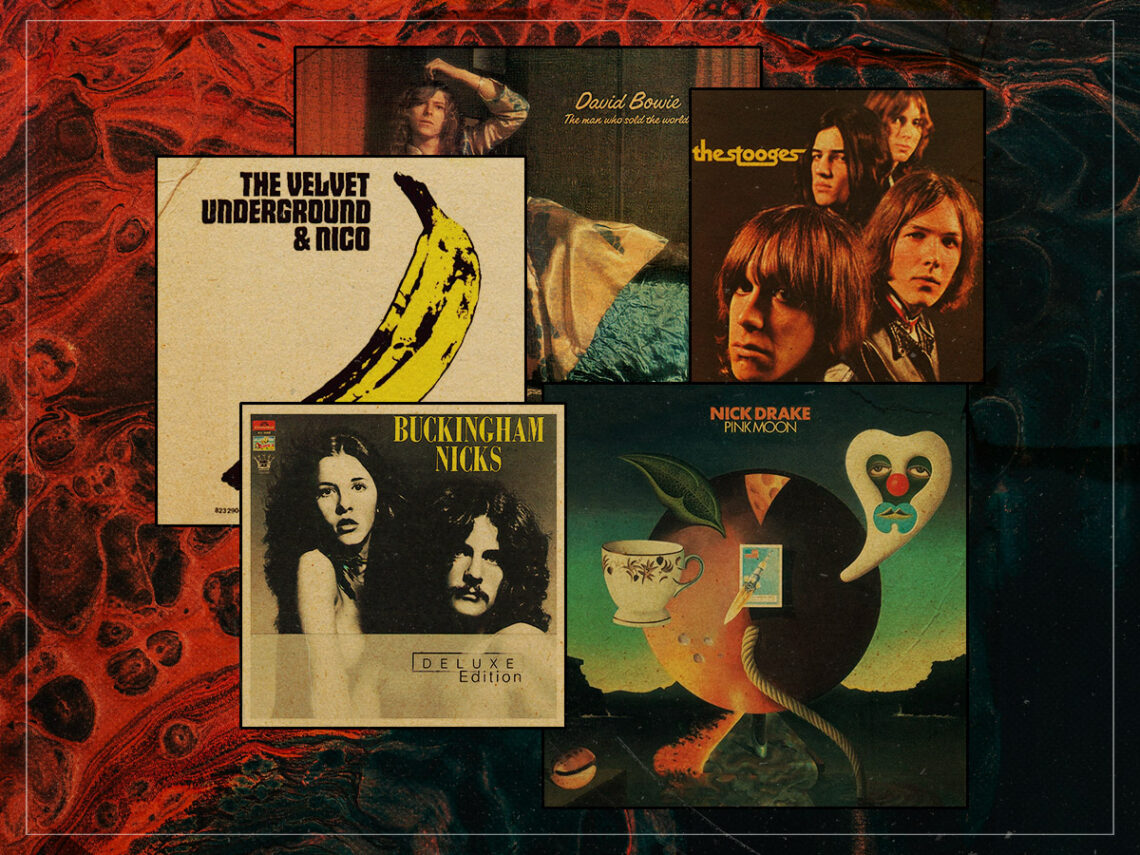
Buckingham Nicks – Buckingham Nicks

Looking at the Fleetwood Mac of the modern age compared to what Peter Green had done really is two separate bands. The rhythm section may have been the sturdy backbone behind everything, but the minute that Lindsey Buckingham and Stevie Nicks joined, it felt like a completely different group had taken over when they left the blues behind and started making pop songs. They might have known the gold they had on their hands here, but it’s almost adorable going back to the duo’s first album together.
Because while there is a lot of great stuff on the record, it’s easy to think of Buckingham Nicks as a breeding ground for what would become The Mac’s White Album, especially since songs like ‘Crystal’ would be reworked into different versions later. While Buckingham does get a lot of time to flesh out his chops on tunes like ‘Frozen Love’, Nicks has the most hit potential across the record, with tunes like ‘Crying in the Night’ sounding like the kind of tune that would have soared had it waited to be released on Rumours.
And considering the massive amount of adulation the band has received in recent years, many of the tunes on here are now considered some of the best from their original run. It can sound a bit naive in places, but with hooks that were that strong, there was no doubt that both of them were going places soon, even if it did mean them sacrificing some of their happiness along the way.
The Man Who Sold the World – David Bowie

Not every band knocks it out of the park on their first album. As much as bands like to mythologise the debut record as their grand statement, there are many acts that have multiple false starts before they truly start getting the ball rolling and start coming out with one great tune after the next. David Bowie often fell into the latter category, and when he branched out of one-hit wonderdom with Hunky Dory and Ziggy Stardust, people started to go back and revisit the undiscovered gems on The Man Who Sold the World.
It’s easy to single out this one because of the iconic Nirvana version of the title track, but there’s so much more the album has to offer than that one tune. In fact, this is probably the heaviest Bowie ever sounded during his early years, taking the basis of what he had done on his sophomore record and adding a bit more distortion to the mix on tracks like ‘The Width of A Circle’ and incorporating pieces of folk back into pieces like ‘After All’.
There was no way that he was going to be competing with the Black Sabbaths of the world or anything, but the fact that this was an unturned stone in Bowie’s catalogue is a testament to how ahead of the curve he was. He was known for the glamorous edge he brought to rock, but even some of his more forgettable outings end up having the blueprint for so many other genres to start out with.
Aerosmith – Aerosmith

It was impossible for Aerosmith to outrun every single one of The Rolling Stones’ comparisons that followed them around. It was no big secret that Steven Tyler had taken some cues from Mick Jagger, and judging by the way that he interacted with Joe Perry, the American rock scene had their perfect answer to ‘The Glimmer Twins’. If the rest of their career was them trying to be the archetype of The Rolling Stones, their debut is their incredibly brief stint attempting to be The Yardbirds.
While most people don’t bother going past tunes like ‘Dream On’ when revisiting this record, it’s actually a far more bluesy mix of songs than any of their later records. Many of the tunes would be retained in their live setlist to this day, but since Tyler is virtually unrecognisable on here by putting on a strange voice, he manages to sound a little bit more gritty when tearing through ‘Walkin’ The Dog’ or harmonising with Perry’s lead guitar in the middle of the song ‘Somebody’.
There are different pieces of Aerosmith that needed to get fine-tuned, but they never sounded more pure than when they were messing around on here. Other records were stuffed to the brim with hits or had a killer riff to anchor it all down, but where else would you find a record that delved into a seven-minute-long guitar jam? It wasn’t the most commercial idea in the world, but you can’t fault an album for wearing its heart on its sleeve this much.
<em>Pinkerton – </em>Weezer

Anyone who creates a blockbuster album right out of the gate is going to find the follow-up to be almost an impossible task. It’s hard enough trying to find a market of fans that like your music in its raw state, but once it starts selling in droves, that’s when expectations start and everyone starts to get anxiety about what’s happening next. Most people need nerves of steel to survive something like that, and Rivers Cuomo was not that kind of artist when Weezer hit it big.
If he was going to make another record, though, he needed it to be from the heart. After scrapping the idea for a space-themed rock opera, Pinkerton turned into the biggest pile of emotional vomit to be released in the 1990s. Cuomo clearly had a lot to unpack when looking over the last few years of his life, and the public was not ready to hear it, with everyone complaining that their funny dorky rock and roll band suddenly became far too weird for them to take seriously.
When listening to it now, though, that awkwardness has become the album’s greatest strength, being somewhere between the cracks between the late-stage emo records coming out at the time and pure pop-punk insanity on tracks like ‘Across the Sea’ and ‘El Scorcho’. The fact that this album is praised to the high heavens today might be precisely why Weezer’s career trajectory has been inconsistent, but no one can really argue with someone who opens themselves up this much.
The Stooges – The Stooges

Before the 1970s, the idea of hard rock wasn’t defined all that much. The Beatles had their heavy moments, but The Rolling Stones and The Kinks were the places that most people went if they thought they needed to hear something a little more feral in rock and roll. If Mick Jagger could make something that was ferocious, though, Iggy Pop may as well have been frothing at the mouth the minute that he strutted into the studio with the rest of The Stooges on their debut record.
The garage rock revolution had been nothing new given the success of Dave Clark Five and The Sonics, but Pop was a different kind of frontman. Everyone in the group wanted to get in touch with a nastier form of rock, and whether that was ‘I Wanna Be Your Dog’ or ‘Real Cool Time’, this was the kind of rock and roll decay that Jim Morrison only seemed to hint at when singing The Doors’ greatest material.
Most people were running scared, but the ones not covering their eyes in horror knew that this music was a lot more artistic than anything else out at the time. Pop wasn’t only making rock and roll. He was making performance art, and the rest of the world was bound to follow in his footsteps once everything from punk to grunge to alternative rock started taking over the mainstream years later.
Pet Sounds – The Beach Boys

So how does one of the most decorated records of all time somehow find its way onto a “failed albums” list? Pet Sounds is clearly one of the greatest albums to come out of the 1960s, and there are an endless number of music legends still shouting the praises of what Brian Wilson did over the course of its 13 tracks. This should have been a way to print money at the time, but everyone from the record company to Wilson’s father was convinced that he had lost his mind when he walked out of the studio.
The Beatles had tried some experimental things before, but no one was quite ready for such a sharp pivot away from Wilson’s surfing and car songs. And while everyone in the band believed in every single note they put on the record, it barely managed to get anywhere in the months after its release, to the point where their management had to release a greatest-hits record from around the same time to cover the damages.
But maybe it was only a few months too early. Once the Summer of Love kicked in a little while later, songs like ‘God Only Knows’ and ‘Wouldn’t It Be Nice’ would be some of the anthems for what life after adolescence was going to be like, complete with harmonies that channelled psychedelia in the exact right way. Wilson was certainly proud of his work, but the idea of anyone turning their back on a masterpiece like this feels like a crime against the music community.
The Velvet Underground and Nico – The Velvet Underground

By the time The Beatles arrived in America in the midst of the Summer of Love, every hippie was convinced that they knew where the future was heading. It was all about creating a technicolour society for everyone to be themselves in, and with the rise of acid-soaked festivals, it felt like utopia was going to be created somewhere in the middle of a rock and roll show. But Lou Reed knew better than that, and fans got a massive hit of bad acid the minute The Velvet Underground came out.
Bob Dylan had shown us what was happening in reality, but Reed left a lot less to the imagination in his lyrics. He was extremely well-read in the greatest poets of his time, but his role was about being a mirror to the society that he saw every day on the streets of New York, whether that was talking about scoring heroin from a dealer or engaging in some strange S&M performances that most mothers never wanted their children to hear about.
It was grimy, it was harsh, and it was more than a little bit off-putting, but the more people listened to it, they started to see what they were working with. The band were practically pariahs of their time, but as soon as everyone else started adapting to the artistic side of rock and roll, The Velvets’ debut may as well have been a road map for what indie music was supposed to be when everyone from Pixies to R.E.M. started breaking out.
Pink Moon – Nick Drake

The entire rise of Nick Drake has always been somewhat of a mystery for fans. He was one of the most interesting singer-songwriters of his time, but due to the nature of his music and his inherent shyness, it was impossible for anyone to catch a good glimpse of him outside of seeing him live. Before most of us could even register what we were listening to, though, he had already released the final masterpiece for us to look at on Pink Moon.
Since Drake had been discouraged from making music for the past few years, Pink Moon was supposed to be the start of an album but it remained in demo form after he lost all will to create. From those who talked to him, Drake seemed not to be in the right frame of mind to make a record and was convinced that he couldn’t write songs any more, eventually handing what he had to his record company before being found dead in his home after passing away in his sleep.
When everyone unpacked what he left, though, they found some of the greatest singer-songwriter tunes of all time, some of them only a few minutes in length, all while using different guitar tunings that made everything sound ethereal the moment the song came on. It’s haunting to think about what Drake was going through when listening to this album, but it’s crazy to imagine that someone who made an album this good was convinced he had nothing to give the world.
RAM – Paul McCartney and Linda McCartney

For a brief moment in time, it almost felt like Paul McCartney wasn’t going to survive the end of The Beatles. After having to leave his friends behind and subsequently duke it out with them in court for the next few months, Macca was heartbroken at the fact that all of the dreams he had for working with his best friends forever were officially over. It was up to him whether to pick himself back up or not, but that didn’t mean that his decision was going to be met with open arms by the public.
For all they knew, McCartney was the one publicly attacking the Fab Four’s name, and bringing in Linda to sing and collaborate on RAM was greeted with confusion more than anything. Fans didn’t really know what to think of an album that was meant to sound this ramshackle, and even some of his bandmates started taking shots at it as well, with Ringo Starr thinking there wasn’t a single good track on the record. But that’s only looking at it coming from McCartney: the perfectionist.
If you look at the full picture, most of what would be considered indie music today is still taking from McCartney’s playbook, especially given the quirky nature of the track list, flip-flopping between strange rock and roll tunes to modern epics like ‘Back Seat of My Car’ and ‘Uncle Albert/Admiral Halsey’. And seeing that there’s even a token ukulele song on the record, this album could have been released today and still done major numbers.
Singles – soundtrack

The world of Hollywood almost seems like a sidenote in rock and roll. There are many rock legends that have tried their hand at being movie stars, but whereas many movies like Purple Rain and A Hard Day’s Night become classics for a reason, there are also projects like Rattle and Hum that get torn apart by half of their audience. And while the Seattle grunge scene should have been the last movement concerned with how they looked on film, Singles was hiding one of the greatest soundtracks of all time.
And that’s for a decade that was already stacked with great soundtracks. Amid everything from Pulp Fiction to the more cheesy compilations like Mission Impossible II, Singles was a case of Cameron Crowe being at the right place at the right time with every single band he worked with. He had been spending time in Seattle trying to get everything right for the movie, so when flipping on the record, it reads like a mixtape of everything that the genre stood for before it became big, with everyone from Alice in Chains to Mudhoney to Pearl Jam having some time on the record.
Even when the songs aren’t objectively ‘grunge’, bringing in songs by people like Jimi Hendrix and Paul Westerberg is a great way of tying all of the other tunes back to their roots in a way. There were already classics coming out left and right during the early 1990s in the alternative sphere, but if this compilation happened to have a Nirvana song thrown into the mix, it would qualify as the greatest grunge album ever made.
