


From Martin Scorsese to Ridley Scott: 10 essential films from the American neo-noir movement

A refreshing revision of the sensibilities that were established by the film noir rules of the 1940s and the ’50s, neo-noir films took a route that was different to the psychologically driven explorations of typical crime dramas that preceded it. Instead of indulging in ratiocinations about the outdated psychological motivations of crime, neo-noir conducts subversive examinations of the sociological construct of crime itself as well as the flawed world in which it exists.
Robert Altman, who popularised the neo-noir subgenre with masterpieces like The Long Goodbye, said: “I never felt I was an artist. I didn’t wake up one morning and think, ‘Well, I’m an artist, so I will go and make this industrial film in this manner.’ I was ambitious and I liked…At first I was in awe of actors, and then I came to love actors, I came to sort of understand how really courageous they are. They’re the ones that stand up there naked. It’s not me. It really is an actor’s medium. We talk about the writers and the directors, but it’s not really correct.”
He added, “I don’t think what I see in the world is real. I think we see what we want to make of it. I’ll hear somebody say something as I’m passing in the street or see a person behave in a certain way. Maybe ten years later that will suddenly appear in one of these films. But that means you are just drawing on your material, which is what you see, what impresses you. The minute I say, ‘Oh, I do this,’ I’m telling a lie because I don’t really know what I’m doing. I’m usually working emotionally. At the moment I’ll say, ‘That seems right to me.’”
As a part of our weekly spotlight on world cinema, we explore the wonderful world of American neo-noir through the films of masters like Francis Ford Coppola and Martin Scorsese among others.
10 essential American neo-noir films:
Point Blank (John Boorman – 1967)
An adaptation of Donald E. Westlake’s pulp novel, Point Blank is a violent clash of film noir sensibilities and the experimental spirit of the French New Wave. It is a brilliant postmodern evaluation of the human condition, fluttering in the void after being severed from traditional value systems.
Boorman reflected: “I have a different relationship with different films. When I see Point Blank again I think: ‘How on earth did I get away with that?’ And Deliverance is very compelling. The craftsmanship is good. And as for Zardoz, I don’t know what the hell it is. But I think they’re all bold films, for better or worse.”
The Long Goodbye (Robert Altman – 1973)
Based on the famous Raymond Chandler novel, The Long Goodbye stars Elliot Gould as a private detective who decides to take on a lawless world with his obsolete code of honour. Despite the fact that the novel was set in 1949-50, Altman chose to shift the framework of the film to Los Angeles in the ’70s which ultimately succeeded in transforming the film into its own entity.
“Most people feel that, with The Long Goodbye, I’ve deserted Raymond Chandler. But Chandler had to be deserted, because Chandler left us in the ’50s. So it’s my interpretation, my presumption, of what Chandler would have remarked about—had he been here to remark,” Altman commented.
Chinatown (Roman Polanski – 1974)
Starring Jack Nicholson as an investigator for hire who gets caught up in an extensive corruption scandal, Chinatown is probably one of the greatest works of neo-noir ever made. It won the Academy Award for Best Original Screenplay and scored 10 other nominations for categories including Best Picture and Best Director.
Producer Robert Evans said, “It’s not like watching Jaws, which is a spectacular picture, and all the special effects and the audiences jump up and down. When the picture’s over with Chinatown, there’s not a sound in the theatre, people walk out [of the theatre] and you [don’t] know what they’re thinking.
“You can’t read it. I knew I had a success, though, with the picture when we previewed it in San Francisco, and, when the picture’s over, a woman walks over to me and pointed her finger at me [and said], ‘You should be ashamed of yourself!’ Then I knew I had a hit!”
The Conversation (Francis Ford Coppola – 1974)
One of Francis Ford Coppola’s finest films, The Conversation follows the misadventures of a surveillance expert who finds evidence of a potential murder in his recordings. Often seen as a reaction to the Watergate scandal, The Conversation won the prestigious Palme d’Or at the Cannes Film Festival.
Coppola recalled, “It started as a premise. I said, ‘I think I want to do a film about eavesdropping and privacy, and I want to make it about the guy who does it rather than about the people it’s being done to.’ Then somewhere along the line I got the idea of using repetition, of exposing new levels of information not through exposition but by repetition. And not like Rashomon where you present it in different ways each time—let them be the exact lines but have new meanings in context.”
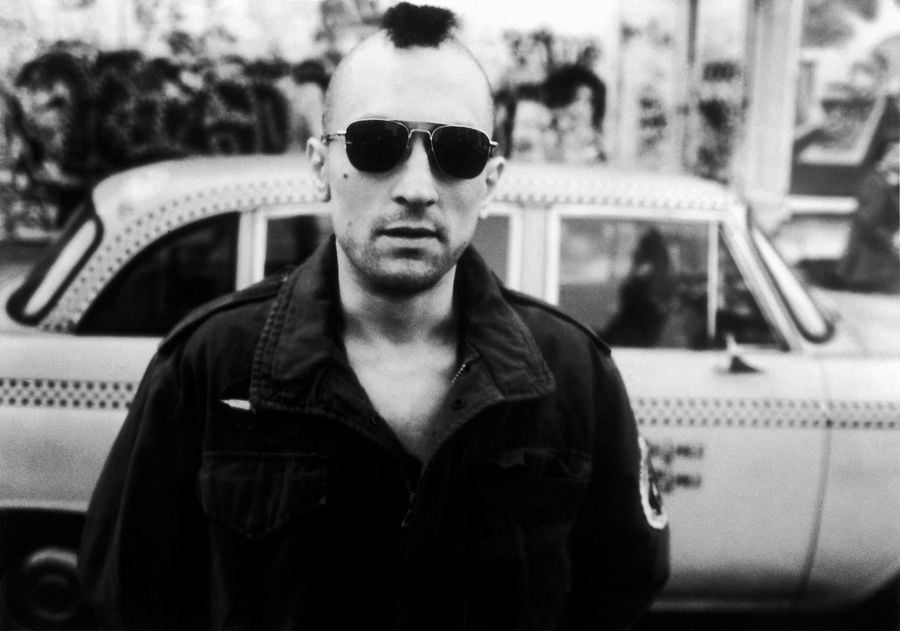
Taxi Driver (Martin Scorsese – 1976)
Martin Scorsese’s 1976 magnum opus Taxi Driver is the definitive cinematic investigation of existential absurdity and the paradoxes of masculinity. Starring Robert De Niro as an insomniac taxi driver who floats around the rotting carcass of New York in search of subjectivity, Taxi Driver amplifies the fundamental isolation that most of us are familiar with.
Screenwriter Paul Schrader revealed, “I got to wandering around at night; I couldn’t sleep because I was so depressed. I’d stay in bed till four or five P.M. then I’d say, ‘Well, I can get a drink now.’ I’d get up and get a drink and take the bottle with me and start wandering around the streets in my car at night. After the bars closed, I’d go to pornography. I’d do this all night, till morning, and I did it for about three or four weeks, a very destructive syndrome, until I was saved from it by an ulcer: I had not been eating, just drinking.”
He added: “When I got out of the hospital I realised I had to change my life because I would die and everything; I decided to leave L.A. That was when the metaphor hit me for Taxi Driver…The absolute symbol of urban loneliness. That’s the thing I’d been living; that was my symbol, my metaphor. The film is about a car as the symbol of urban loneliness, a metal coffin.”
Blade Runner (Ridley Scott – 1982)
A fascinating adaptation of Phillip K. Dick’s seminal sci-fi novel Do Androids Dream of Electric Sheep?, Blade Runner imagines a futuristic world where humanity is forced to confront its crimes as well as the possibility of becoming obsolete due to technological evolution. Although the film is set in 2019, its warnings for the future that hasn’t happened yet are still just as relevant.
While talking about the fictional setting, Scott explained: “We’re in a city which is in a state of overkill, of snarled-up energy, where you can no longer remove a building because it costs far more than constructing one in its place. So the whole economic process is slowed down. Once a structure like the Empire State Building goes up, it’s probably going to be there for… you name it. How the hell are they going to take it down? So it’s a physical feeling you get about that society.”
Blue Velvet (David Lynch – 1986)
David Lynch’s psychosexual masterpiece delves deep into the very bowels of human depravity. Superficially structured as a typical crime mystery featuring a young Kyle MacLachlan, Blue Velvet paints a compelling portrait of a suburban nightmare that shakes us to our cores.
“My childhood was elegant homes, tree-lined streets, the milkman, building backyard forts, droning aeroplanes, blue skies, picket fences, green grass, cherry trees,” Lynch explained.
“Middle America as it’s supposed to be. But on the cherry tree there’s this pitch oozing out – some black, some yellow, and millions of red ants crawling all over it. I discovered that if one looks a little closer at this beautiful world, there are always red ants underneath. Because I grew up in a perfect world, other things were a contrast.”
Pulp Fiction (Quentin Tarantino – 1994)
Quentin Tarantino’s most acclaimed work also happens to be one of the most iconic neo-noir films in the history of American cinema. Extremely subversive in many ways, Pulp Fiction’s overwhelming nihilism is presented to us through complex narrative structures and is decorated with the irresistible allure of Tarantino’s cinephilia.
When asked about it, Tarantino explained: “One thing that’s cool is that by breaking up the linear structure, when I watch the film with an audience, it does break [the audience’s] alpha state. It’s like, all of a sudden, ‘I gotta watch this … I gotta pay attention.’ You can almost feel everybody moving in their seats. It’s actually fun to watch an audience in some ways chase after a movie.”
L.A. Confidential (Curtis Hanson – 1997)
Based on James Ellroy’s eponymous novel, L.A. Confidential tells the story of three LAPD detectives who stumble onto something massive while following up on homicide cases. Hanson’s 1997 film was a critical and commercial success, winning two Oscars out of nine nominations.
“It’s a movie I’m very fond of myself. It’s a more personal movie to me than the two that followed it, which I did for other reasons, more as a director for hire. L.A. Confidential is actually the most personal I’ve done, and prior to that Bad Influence,” Hanson revealed.
The Big Lebowski (Coen Brothers – 1998)
Definitely the funniest film on this list, the Coen Brothers’ enigmatic 1998 neo-noir stars Jeff Bridges as The Dude – a bowling enthusiast who ends up being a part of a criminal scheme against all his wishes. Unlike most detective stories where the investigator has an epistemological compulsion to find out what’s going on, the only thing The Dude wants is to take it easy.
“Jeff was obvious really right off the bat once we actually started thinking about it, because actually, to tell you the truth, the list is not long when you get into that age, that kind of physicality,” Joel Coen said. “And Jeff, because we’d worked with him before, was the first person that we thought of. We thought, ‘why look any further?’ Because he’d be really good in this part and we asked him to do it and fortunately he said yes.”
