


10 directors who peaked way too early

Although several of cinema‘s most established and esteemed veterans have made it look effortless, any director with designs on longevity needs to strike the balance between consistency and success, with one hand perpetually feeding the other.
Steven Spielberg, Martin Scorsese, Clint Eastwood, and Ridley Scott are four prominent examples of behind-the-camera talents who broke through in the 1970s and have continued working to a high level ever since, and Francis Ford Coppola would undoubtedly be among them were it not for all the high-profile flops and repeated declarations of bankruptcy.
There are plenty of directors who’ve been around for decades and worked solidly throughout that time, but the hard part is doing it on movies that matter. Quentin Tarantino plans to jump ship before he becomes a jobbing old man, but at least he defined a generation on his way to the top.
Whether it’s would-be stars who failed to live up to the hype, hit-makers who couldn’t keep up the pace, or awards-laden legends who succumbed to the ravages of banality, the following ten directors all reached their peaks much closer to the beginning of their careers than the end.
10 directors who peaked way too early:
10. Simon West
Even though he was never going to be a filmmaker who troubled awards season, there was enough evidence on display in his feature-length debut Con Air that Simon West had the potential to become one of the action genre’s leading lights.
It never came to pass, though, with mediocrity becoming the order of the day. He’s worked with some of the biggest action stars around on The General’s Daughter, Lara Croft: Tomb Raider, The Mechanic, The Expendables 2, Stolen, and more, but the best anyone can say about any of them is that they were alright.
Peaking right out of the gate on the big screen and gradually sliding downwards isn’t a trajectory anybody wants to experience, and for anyone who doesn’t hold Con Air in high esteem as a 1990s classic, then West’s directorial career reached its highest point a decade previously when he helmed the video for Rick Astley’s ‘Never Gonna Give You Up’.
9. Neill Blomkamp
Exploding out of the blocks, Neil Blomkamp was only 29 years old when District 9 released, becoming a word-of-mouth sci-fi sensation and securing an Academy Award nomination for ‘Best Picture’ into the bargain.
After striking gold telling a sci-fi story wrapped in socio-political undercurrents, the filmmaker did the exact same thing again to bigger box office and lesser reactions with Elysium, before doing the exact same thing for a third time and failing on all fronts with Chappie.
Supernatural horror Demonic was a shambles, his debut as a studio hand-for-hire yielded a modest hit in Gran Turismo, but Blomkamp is nonetheless a million miles away from living up to his early billing as one of the cinema’s brightest-shining directorial wunderkinds.
8. Richard Kelly
It’s been a decade and a half since Richard Kelly directed anything, with his career falling off a cliff and into the cavernous abyss of nothingness below in the years after Donnie Darko saw him heralded as one of the brightest new voices in independent cinema.
After breaking out with such an assured, confident, and stylish debut, Kelly made a near-fatal misstep when Southland Tales mistook incoherent pretention for ambition, delivering a box office catastrophe that sent his reputation tumbling downwards.
Mystery thriller The Box was as forgettable as they come, and as ridiculous as it would have sounded in a post-Donnie Darko landscape to suggest its writer, director, and creative figurehead would amount to virtually nothing in the 20 years to come, that’s not far off the way things have panned out.
7. Michael Bay
Bayhem entered the cultural lexicon when Michael Bay cemented himself as action cinema’s foremost auteur through Bad Boys, The Rock, and Armageddon, and while he remains a big name and a proven box office commodity, he’s hardly been churning out comparable features.
Pearl Harbor was a notable misstep that failed to usher in his evolution into a more serious-minded filmmaker, The Island gave him his first-ever box office bomb, and then he wasted a decade on the mind-numbing histrionics of Transformers. Sure, they’ve earned billions, but his filmography has been largely dreck for a long time.
From an aesthetic or stylistic standpoint, Bay is very good at what he does, but after three explosively entertaining blockbusters in a row to kick things off, that early momentum has never been recaptured. If it carries on this vein, his evolution into a full-fledged parody of himself can’t be too far off.
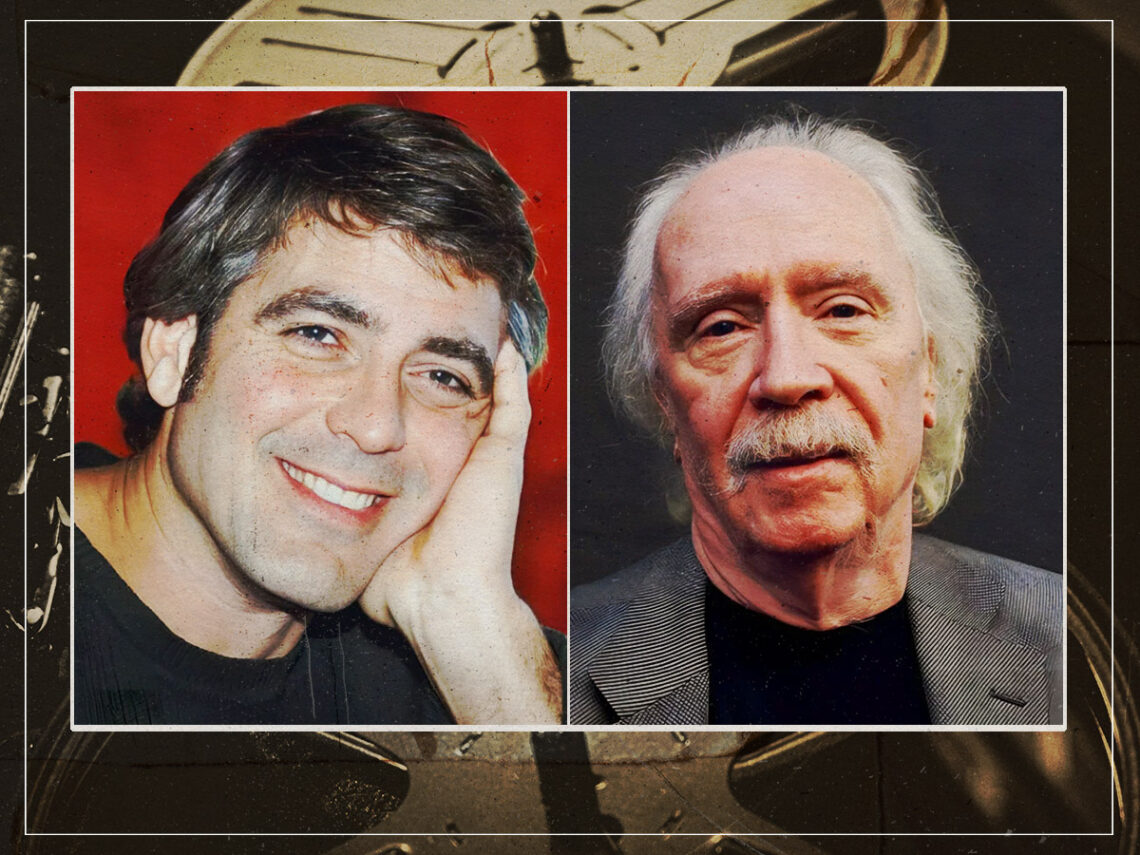
6. George Clooney
All the signs were pointing in the direction of George Clooney becoming the latest heavyweight actor-turned-director, and as consistent as he’s been from behind the camera in terms of volume, his first two features are far and away the best work he’s ever done.
Confessions of a Dangerous Mind was a rip-roaring biographical spy thriller, and Good Night, and Good Luck netted six Academy Award nominations including ‘Best Picture’ and ‘Best Director’, but everything since then has been lightweight, underwhelming, and a long way away from the engrossing genre pieces that first signalled his directorial prowess.
That’s not to say his subsequent films have been terrible, but Leatherheads, The Monuments Men, Suburbicon, or The Boys in the Boat barely even qualify as memorable. They’re competently-made, well-staged, and solidly acted, but Clooney is clearly capable of a great deal more.
5. Roland Joffe
Roland Joffe has helmed 11 features in total, but none of them can hold a candle to 1984’s seven-time Oscar nominee The Killing Fields, with the biographical drama standing out as the undoubted and unequivocal high point of his directorial career.
In fairness, his sophomore effort The Mission was also nominated for seven Oscars, but everything since then has been indicative of a filmmaker who got the best movies of their career out of the system far too early, with not a single one of the following nine making much of a splash on any front.
In the case of 2013’s time travelling adventure The Lovers it was highlighted that he wasn’t above taking the reins on something abjectly terrible, either, with the glory days of his 1980s peak fading into memory the longer he carries on his ongoing creative downturn.
4. John McTiernan
Anybody who made their debut on a B-tier horror before going on to direct Predator, Die Hard, and The Hunt for Red October consecutively realistically didn’t have anywhere else to go but down, a fate that was almost inevitably going to befall John McTiernan eventually.
Last Action Hero remains underrated and ahead of its time, Die Hard with a Vengeance gave him the distinction of helming the two best entries in the franchise by some distance, and The Thomas Crown Affair was a superbly-crafted remake propelled by the irresistible chemistry of its leads.
However, The 13th Warrior ended up as one of the biggest flops of all time, Rollerball was a fiasco from start to finish, and Basic was a complete waste of his undoubted talents. Little more than a decade on from Die Hard, then, and McTiernan was already in the midst of what turned out to be an irreversible decline.
3. Michael Cimino
Debuting with classic buddy caper Thunderbolt and Lightfoot and then winning ‘Best Picture’ and ‘Best Director’ for The Deer Hunter set Michael Cimino up for greatness, but he ended up as his own worst enemy and torpedoing his shot at becoming one of the very best.
Heaven’s Gate was miscalculated to such a galling degree it completely changed the face of mainstream American cinema, and while there are no shortage of folks willing to defend it to the death, Cimino shot another four movies between 1985 and 1996 that failed to get him back on the right track.
He had all the tools at his disposal to join Scorsese, Spielberg, Coppola, and the rest who emerged during the 1970s and spent decades casting huge shadows over all of cinema, but his wayward personality instead saw him regarded as a major case of unfulfilled promise.
2. Robert Zemeckis
It’s been over 45 years since Robert Zemeckis made his directorial debut, and he’s continued working solidly ever since, but it wouldn’t be unfair to say his best years are behind him unless something drastic changes.
His fourth, fifth, sixth, seventh, eighth, ninth, and tenth features are comprised of Romancing the Stone, the Back to the Future trilogy, Who Framed Roger Rabbit, Death Becomes Her, and Forrest Gump, an incredible run that turned him into one of the highest-profile filmmakers in the business.
He’s helmed another dozen since then, though, and how many of them can realistically stand shoulder-to-shoulder with his finest offerings? Maybe Cast Away, What Lies Beneath and Contact at a stretch, with The Witches remake and live-action Pinocchio standing out as egregiously bad films from a former titan of cinema, to say nothing of his ill-fated and short-lived obsession with motion capture.
1. John Carpenter
Harsh? Absolutely. True? Factually. John Carpenter is an icon for a number of very good reasons, just one of which is the fact he enjoyed one of the greatest runs any filmmaker has ever been on in a relatively short period of time, which unfortunately marked the apex of his career.
In the span of only ten years, the horror maestro burned through Halloween, The Fog, Escape from New York, The Thing, Christine, Big Trouble in Little China, and They Live, all of which range from the cult classic to the stone-cold variety, with no in between.
It would be 22 years before Carpenter directed what still stands as his last movie, though, and The Ward was merely the exclamation point on a downward slope peppered with failures like Memoirs of an Invisible Man, Village of the Damned, Vampires, and Ghosts of Mars. On the plus side, at least legendary status had been secured long before then.
