


10 directors who killed their careers with one movie

The greatest directors of all time are known as such for their visionary masterworks of the cinematic craft, but they are also praised for their sheer consistency. The likes of Stanley Kubrick, Steven Spielberg, David Lynch, Francis Ford Coppola, Lynne Ramsay and Chantal Akerman created classic movies time and time again, often following up one celebrated great with yet another.
Yet, some filmmakers aren’t so lucky, with their careers being derailed by one significantly terrible flick or creating a string of awful films that eventually test the patience of Hollywood producers. No director is indeed safe, with some of the greatest to ever grace the silver screen creating films that flopped and ultimately sent them for an early shower in the context of their film career.
No doubt, the same can be said for actors, with our list of ten stars who killed their careers with one movie fulfilling this insatiable thirst to bring such icons to justice.
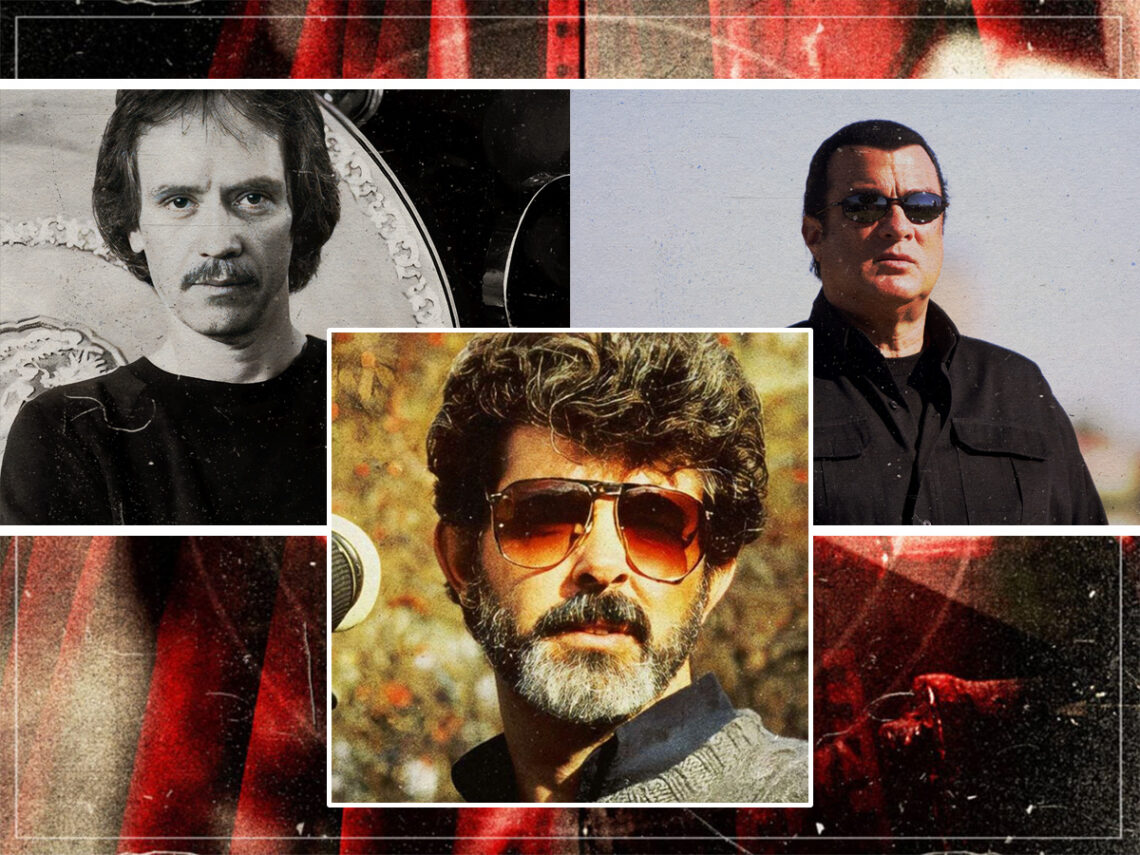
Take a look at the list of ten directors who ruined their careers with one movie below, and discover awful flicks from the likes of John Carpenter, Michael Cimino, George Lucas and Michael Powell.
10 directors who killed their careers:
Roberto Benigni
Although certainly not a household name in the world of cinema, the Italian actor and comedian Roberto Benigni created a handful of unforgettable movies throughout his career. As well as directing 1997’s celebrated Life Is Beautiful, he also took a starring role in the Jim Jarmusch movie Down by Law, but things would all go a little pear-shaped for the star come 2002 and the release of his bizarre Pinocchio adaptation.
Putting himself in the firing line as the director and lead actor, Benigni created a truly awful piece of cinema that he was simply never able to recover from. Although he made The Tiger and the Snow in 2005, it would mark his last movie to date, with the director never reaching the consistency of his earlier career again.
Martin Brest
At one point in the 1980s, there were few names bigger in the Hollywood movie industry than Martin Brest, the director behind such celebrated films as Beverly Hills Cop with Eddie Murphy and Midnight Run with Robert De Niro. His good form continued into the following decade, too, directing the Academy Award-winning movie Scent of a Woman starring Al Pacino and Meet Joe Black with Brad Pitt.
Yet, his career came to a grinding halt following the release of Gigli in 2003, which was so critically panned that it sent Brest into a state of persistent career hibernation. Despite creating some of the greatest movies of the 20th century, he has yet reared his head again.
John Carpenter
Speaking of iconic directors of the 1980s, there were few bigger than the great John Carpenter, the filmmaker behind such classics as Escape From New York, The Thing and Big Trouble in Little China. Whilst he is remembered for his contributions to popular cinema at the end of the 20th century, few people talk about his contemporary offerings, and for good reason, too.
Neither of his 21st-century flicks have been able to gather much of a fanbase, but this wasn’t helped by his awful 2001 movie Ghosts of Mars, which performed poorly both critically and commercially. He might be one of cinema’s most celebrated icons, but he is still a fallible creative.
Michael Cimino
The seminal Vietnam War flick The Deer Hunter, directed by Michael Cimino, remains one of the most incredible depictions of the grizzly 20th-century conflict and has been championed across the world for its accuracy. Starring Christopher Walken, Robert De Niro and Meryl Streep, the film would sadly remain Cimino’s only classic, following it up with the disastrous 1980 movie Heaven’s Gate.
Facing countless setbacks that involved budget overruns, a considerable amount of retakes, controversies surrounding animal abuse and the director’s own volatile personality, Heaven’s Gate was such a PR shit-storm that it triggered the demise of Cimino as one of Hollywood’s ‘great’ filmmakers.
George Lucas
Following the release of Star Wars: Episode VI – Return of the Jedi in 1983, director George Lucas could do no wrong. Sure, the final film in the iconic trilogy wasn’t perfect, with many criticising the fluffy, nonsensical Ewok characters, but the truth was that the filmmaker had almost single-handedly made a beloved franchise that was suddenly Hollywood’s most lucrative property.
So, naturally, when a prequel trilogy was announced in the 1990s, fans went wild, only to witness one of cinema’s greatest disappointments in the form of 1999’s Phantom Menace. But, people were willing to give him the benefit of the doubt until Attack of the Clones was released three years later, solidifying Lucas as a ‘has-been’ who knew little about how to make contemporary cinema great.
John McTiernan
If you’ve never heard of the American filmmaker John McTiernan, you’ve certainly watched his films. The director of such beloved action flicks as Predator, Die Hard, The Hunt for Red October and Last Action Hero, McTiernan was known as one of the industry’s greatest genre minds, working with the biggest stars such as Sean Connery, Bruce Willis, Arnold Schwarzenegger and Samuel L. Jackson.
Things went wrong once McTiernan tried to adapt to the new millennium, creating a remake of 1975’s Rollerball that was simply awful. Starring Chris Klein, Jean Reno and Rebecca Romijn, the film failed to capture any of the charm of the original and came off as a cheap, boring mimic. It’s fair to say that McTiernan never recovered.
Georges Méliès
The majority of the directors that we’ve discussed on this list so far have been icons of the late 20th century, but the French illusionist and filmmaking pioneer Georges Méliès was one of the very first ever to create a commercial movie. His seminal classic A Trip to the Moon has since been paid tribute to in countless other movies, with many seeing it as a technical marvel, especially considering its production date of 1902.
But, due to dodgy copyright laws at the time, everyone from Sigmund Lubin to Thomas Edison released imitations that borrowed liberally from his movie, causing Méliès to miss out on considerable profits from his work. Thanks to his lack of financial gains, Méliès had to bow out of the industry in 1914 after his subsequent films failed to gain an audience.
Michael Powell
One-half of the iconic British directorial duo Powell and (Emeric) Pressburger, Michael helped to develop such classic movies as The Red Shoes, A Matter of Life and Death and The Life and Death of Colonel Blimp. But, in 1960, he ventured out to make a film on his own, namely the horror flick Peeping Tom, starring Karlheinz Böhm, which told the story of a voyeuristic cameraman who killed his victims using a tripod.
All in all, the film was awfully received at the time, with people calling it a moral outrage that promoted violence and sexual perversion. Many decades later, it’s considered among the greatest horror movies of all time, but there’s no doubt that its terrible critical reception at the time led to the director’s downfall.
Steven Seagal
Many will know Steven Seagal to be that internet meme and former action movie star who now features in bargain bin oddities, but there was a moment in time when he was a genuine movie star, albeit an up-and-coming one. It was during this period of success in the 1990s when he took to directing, helming the 1994 flick On Deadly Ground, co-starring Michael Caine and Billy Bob Thornton.
The movie was a critical bomb that barely made its money back commercially, with such certainly not being helped by the fact that Seagal kept going over budget. As a result of his poor mismanagement, it remains the first and only movie Seagal has ever helmed.
Josh Trank
The final name on our list also happens to be the one who had operated most recently in the industry. Josh Trank climbed to success in 2012 with his innovative superhero flick Chronicle and was awarded a significant step-up three years later when offered the chance to work on 20th Century Fox’s Fantastic Four, a film that would later go down as one of the worst movies of all time.
Creating an awful script that set the film off to a terrible start, Fantastic Four was later plagued with budget cuts, studio interference and on-set issues. Admitting his part in the downfall of the movie, Trank told Variety in 2020, “As far as my own level of responsibility in the film turning out to be a disaster and not working, I was absolutely responsible. But so was everybody else…When I was in the middle of the situation, it was very clear that everybody was doing the wrong thing”.
