


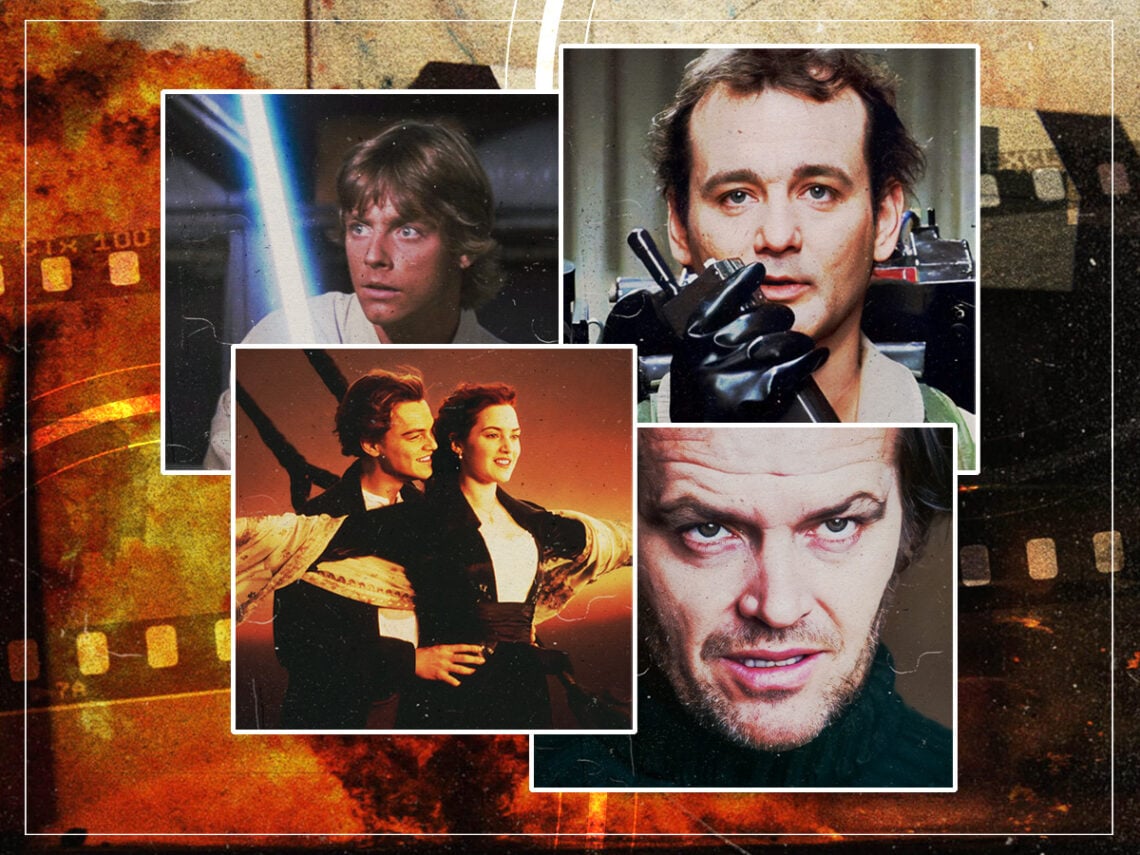
10 deleted scenes that would have ruined movies

The role of the editor is one of the most important in cinema, arguably more so when it comes to auteurs who get to create their movies with almost unlimited creative freedom.
One of the reasons why such well-known luminaries of the medium, including Martin Scorsese, Quentin Tarantino, Steven Spielberg, Clint Eastwood, Spike Lee, Francis Ford Coppola, and Tim Burton, to name but a small few, spent decades working with the same editor on almost every one of their features is because the person cutting the film together knew how to rein in their excesses and self-serving tendencies in order to better service the final cut.
On the other side of the coin, studio-backed blockbusters often feel as though they’ve been edited beyond comprehension at points to squeeze in as much bombast as possible. There’s a happy medium that any great movie always manages to find, but sometimes the cinemagoing public is much better off after a particularly egregious scene is left on the cutting room floor.
The majority of them have since become available in some way, shape, or form, but it’s easy to see why they ended up being removed. Whether it’s boneheaded sequel bait, unnecessary exposition, showing and telling at the expense of mystery, or being completely unnecessary to the feature that’s just unfolded, the following ten titles dodged a bullet by dropping these scenes.
10 deleted scenes that would have ruined movies:
10. Ghostbusters (Ivan Reitman, 1984)
Suspension of disbelief is obviously key for an effects-heavy comedy that focuses on three paranormally-inclined scientists and one successful job applicant staving off a supernatural threat hellbent on destroying New York City and then the world, but Ghostbusters thankfully scrapped a pointless scene that seemed to exist for no other reason than the self-indulgences of its cast.
Rick Moranis’ Louis Tully would run past two homeless men in Central Park, breaking up their debate over who would win a fight between a heavyweight boxer and an elite-level martial artist. It sounds inoffensive and innocent enough in a microcosm, but for inexplicable reasons, the roles were played by Bill Murray and Dan Aykroyd.
They weren’t even unrecognisable under makeup and/or prosthetics, either; it was literally the two top-billed names in the ensemble playing a secondary part that had no weight or bearing on the story whatsoever, in a needless aside that would have also shattered the immersion.
9. Terminator 3: Rise of the Machines (Jonathan Mostow, 2003)
Rather ironically, given the core concept at the very heart of the property, self-awareness was the worst thing to ever happen to the Terminator franchise, with no single moment encapsulating that notion better than the full-body cringe of Arnold Schwarzenegger’s Sergeant Candy.
Jonathan Mostow’s threequel was already too self-referential for its own good, but an entire scene dedicated to the ‘Austrian Oak’ hamming it up as a southern-fried soldier would have been far too much. Doubling down on going meta, Cyberdyne executives criticise Candy as the perfect candidate to provide vocals for the company’s in-development endoskeleton, which prompts a suit to chime and state “we can fix it” in Schwarzenegger’s own Austrian brogue.
8. The Amazing Spider-Man 2 (Marc Webb, 2014)
As unfortunate as it is, on both the pages of comic books and almost every other iteration in multimedia, Spider-Man is a character defined by trauma. Taken in by his Aunt May and Uncle Ben following the death of his parents, it’s the murder of the latter that prompts Peter Parker to take up superheroism in the first place.
In an arena that’s constantly throwing up new contenders, The Amazing Spider-Man 2 remains one of the most overstuffed superhero movies ever made, which is saying something. As part of that focus to look five movies ahead while forgetting to focus on telling a decent story in the one that’s being made, an absolute clanger of an ending almost made its way to cinemas.
Campbell Scott’s Richard Parker shows up at Gwen Stacy’s grave to reveal himself to Andrew Garfield’s Peter in what was supposed to be an epic cliffhanger. Instead, confusion would have reigned supreme, considering he told his son he’d faked his death to protect him, which seemed impossible given that the very same film featured a plane crash sequence that looked pretty darned inescapable. All that, and where was his wife? Mercifully, nobody ever got to find out.
7. Titanic (James Cameron, 1997)
James Cameron’s movies have constantly reinvented the face of cinema, pushed the technological boundaries of the medium, and shattered box office records. However, hilarity has never really been his strong suit, as evidenced in a sight gag smartly excised from Titanic.
While his filmography does contain humour of a situational variety, having Kathy Bates’ Molly Brown ask a waiter for some ice to go in her drink at the very same second a gigantic iceberg is spotted in the window directly behind her would have induced groans in the aisles.
A three-hour sweeping epic that weaves a love story through one of history’s most infamous disasters, Titanic didn’t need to be funny. In fact, it didn’t even have to try, which is what would have made this ill-advised gag stick out like a sore thumb.
6. Terminator 2: Judgement Day (James Cameron, 1991)
The importance of the editor on a James Cameron movie should never be overestimated, with yet another one of his classics benefitting immensely from some judicious snipping in the editing room. The difference is that, unlike Titanic, Terminator 2 wasn’t cut together by the filmmaker himself. It’s without a doubt one of the best action movies, sci-fi stories, and sequels ever made, but opting for a saccharine ending would have undone a lot of the narrative heft.
Linda Hamilton caked in old-aged makeup and reflecting on a life that saw her son become a senator and a father in the very same park where she’d envisioned being turned to smouldering ash in a cacophony of nuclear fire was ladling it on thick, to say the least.
Beyond that, it twists the already-convoluted mythology in knots, considering the war between man and machine needs to happen in order for Kyle Reese to be sent back to his father, John Connor, in the first place. As much as it would have saved the world from four more subpar sequels, the ambiguous note Judgement Day ends on was by far the better choice.
5. Star Wars (George Lucas, 1977)
By the time the opening scene of Star Wars had even ended, viewers knew they were in the midst of a spacefaring epic the likes of which they’d never seen before, with a hulking craft soaring into shot and letting the world know that there was a new cultural obsession afoot.
The journey of Luke Skywalker being set in motion by his encounter with C-3PO and R2-D2 is integral in his evolution from wet behind-the-ears farm boy to saviour of the entire galaxy, which wouldn’t have been realised quite as well had Lucas opted to keep in the scene where he witnesses the opening space battle from the sands of Tatooine and then tells his friends about it.
It’s hardly an offensive scene, but it would have slowed the pace to a crawl and bogged itself too heavily in exposition and the introduction of superfluous characters who don’t matter by the time the credits come up, but it would have robbed the opening of Star Wars of its immediacy, urgency, and jaw-dropping visual splendour.
4. The Lord of the Rings: The Return of the King (Peter Jackson, 2003)
Modern blockbusters have a recurring habit of throwing any focus on plot or character out of the window for the express purpose of having the heroes battle against a formidable CGI enemy, a trap one of the greatest epics of all time almost fell into.
The entire purpose of Sauron as the overarching antagonist of The Lord of the Rings is that he’s a malevolent presence who can bend wills to suit his agenda without having to even take on a physical form, with his looming tower a great deal more foreboding than any armoured warrior could ever be.
Peter Jackson did catch on eventually, but not before shooting a scene where Aragorn would go toe-to-toe with Sauron outside of the Black Gate. Sauron didn’t need a body in order to instil fear upon the denizens of Middle-Earth, and if anything, having him be dispatched in a swordfight would have done the big bad a huge disservice.
3. Alien (Ridley Scott, 1979)
Keeping its instantly iconic monster cloaked in shadow and darkness is just one of the many reasons why Alien remains a seminal sci-fi horror, but the haunted house in space classic would have torpedoed any sense of lurking dread carried by the Xenomorph had it kept in the crab walk.
Leaving it to the imagination of the audience was by far the wisest call, and it’s difficult to imagine anybody sympathising quite as intently with Ripley’s plight had the final showdown in the slow-burning cat-and-mouse game between the two came after a preposterous deleted scene.
With Veronica Cartwright’s Lambert in the machinery room, the Xenomorph reveals itself in full view. Does it lunge? Slither? Stalk? No, it shuffles along in a fashion eerily similar to Futurama‘s Dr. Zoidberg, which would have ruined any tension or dread the creature had cultivated up to that point.
2. The Shining (Stanley Kubrick, 1980)
It’s stating the obvious to call Stanley Kubrick a master of tone and pacing, but even the best in the business can come perilously close to making mistakes, something that was rectified before The Shining scared everyone out of their seats.
The final moments of Jack Nicholson’s Jack Torrance frozen in the snow with that maniacal grin on his face and a mischievous twinkle in his eye have been burned into the collective consciousness for over 40 years, but immediately cutting to a scene of his would-be victims recuperating would have sacrificed the haunting ending in favour of a feel-good moment.
Kubrick almost wrapped up The Shining with a brief scene of Shelley Duvall’s Wendy and Danny Lloyd’s Danny recovering from their ordeal in a nearby hospital, letting the audience know that they were perfectly okay and escaped unharmed. Not exactly what could be called Kubrickian, then, but the upbeat ending was eventually removed entirely in favour of maintaining the sinister tone that defined the film.
1. The Thing (John Carpenter, 1982)
Virtually any genre film backed by a major studio feels as though it isn’t allowed to end on a definitive or ambiguous note, just in case it performs well enough to merit a sequel. As ridiculous as it sounds, The Thing almost left the door ever-so-slightly ajar in that regard.
John Carpenter’s gruesome classic boasts one of the most heavily discussed and widely-dissected endings in all of cinema, with Kurt Russell’s MacReady and Keith David’s Childs sharing a bottle of whisky as they slowly freeze to death and realise this is the only way to permanently resolve their mutual distrust as to whether or not one of them is really a shapeshifting alien in disguise.
In the original cut, though, the action would have resumed the following morning and shown one of the sledge dogs running away from the camp to imply that the titular creature has escaped and is now out in the open to wreak havoc. It carries the same implications that resistance is indeed futile, but it would have carried infinitely less impact when the credits came up.
