


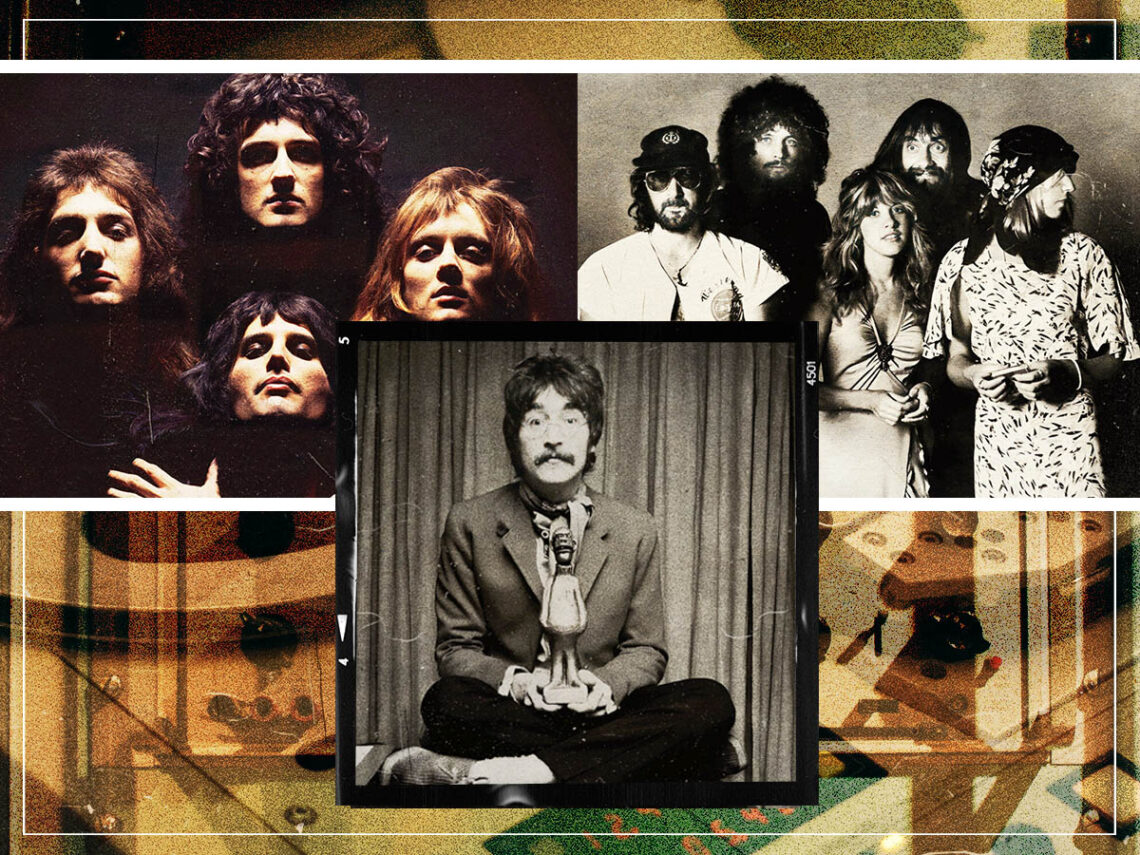
10 classic songs that musicians struggled to record

For any aspiring artist, the studio is an open canvas to work. Even though the rock and roll lifestyle promotes the idea of artists living and dying by their performance onstage, there are just as many opportunities to experiment in the studio with songs that aren’t as suited to a live experience. Although bands are willing to test the limits of their craft in the studio, artists like Nirvana and The Beatles would occasionally run into trouble creating their biggest hits.
Although every one of these band’s trademark songs might hold a special place for rock fans, it didn’t come without hardship beforehand. Despite the massive popularity that came out of the track, artists would spend countless hours trying to get the song as close to perfect as they could, going for one take after another until they had one magical piece of music.
Then again, there were just as many instances where everything could have been thrown in the garbage. Even though the bands may have wanted to push the limits of what they could achieve, there was a good chance that the songs wouldn’t see the light of day because of how much work it was trying to get one of them to sound halfway decent.
The band did manage to put in the elbow grease, though, and the results made for the greatest songs of their generation, being both technical innovations and relentlessly catchy in equal measure. While recording might sound like a lot of fun to the uninitiated, the amount of time and energy put into these songs made the phrase “suffer for your art” sound like a massive understatement.
10 songs artists struggled to record:
10. ‘Californication’ – Red Hot Chili Peppers
Having only a piece of a song can sometimes be as disconcerting as being unable to come up with anything. Even though an artist can be excited about having a little piece of a track with a lot of potential, it becomes a different struggle to find another piece that will turn it into a complete song. Although Red Hot Chili Peppers already had the foundation for a good record with Californication, John Frusciante spent days working on the title track until he found a guitar lick that worked.
While most of the usual Chili Peppers songs were birthed out of jam sessions, Anthony Kiedis had the lyrics of the song finished before Frusciante could find a chord sequence to go with it. Although Flea could play any type of fill to offset Frusciante’s lead licks, the guitarist couldn’t find anything to work with until he started listening to The Cure.
Becoming lost in one of the group’s extended jam tracks, a little musical fragment drew the riff out of Frusciante, practically copying the song note-for-note by playing it on a clean electric guitar instead of the usual walls of distortion. Since there’s a fairly sparse arrangement behind the riff, though, keeping things simple makes Kiedis’s lyrics feel all the more lonely when talking about the superficial side of Hollywood.
9. ‘The Long Run’ – Eagles
Every Eagles member had their work cut out after coming off the road for Hotel California. Since their previous effort had the biggest songs of their career and anthems that would stand the test of time, there was no way they would be able to follow it up with something equally as good. Although the band reconvened a few months after the tour ended, ‘The Long Run’ showed how frazzled the touring life had made them.
Becoming fond of cocaine while on the road, most of the band started to let their bad habits get the better of them in the studio, taking multiple hours just to write basic songs. Although the title track had a fairly straightforward arrangement, the band would spend days working on the tracks where nothing got done, trying desperately to develop a song as brilliant as ‘Life in the Fast Lane’.
The tension in the studio became so bad that the group renamed the track ‘The Long One’ throughout their time before changing it when it came time for release. Every Eagles song practically radiated California sunshine, but those warm sounds of summer had started to turn ice cold on this track.
8. ‘Where the Streets Have No Name’ – U2
Producer Daniel Lanois used to say that U2 records are never finished…they just come out. Although the band are responsible for the most spiritual rock music ever made, their indecisiveness about what to keep in the final track made for a struggle trying to get albums like The Unforgettable Fire completed. While The Joshua Tree would become one of the foundational pieces of their catalogue, the opening strains of ‘Where The Streets Have No Name’ could have easily been forgotten entirely.
Stemming from a riff that The Edge had turned in featuring a cascading run of delayed notes, the band had a hard time getting used to where the central beat of the song was. Since the delay was locked into a rhythm, Larry Mullen Jr and Adam Clayton continuously struggled to find their place, leading to producer Brian Eno writing down the entire arrangement on a blackboard so they could figure out when to come in.
When that didn’t work, Eno came dangerously close to erasing the entire arrangement in frustration before the band started to get the hang of it. Being played in an unusual time signature, the final take showcases The Edge being locked into his guitar, as Mullen’s massive tom-toms lead the listener into a futuristic soundscape. U2 may have been at their lowest when tracking the song, but all of the time studying the music led to them locking in like a human metronome.
7. ‘Never Going Back Again’ – Fleetwood Mac
It would be easy to throw a dart at every track on Fleetwood Mac’s Rumours and find something that took forever to create. From the tension between Stevie Nicks and Lindsey Buckingham to John and Christine McVie’s drunken separation, the animosity between each member in the studio made for a hellscape whenever the record button was turned on. Although the band could channel their aggression into the songs, Buckingham had to record one of his tracks from scratch by accident.
Written about his dissolving relationship with Nicks, ‘Never Going Back Again’ benefitted from its sparse arrangement, featuring a delicately picked acoustic guitar figure. After spending hours trying to hone down the pattern, Buckingham finally found a version of the song he was happy with, only to discover that it was recorded in a key too high for him to sing in.
Instead of slowing the tape down to lower the pitch, Buckingham insisted that the band re-record everything, knowing that any slowing would make the song sound sluggish by comparison. Listening back to the song, though, it’s clear Buckingham made the right call. Considering the high notes that he hits in the final version of the track, there’s a good chance he could have sounded dangerously close to a cartoon if he tried to push himself any harder.
6. The Colour and the Shape – Foo Fighters
Nothing that ends up on a Foo Fighters record would get a pass if it doesn’t have Dave Grohl’s approval first. Started as a one-man band on the group’s debut, Grohl has been the undisputed leader of the group throughout every iteration of the project, bringing in the rest of the band to help make his ideas a reality. Although it seemed like everything would be perfect at first, The Colour and the Shape quickly dissolved into a nightmare when tracking the drums.
Picking up William Goldsmith to drum on the band’s first tour, Grohl quickly learned that songs like ‘Monkey Wrench’ and ‘Everlong’ weren’t up to the drummer’s capabilities. Having been one of the foundational members of Nirvana behind the kit, Grohl decided that the best way to record the songs would be to re-record everything over again behind Goldsmith’s back.
Once Goldsmith found out he was being written out of the record, he quit the band on the spot, leading to Grohl drafting in Taylor Hawkins from Alanis Morrissette’s touring band. While Grohl knew what was right for all of his songs, he did admit that Goldsmith would probably never forgive him for playing drums on the album.
5. ‘Black Dog’ – Led Zeppelin
At the start of the 1970s, nothing was going to get into Led Zeppelin‘s way of being one of the biggest bands in the world. Despite critics never giving them the time of day, all the members of Led Zeppelin decided to call their bluff on their fourth outing, releasing it without any hype and fans heralding it as their best work, including tracks like ‘Rock and Roll’ and ‘Stairway to Heaven’. While every song on the record could be considered a masterpiece, ‘Black Dog’ was far too complex for them to handle.
Centred around a riff by John Paul Jones, the band couldn’t internalise the song’s rhythm, constantly working on the track before the riff fell out of time when going back into the next section. Rather than leave the song behind, the band got help from John Bonham in post-production.
Recorded with Bonham providing a human click track, the band went on to nail the song perfectly, playing measures that constantly skip beats before realigning back on track for Robert Plant’s powerhouse vocals. ‘Black Dog’ may have been impossible to count properly at the time, but the final results have a little bit of musical genius hidden in between each musical bar.
4. ‘Bohemian Rhapsody’ – Queen
Throughout the 1970s, Queen were already on a path to becoming one of the biggest bands in the world. Even though they didn’t have a penny to their name in their early days, their records always had a layered texture, with mountains of overdubs of guitars and vocals to create the perfect melodic track. Although the band liked to flirt with progressive tendencies, Freddie Mercury was ready to make a rock and roll masterpiece when creating ‘Bohemian Rhapsody’.
Recorded over months, the band’s trademark epic would have to be recorded in separate studios worldwide, with Mercury continuously adding parts that fit with the song’s aesthetic. Comprised of three miniature songs, the track feels like an odyssey, going from the piano ballad intro to the operatic section before giving way to headbanging rock and roll for the final verse.
The only thing that slowed the band down at the time was the physical medium they were working with, as the master tape got weathered down so much that it was nearly transparent when it was finally mixed properly. ‘Bohemian Rhapsody’ may already have enough musical credentials going for it, but the fact that it survived the initial pressings is an engineering miracle.
3. ‘Something in the Way’ – Nirvana
None of the songs on Nirvana’s Nevermind were meant to be the most complex songs in the world. When writing tracks for the album, Kurt Cobain often used the analogy of children’s songs when shaping his material, wanting to keep everything as simple as possible. While the band could still play ferocious rock and roll with a few clever twists, ‘Something in the Way’ may have been too simple for the rest of the band to wrap their heads around.
Recording the basic track with an out-of-tune five-string guitar, Cobain sang in a subtle whisper throughout the verses, which meant that every member of the band had to serve the performance that he gave. Building the track from the ground up, Dave Grohl ended up struggling the most, trying his best to play the drums as softly as possible so he wouldn’t overpower Cobain’s voice.
Since the guitar was out of tune for most of the recording, both Krist Novoselic and a session cellist also had their fair share of issues, trying to find a way to make their performances sound halfway decent while playing along to what Cobain had laid down. Even though the song is technically still out of tune, those imperfections add to the eeriness of the themes of feeling alone in the world.
2. ‘Rebels’ – Tom Petty and the Heartbreakers
Tom Petty and the Heartbreakers were a band that lived and died on the road. While the band may have set aside time for their personal lives now and again, the chemistry was always working at its best when everyone was either in the studio or on the road at various points during the year. When they took a much-deserved break before working on Southern Accents, everyone returned to the studio blitzed out of their mind on cocaine.
Although Petty was going to produce the record with guitarist Mike Campbell, their impaired state led to sessions where nothing got done. When working on the track ‘Rebels’, Petty became so furious about how the sessions were going that he ended up hitting the wall in frustration, severely breaking his hand and needing to spend months in recovery while the tendons healed.
Outside of working on his original material, Petty failed to see when a hit was in front of his eyes, turning down a demo from Campbell that would turn into the song ‘Boys of Summer’ once it was presented to Don Henley. While Petty would later say that he was happy with how Southern Accents turned out, he wouldn’t want the sessions to become that strained to that extent ever again.
1. ‘Strawberry Fields Forever’ – The Beatles
After years of Beatlemania, The Beatles had finally grown tired as a touring entity. With fans rendering their music inaudible onstage, the group’s final gig in Candlestick Park marked the final time they would put on a massive concert together, spending the rest of their days slaving away at Abbey Road Studios creating incredible music for the world. While everyone waited to see what the Fab Four would come up with, John Lennon was on the verge of writing a masterpiece with ‘Strawberry Fields Forever’.
Depicting his childhood in Liverpool, the haunting sounds of ‘Strawberry Fields Forever’ needed to be done right, with Lennon growing indecisive about whether to have a band arrangement behind him or a sweeping orchestral suite. Figuring that both would work, Lennon asked producer George Martin to combine two takes in different tempos and keys, which would have been considered impossible.
Through technical ingenuity, though, Martin made an edit where the band arrangement crashed into the orchestral section instantly, making the listener sound like they are being transported to that fantastical wonderland Lennon is singing about. While Lennon may have been dismissive about most of the songs that he wrote for The Beatles, ‘Strawberry Fields Forever’ is probably the closest fans will get to hearing what he heard in his head.

Never Miss A Beat
The Far Out Beatles Newsletter
All the latest stories about The Beatles from the independent voice of culture.
Straight to your inbox.