


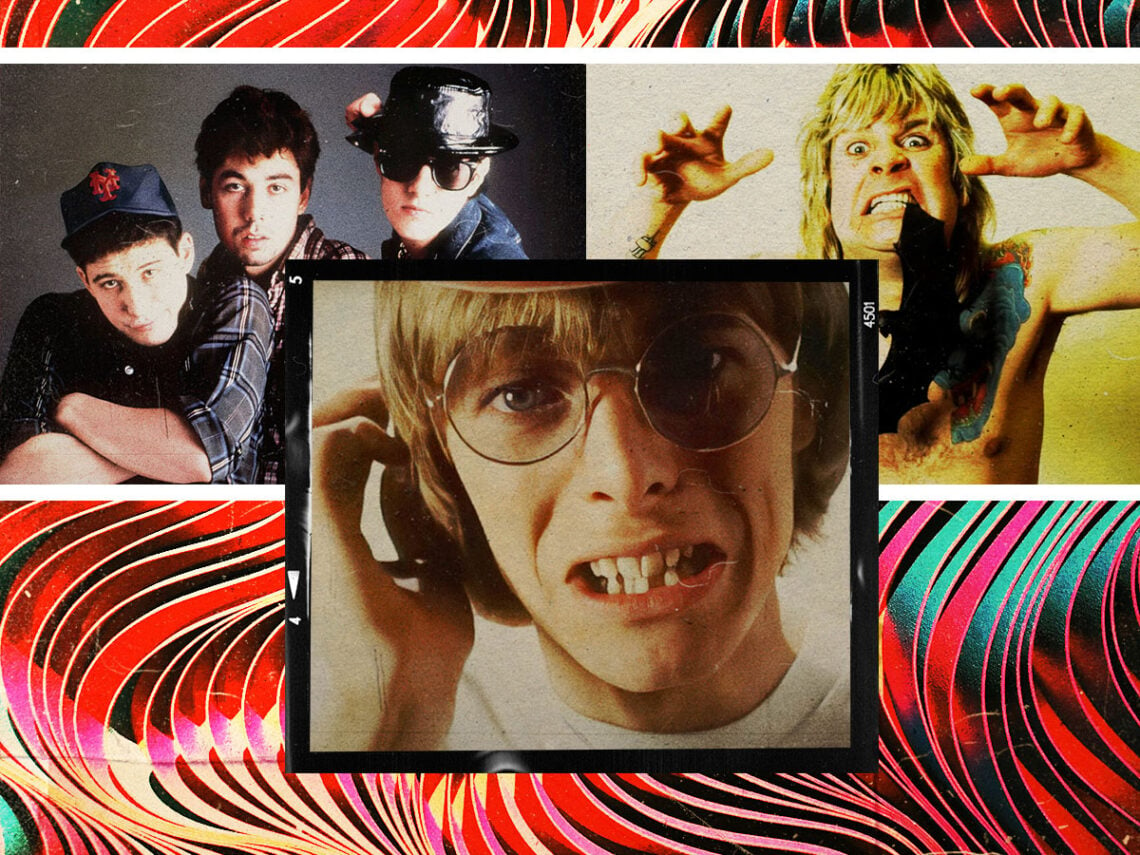
10 classic artists that were originally considered jokes

The most significant artists of all time tend to have a certain level of respect showered upon them. Even if they aren’t to everybody’s taste, the average music fan can look at most of the celebrated artists of decades past and at least understand why they were as successful as they were. Although half of the most prominent artists in the world had to fight for their relevance, acts like Radiohead and Stone Temple Pilots still didn’t garner respect once they became well known.
Although every one of these artists had more up their sleeves, most of them were treated as nothing but a gimmick with their first handful of records. Even though their later albums would prove to the fanbase that they had more to offer than just one trick, half of the artists still had that stigma carried around with them as if they had to justify why they were selling out millions of shows to prospective fans.
Granted, it’s easy to see why a handful of those artists got that reputation as well. Throughout their career, not every artist is supposed to take themselves seriously, and some artists have played into the tongue-in-cheek aspect of their reputation, either playing with different musical styles or making tracks that seem to be an amalgamation of what their detractors thought they sounded like.
Then again, every artist had time on their side, never stalling for a second and becoming the most successful names in their genre, either through perseverance or reshaping the genre to their benefit. Whether they are still looked at as jokes or have a mantle of respect placed on their name, all those supposed “jokes” are most likely laughing all the way to the bank these days.
10 artists that were considered jokes:
10. Aerosmith
Ever since The Beatles first landed on American shores, the US was trying to find their own substitute for the British Invasion. Although The Beach Boys may have gotten the ball rolling with their odes to summer and fun on the beach, it was only a matter of time before an act decided to take things in a heavier direction. Despite Aerosmith’s penchant for making one solid riff after another, just as many people dragged them through the mud as copycats.
For the first half of their career, ‘The Bad Boys From Boston’ received criticism from fans and critics alike for wearing their influences on their sleeve. Being an amalgamation of The Rolling Stones and Led Zeppelin, it was easy to spot the similarities between the partnership between Steven Tyler and Joe Perry with Mick Jagger and Keith Richards. Although the band never shied away from their love for The Stones, they quickly found their distinct track.
With millions of albums sold, Aerosmith took the basis of The Rolling Stones and added their signature brand of bluesy boogie, ultimately turning their songs into pop marvels in the next few decades with tracks like ‘Livin on the Edge’ and ‘Janie’s Got a Gun’. Although The Rolling Stones have had their distinct sound since the 1960s, there was no way Jagger and Richards would have written something like ‘Back in the Saddle’ if they had tried.
9. System of a Down
For bands considered jokes, it would be easy to put the entire rap-metal genre on this list. Except for Rage Against the Machine, nearly every band that tried to blend the sound of heavy guitars with a rapper and a DJ tended to age like milk, with the wave quickly dying off in the mid-2000s. Although System of a Down never had a DJ or tried on a hip-hop flow, fans were sceptically amused when they first laid ears on songs like ‘Spiders’ and ‘Sugar’.
Granted, that wasn’t without validity, either. When producer Rick Rubin first signed System of a Down in the first place, he remarked that he couldn’t stop laughing throughout the entire show because of how alien the music sounded to him. When the original shock factor had settled, the melodic counterpoint between Serj Tankian and Daron Malakian made for the most forward-thinking metal of the time, from the contrast of ‘Chop Suey’ to the massive protest songs like ‘BYOB’.
Between all of the heavy subject matter, though, even System knew when to have fun every now and again, including a handful of absurdist songs on every one of their albums like ‘Old School Hollywood’ and ‘Cigaro’. Trying to sell an audience on political doctrine is never easy, but if humour is mixed in, that bitter pill can go down a little easier.
8. Black Sabbath
There aren’t too many bands to come out of the 1970s that sounded as frightening as Black Sabbath. Since the heaviest band from around that time was Led Zeppelin, the riffs from Tony Iommi seemed to come straight out of the underworld, using the demented tritone at will on their titular track. Where most fans heard heavy metal sounds being birthed, the critics saw Sabbath as a half-assed blues band turning in schlock.
For as many fans as Sabbath won in their time, most seasoned rock fans saw them as a parody of what bands like Cream and Led Zeppelin had already done a few years before. Though Sabbath had their blues antecedents between them, Iommi took things one step further, turning the basic sounds of 12-bar blues into demonic exercises like ‘The Wizard’ and ‘NIB’.
Beyond their bluesy roots, though, the next few years would see Sabbath pave the way for future generations of metal bands, from adding synth textures on albums like Sabbath Bloody Sabbath to ushering in the New Wave of British Heavy Metal with Ronnie James Dio behind the microphone on Heaven and Hell. Sabbath was never meant to be a critic’s band, but once they stuck around long enough, they realised that they had accidentally invented an entire genre of music.
7. Beastie Boys
When the Beastie Boys were getting started, hip-hop was just getting initiated. Though the genre may have been birthed as an offshoot of disco with acts like the Sugarhill Gang, artists like Run-DMC came to the forefront with bars that could be taken seriously outside of a DJ’s set. While the Beastie Boys fit snuggly into that company, it wasn’t farfetched to think those Bowery Boys would be forgotten in a year.
Throughout their debut album, Licensed to Ill, most of the group’s rhymes feel primitive, sounding like the high school bully that just got done shoving a sorry nerd into a locker. While the group realised they had cultivated a reputation as wise guy New Yorkers, it wasn’t long before they realised they didn’t want that reputation anymore. Starting with Paul’s Boutique, the band developed into their own unique entity, making a psychedelic headtrip of samples that became one of the foundational albums of hip-hop.
As the years progressed, the band even started to play their instruments on their records, making for an eclectic mix of hip-hop, punk and alternative music that fit perfectly with the music scene of the 1990s, with Generation X wanting music that was more than just the average glossy schlock cluttering up MTV. The Beastie Boys may have begun life as the soundtrack to every frat house imaginable, but their willingness to experiment made for the most impressive runs in alternative music history.
6. Red Hot Chili Peppers
The underground California rock scene has always been known for creating off-the-wall artists. Although many like to think of the sounds of LA as the Eagles and Linda Ronstadt, this was also the same scene that birthed bands like The Germs and The Runaways, bringing a rowdy edge to the ‘Sunshine State’ that no one had heard before. If listeners thought that hardcore punk was a lot to take in, nothing could have prepared them to see Red Hot Chili Peppers for the first time.
Long before John Frusciante joined the fray, most of the early shows by the Peppers served as funk/hip-hop joints. When playing together for the first time, Flea and original guitarist Hillel Slovak came up with their first song by jamming and having their friend Anthony Kiedis rap over it. Although there was no chance of anyone taking them seriously during their first two albums, the struggles they had to work through were channelled into their best material.
After finally getting on track during The Uplift Mofo Party Plan, the death of Slovak and the inclusion of Frusciante took the group’s playing to a new level on Blood Sugar Sex Magik. Though the band would have to punch their way through even greater hardships, every record since has had its fair share of amazing material, blending their usual funk style with a melodic sensibility unheard of from a band of their genre. Although not every Red Hot Chili Peppers lyric is meant to be on the level of Bob Dylan, there’s no disputing the emotion behind every melody.
5. Oasis
Towards the mid-1990s, the rock scene needed an excuse to feel happy again. Since the last few years of grunge had been about talking about every problem that life can bring, the death of Kurt Cobain gave everyone a dose of reality, realising that all that doom and gloom came at a heavy price. Although artists like Weezer and Green Day were bringing a more lighthearted tone to the genre, the first works of Noel Gallagher felt like a cheap joke from decades past.
Although Noel was known for crafting the best melodies of his time, just as many detractors were thinking that every Oasis song was a rehash of what The Beatles and The Rolling Stones had done in the 1960s. It wasn’t that far off the mark, with several songs like ‘Supersonic’ and ‘She’s Electric’ having a few subtle nods to the Fab Four. While Noel may have been able to create melodies like his idols, the difference was in the tone.
Having a massive love for punk rock, Noel’s defiant attitude in his music spoke to legions of disaffected kids looking for optimistic music again. While Noel would even tell journalists that he liked to nick ideas from his favourite acts, it never came from a feeling of laziness. This was the sound of a songwriter taking bits from classic rock history and turning it into a musical collage.
4. Radiohead
The difference between the Radiohead that most people knew in the early 1990s and the one that walks the Earth now feels like night and day. Ever since their colossal album OK Computer, every single Radiohead project has been looking to expand the parameters of rock and roll, toying with different electronic enhancements and songs that don’t seem to have any set structure. Although the band grew exponentially in just a few years, their beginnings felt like a poor man’s version of Nirvana.
Released in 1993, Pablo Honey was greeted like the British equivalent of grunge, sounding like a cheap pastiche of what the Seattle scene was doing so effortlessly. Despite garnering success from their single ‘Creep’, Radiohead did not intend to do everything over again. Starting with The Bends, the band was looking to destroy their earlier reputation, making songs more depressing before reshaping the rock landscape with OK Computer.
Although any average band could retire and make profits off an album like that, Radiohead never bothered resting on their laurels, drawing a line in the sand with Kid A and spending the rest of their careers doing whatever the hell they wanted, whether it was returning to their roots with In Rainbows or going into the world of chamber pop on A Moon Shaped Pool. Radiohead may not have been the British answer to Kurt Cobain’s gloom, but life was more fun for them when they followed their muse.
3. David Bowie
There’s no denying the amount of influence that David Bowie has had across generations of musicians. Throughout his time on this Earth, ‘The Starman’ was looking to expand the minds of the average rock fan, taking influences from fellow visionaries like Bob Dylan and Lou Reed and constantly changing his style to suit where he was at any particular moment. On Bowie’s first introduction to the world, though, it wasn’t clear that he would be anything more than a novelty act.
Rather than the rock and roll alien he’s known for today, Bowie’s first proper debut showcased him as a songsmith who wrote meaningless show tunes. Throughout songs like ‘Rubber Band’, it’s impossible to see the potential that Bowie would build upon, treating his audience to songs that feel closer to the backing track for a particularly bad carnival.
It would seem that even Bowie wasn’t a big fan of his debut, either, practically disowning the record and rebranding himself as a glam-rock messiah on his single ‘Space Oddity’. Although an equal amount of listeners thought Bowie was playing up his glamorous looks for a bit of camp, this was not just about entertaining an audience. Bowie was looking to tear down the expectations of the traditional rock star, and in doing so, he found his calling as a true rock and roll chameleon.
2. Stone Temple Pilots
As soon as Nirvana hit it big, every record label wanted to do the same thing over again. Although the grunge scene of Seattle thrived on having an eclectic mix of bands among them, the term “grunge” was bestowed upon them to describe their signature brand of emotionally intense music with blaring guitars and incomprehensible vocals. If the labels couldn’t get the trust of a band like Pearl Jam, Stone Temple Pilots seemed to be the next best thing.
Granted, many grunge purists saw through the supposed ruse of Stone Temple Pilots. Coming from California, many assumed that the band had tried to copy off the Seattle sound with songs that sounded way too similar, down to Scott Weiland co-opting Eddie Vedder’s vocal style on songs like ‘Wicked Garden’ and ‘Plush’. Once the initial hate train settled, Stone Temple Pilots became an eclectic alternative rock act, bringing a healthy dose of sunshine into their second album Purple.
Even when grunge was dying out in the mid-1990s, the band reinvented themselves yet again, turning into a borderline glam rock band on albums like Tiny Music before toying with garage rock on No. 4. The original Stone Temple Pilots may have felt like a discount version of what Pearl Jam was already doing, but the rest of their catalogue is a perfect example of how well a band can grow up.
1. Rush
None of the original progressive rock bands were looking to make anything too lighthearted. Unless it was Jethro Tull releasing their comedic take on prog music on Thick as a Brick, acts like Yes and Pink Floyd were looking to expand the minds of their listeners, taking them on long journeys that put rock on the same level as classical music. While Rush could play with the best of them, just as many enthusiasts considered them the nadir of progressive music.
Although the band could play their asses off, the flowery language and the self-indulgence of their prog masterpieces became too much for the average rock fan. Critics weren’t much kinder, either, having severe problems with Geddy Lee’s high-register singing and their inability to find any discernible hook across their massive epics. That didn’t matter to the Rush faithful, though, with the band building up a strong army of fans that stuck with them throughout every facet of their career.
From their turns as pop stars in the 1980s to synth-rock musicians in the latter half of the decade, every era of Rush’s career has been carried by a rabid number of fans, more interested in seeing where the band were going to go next than what any supposed critic had to say about them. Although Rush still has a reputation as a joke amongst corners of the rock community, they have since carved out their own lane separate from the mainstream.
