


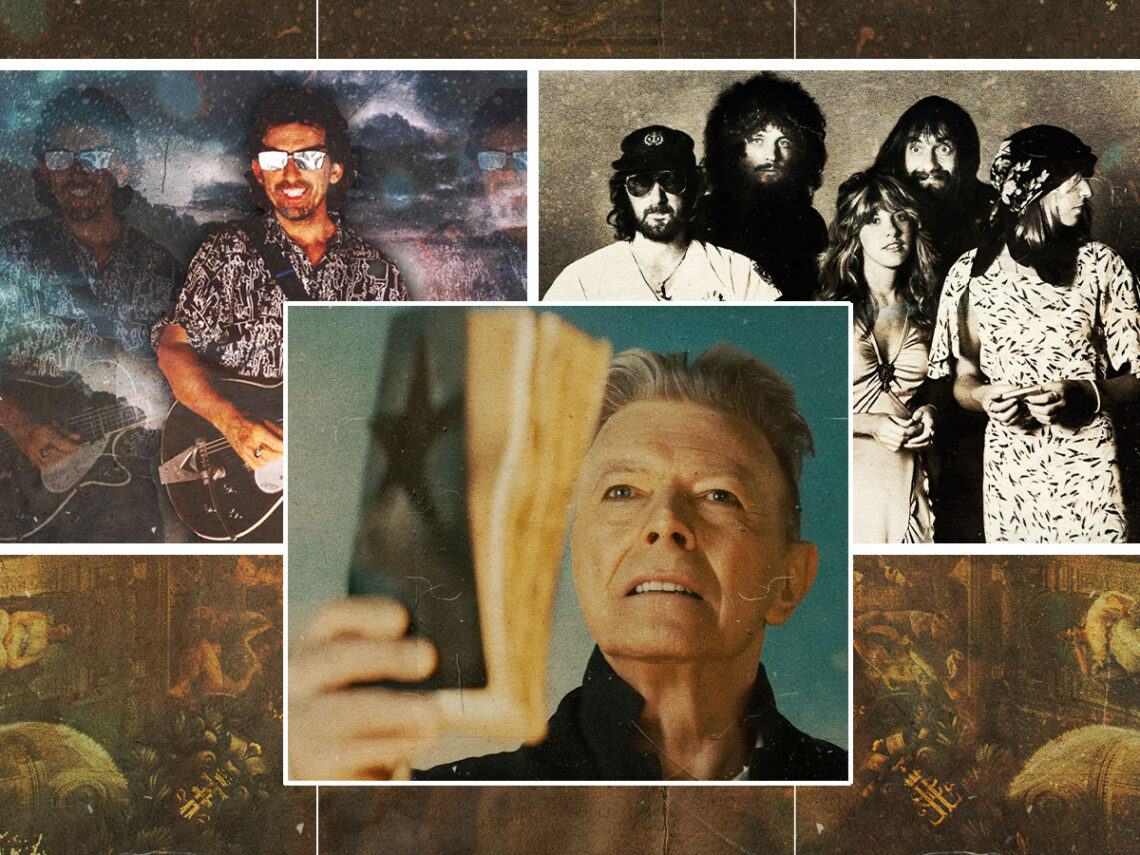
10 career renaissances from classic artists

It’s almost an impossible feat for any band to become one of the biggest acts in the world. For as much blood, sweat and tears go into creating an album, there tends to be a 50/50 chance as to whether the music will actually strike a nerve with the public. Even though it takes superhuman strength to make a band’s career blow up once, artists like Paul McCartney and Tina Turner made it happen twice.
After their first foray into the big leagues, each act tends to go through a lull period where they aren’t exactly measuring up to their past glory. While the typical career trajectory is for fans to just forget about their favourite acts, these acts decided to knuckle down and create records to remind their fans why they should be paid attention to in the first place.
Then again, not every record was about giving their fans the same formula one more time. While there are a few identifiable elements to remind fans of the glory days, the real strength behind the career renaissance is showing fans something they didn’t realise they wanted, either by expanding on the old sound or taking a creative risk no one saw coming.
No matter how an artist gets to the top of the food chain, their second shot at the big time might even eclipse the acclaim they had at the start of their career. Instead of resting on their laurels for the rest of their days, these albums proved that a good artist doesn’t need any formula to wow their audience.
10 career comebacks by classic bands:
10. Cloud Nine – George Harrison
Towards the end of the 1980s, George Harrison had washed his hands of his days as a pop star. Since most of the press for his latest albums wanted nothing to do with his spirituality anymore, the former Beatle focused on his work with his film studio Handmade Films, only returning to contribute the odd song to a movie soundtrack. After working with ELO frontman Jeff Lynne on a few projects, though, Harrison started to get the itch to record again.
While most of Cloud Nine does feel timestamped in the ‘80s these days, Harrison delivers the strongest set of songs of his solo career, like ‘Fish on the Sand’ and ‘This Is Love’. Though he does take a few cues from the modern recording artists of the day, it’s easy to see Harrison’s focus on religion seeping into the mix as well, like the liturgical sheen that coats ‘Just For Today’ or the question of whether he’s singing to a girl or God on ‘If That’s What It Takes’.
The sessions went so well that it would eventually spawn a completely different group, with Harrison cutting a B-side that would become the debut single for The Traveling Wilburys. Though Harrison’s career comeback is the textbook definition of “dad rock”, his choice to settle into comfortable middle age is the career goal that most artists can only dream of.
9. …Like Clockwork – Queens of the Stone Age
It’s arguable that Queens of The Stone Age have never had a stinker in their discography. While there have been a few albums that shine brighter than others, Josh Homme’s skill at crafting some of the gnarliest riffs known to man has only grown stronger with age. Even though Era Vulgaris still had the signature QOTSA sound, …Like Clockwork was a career resurgence due to its tortured production schedule.
Before going into the studio, Homme was undergoing surgery when his heart stopped on the operating table, being pronounced dead for a few minutes before the paramedics revived him. Having a new lease on life, most of Homme’s lyrics on the album are about his unsettling experience and the pure euphoria of being alive. Although the band had been going down an art-rock direction for the past few albums, ‘My God is The Sun’ is an example of classic Queens working at full blast.
No QOTSA album is complete without a few guest stars, and Homme makes his comeback album feel like one massive party, with everyone from Elton John to Alex Truner to the return of Dave Grohl featuring on the record. Queens of the Stone Age could have easily died on that operating table with Homme, but the desire to keep his musical dreams alive birthed one of the greatest albums of the 2010s.
8. Automatic for the People – R.E.M.
There’s no set rulebook for what happens to the ageing rock star. Even though plenty of artists have seen success beyond their prime years, no one is getting any younger, and it’s not as easy to write songs about the recklessness of youth when approaching 40. While R.E.M. had said all they needed to say by the early ‘90s, they were on a renaissance for the ages on Automatic for the People.
Rather than try to stay in the past, Michael Stipe details his struggles with growing older on every track, from having preoccupations with death on ‘Try Not To Breathe’ to reminding himself that things will one day get better on ‘Sweetness Follows’. Alongside Stipe’s brilliant vocals, Peter Buck’s knack for a great guitar line pairs beautifully with Mike Mills’s bass work, providing an anchor for Stipe to create pictures in the listener’s mind.
Even in an era when grunge dominated, R.E.M. still found themselves fitting in amongst the cool kids, with ‘Everybody Hurts’ becoming a landmark hit and the album being a personal favourite of Kurt Cobain. Whereas most artists are stuck trying to find eternal youth through music, R.E.M. realised that it was much more exciting to write about the here and now.
7. Californication – Red Hot Chili Peppers
For all of the chaos going on in the 1990s, there was a good chance that we wouldn’t be talking about the Red Hot Chili Peppers before the decade was out. Although they had arrived on the scene with one of their greatest albums at the start of the decade, the dysfunction with guitarist John Frusciante cast a dark shadow over the next few years, with Dave Navarro joining for the poorly received One Hot Minute. After Frusciante overcame his struggles with heroin addiction, his return to the world of funk-rock made for a ray of musical sunshine on Californication.
Then again, this album is by no means happy from back to front. Throughout every song, Anthony Kiedis details the long road that it took for the band to get here, from his struggles with substances on ‘Scar Tissue’ to memorialising their fallen guitarist Hillel Slovak on tracks like ‘Saviour’ and ‘Otherside’. Since Frusciante had to practically relearn guitar from scratch, his minimalist approach makes for the most simplistic guitar masterpieces ever made on the title track or ‘Parallel Universe’.
Even though there’s a genuine feeling of weariness across Californication, the band are by no means out of gas. It took a world of trouble for them to get back on track, but when listening to them play together again, it sounds like they would do it all over again if it meant being this happy.
6. Fleetwood Mac – Fleetwood Mac
The original incarnation of Fleetwood Mac was a far cry from anything that fans associate with them these days. Before the era of pop perfection, The Mac was known as one of the defining blues rock acts of the late 1960s, with Peter Green steering the group through their first major hits like ‘Black Magic Woman’ and ‘Albatross’. After a Spinal Tap-level of lineup changes, The Mac’s final form started to fall into place once they got two pop geniuses in their ranks.
After losing guitarist Bob Welch while recording their next album, Mick Fleetwood walked into another session in the recording studio and stumbled upon guitarist Lindsey Buckingham. Impressed by what he heard, Fleetwood asked Buckingham to join the group, only to be told that Buckingham wouldn’t get on board if not for his girlfriend, Stevie Nicks, joining as well.
Each playing off each other, Fleetwood Mac is the culmination of every songwriter in the band reaching their creative peaks, from Christine McVie’s delicate voice on ‘Say You Love Me’ to Nicks proving that she was already a pop starlet on tracks like ‘Rhiannon’ and ‘Landslide’. For a band that was spitting out members left and right for most of the 1970s, Buckingham and Nicks’s flair for pop hooks made their massive success look easy.
5. Private Dancer – Tina Turner
The entire backstory that goes into Tina Turner’s career feels sad to look back on. Although she may have had one of the biggest careers in R&B with the help of her husband, Ike Turner, it didn’t come without its problems, including abuse from her husband and a neverending cycle of work that never gave her time to breathe. After finally reclaiming her independence from Ike, Turner launched herself into the 1980s with a vengeance on Private Dancer.
From the first few seconds of her debut single ‘What’s Love Got To Do With It’, Turner sounds like a new woman who’s unwilling to take shit from anybody. Compared to the pop starlets that were lighting up the charts around the same time, Turner has no time for any man trying to run her life, holding all the cards in songs like the title track and not being afraid to tell off her new flame on ‘You Better Be Good To Me’.
Even without the help of her husband, Turner could still deliver the most fiery performances of her career, practically one-upping her version of ‘Proud Mary’ with ‘Steel Claw’ and delivering a great mix of covers from rock legends like The Beatles and David Bowie. Her home life may have fallen into a million pieces, but Turner refused to let any heartache ruin her chances as a superstar.
4. Band on the Run – Paul McCartney and Wings
It’s hard to even imagine Paul McCartney ever struggling during his solo career these days. Compared to his fellow Beatles, Macca has delivered a good-time spirit in his music that seems to be tailor-made for the singles charts, whether it was in the Fab Four or working in the group Wings. For a few choice years, though, McCartney was becoming known as the resident punchline of the greatest band in the world.
With sonic experiments like RAM and the skeleton record Wild Life, McCartney couldn’t get anyone to take him seriously, with Ringo Starr even landing a few punches at his bandmates’ expense. When it was time to hunker down and deliver an excellent record, though, McCartney was greeted with his bandmates quitting just before they were to record in Nigeria.
Then again, we’re talking about Paul McCartney here…the resident king of optimism. For all of the odds that were stacked against him, McCartney travelled to Nigeria with his wife Linda and Denny Laine and created Band on the Run, which brought him back to the pop charts with the title track and ‘Jet’. Even a few experimental tracks became staples of McCartney’s career, like ‘Nineteen Hundred Eighty-Five’ and ‘Let Me Roll It’. McCartney could have been known as the major casualty of The Beatles, but Band on the Run is the sound of Macca with his back against the wall and creating his masterpiece.
3. Full Moon Fever – Tom Petty
As the 1980s began, Tom Petty was becoming dangerously close to settling into “dad rock” territory. Although he had only been in the spotlight for a decade, his flair for retro rock and roll and his inclusion in The Traveling Wilburys made him the parent-approved version of what rock was supposed to be. After making a record among rock legends, Petty borrowed Jeff Lynne to help create his first major solo release.
Operating without the Heartbreakers for the first time, Full Moon Fever is the sound of Petty, Lynne, and guitarist Mike Campbell having fun for the hell of it. Although not every song was necessarily cut out to be a Heartbreakers tune, Petty’s ability to tell standalone stories in his songs made for musical magic on tracks like ‘A Face in the Crowd’ and ‘Free Fallin’, which became major chart hits alongside contemporary acts like Peter Gabriel.
Even though The Heartbreakers weren’t as thrilled to hear Petty cutting an album without them, this would give way to the most honest songs he had ever written, from the conviction in ‘I Won’t Back Down’ to the pure swagger of ‘Runnin’ Down a Dream’. While Petty may have started his career renaissance in the late ‘80s, his no-BS attitude would become foundational for the grunge acts that were to come.
2. Blackstar – David Bowie
After decades of musical brilliance, no one expected David Bowie to deliver a stunning album in the 2010s. Even though ‘The Starman’ had virtually retired from music after the tour for Reality, The Next Day saw Bowie embracing the sounds that made him a star back in the 1970s, sounding like his Berlin trilogy updated through a modern lens. Bowie was not long for this world, though, and Blackstar was the moment he began accepting his fate with class.
Being diagnosed with cancer years before the album dropped, Bowie takes inventory of his life throughout every song on this record. When looking back on his years as a superstar in tracks like ‘Lazarus’ and the title track, Bowie approaches the idea of death with both determination and musical ingenuity, wondering what people will make of his life once the world moves on without him.
Even though the magic of Bowie’s golden years is still accounted for, his love of jazz also seeps through the mix, as if to give his audience one last musical costume for him to try on before he departs from them for good. Bowie might be searching for new cosmic lands now, but Blackstar is a fond farewell that is rare to come by in music.
1. In Rainbows – Radiohead
Every single Radiohead album ever released was based on some sort of risk. Even though a band with a debut like Pablo Honey had no business lasting past 1993, their lease on life with The Bends made for even more creative detours, reinventing rock on OK Computer before dipping their toes into ambient music on Kid A. While everyone had pigeonholed the band as art-rock types for the rest of their career, In Rainbows is when they proved that they could still make transcendent rock music.
While the experimental sounds of the band’s post-2000 years are still accounted for, their first independent record gave us some of their most solid rock tracks since OK Computer, from Jonny Greenwood’s savage riff on ‘Bodysnatchers’ to the entire band operating at full capacity to hammer home the final verse of ‘Jigsaw Falling Into Place’.
Even after the sessions were finished, Radiohead was still looking to be ahead of the curve, releasing the album independently on a “pay what you want” basis and managing to turn over a profit. In an era where many critics wondered whether rock was dead, Radiohead reinvented the genre by chopping up their old sound and rebuilding it from the group up.
