


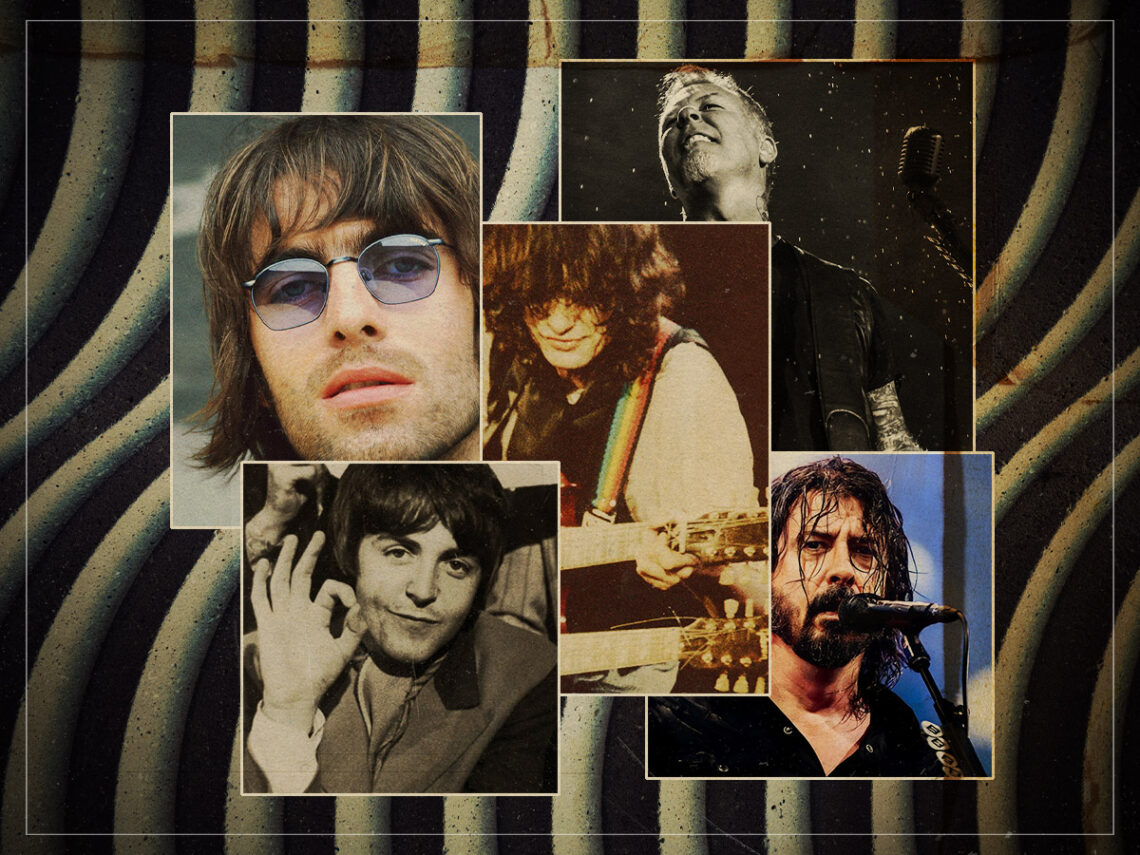
10 bands that got away with stealing

No artist is safe from the odd lawsuit that comes their way. As much as people like the idea of making the most out of their inspirations, no one manages to get off easy when they have something that’s a little bit too close to their inspiration. And when it comes to bands like Oasis, they made out like bandits when it came time to pull from some of their musical heroes in their own work.
Granted, this does not in any way condone the act of plagiarism. Many artists have found themselves in hot water when they take an entire song from someone else and pass it off as their own, and lawyers are more than happy to put their foot down and claim that one of the biggest hits at the time is their client’s property. If you hide it well enough, though, it’s easier for people to disguise their biggest tunes.
After all, the biggest strength that every musician has is creativity, and if that means twisting the riff around ever so slightly or putting it in the context of a completely different song, it’s usually worth it to see where they got their inspiration from. And if it manages to expose more people to a genre of music that they wouldn’t have thought of otherwise, it’s practically doing a good deed trying to get more people listening to their favourite bands.
Given how similar some of them might have sounded, you also have to give kudos to the original artists for not holding any ill will towards their musical contemporaries. They could have fought for their songs if they wanted to, but they seemed satisfied knowing that millions of people enjoyed their music out in the world.
10 artists who got away with stealing:
‘Gods of War’ – Def Leppard

In the grand scheme of hair metal icons, Def Leppard certainly deserves to be one notch above everyone else. They may have succumbed to the same tropes that many bands on Sunset Strip did, but outside of the usual odes to sex, drugs and roll, the Sheffield legends could sing their asses off and crafted one of the best rock albums of the entire decade with Hysteria. For as much as their music revolved around rock and roll before anything else, no one expected them to get as serious as they did on ‘Gods of War’.
Yes, in the midst of an era that didn’t think about anything more than hairspray, there was an honest-to-God protest song against the dangers of Cold War propaganda. While the epic nature of the song can get more than a little bit heavy-handed for a band that would be singing tracks like ‘Pour Some Sugar On Me’, the main riff behind it was taken from The Police, with Steve Clark basing the central guitar figure off of the finger stretch in ‘Message in a Bottle’.
But when it’s played through mountains of distortion and rotating amongst two guitar players, the guitars almost sound mechanical, as if to bring to life the aforementioned gods of war as they make their way across the world. Joe Elliott may be the one voice crying out for salvation, but given that the song ends with a Pink Floyd-esque acoustic guitar riff, there’s not as much hope as one would think.
‘Wheels’ – Foo Fighters

For the past few years, Foo Fighters have become the shoo-in for any great rock and roll presence on a grand stage. While Dave Grohl has built up the kind of reputation that warrants being called a legend of rock, their massive presence at festivals as of late often makes them look like one of maybe five “modern” bands that people would want on the festival circuit. That’s not necessarily a bad thing, but as the years go by, Grohl has been inching closer and closer to dad rock.
Although most people putting that label around Foo Fighters aren’t seeing the full picture, ‘Wheels’ absolutely falls into that category. From the beat being a little lazier than usual and Grohl sounding like he’s being forced to shout the chorus, there’s not nearly as much energy in the tune as there should be. But that might be because the basis for the song came from one of the almighty figures of granddad rock.
From the chord progression to the theme of landing on the ground, ‘Wheels’ feels like Grohl writing his version of Tom Petty’s ‘Learning To Fly’, only this time with far less commitment to the idea. Then again, Petty did sell loads of records for a reason, and since this was meant to be the kind of tune that would stand alongside their other greatest hits, it’s not like Grohl was making an uninformed decision here.
‘Master of Puppets’ – Metallica

Metallica has always played fast and loose when it came to copyright rules. When they first started, no one quite knew what they were hearing, so once they decided to start throwing songs by people like Diamond Head into their live set, they didn’t bother telling the audience that it was written by someone else. While the band would eventually steal from themselves on tracks like ‘King Nothing’, their trademark tune did have a familiar riff hiding in plain sight for the glam-rock fans.
Despite Metallica wanting nothing to do with the lipstick generation of heavy metal bands, the breakdown riff after the solo in ‘Master of Puppets’ is taken note-for-note from David Bowie’s ‘Andy Warhol’. The band had been exposed to Bowie through Cliff Burton, and since they had already taken the song title ‘Leper Messiah’ from ‘Ziggy Stardust’, they didn’t think twice about metalising the folksy riffs to sound more menacing.
But listening to both songs back to back, this is one of the few times where James Hetfield’s performance of the riff is a lot more biting than the original. Bowie’s version is a fun time tied together with a lazy little acoustic riff, but the attention to detail that Hetfield puts on the thing makes the whole track feels like it’s made from cerated steel.
‘You Shook Me’ – Led Zeppelin

When talking about Led Zeppelin’s history with copyright, it can be more than a little bit tricky. The band were among one of the most notable plagiarists in the blues rock scene, but once their music was attributed to the correct writers, it was easier to listen to tracks like ‘The Lemon Song’ and ‘When the Levee Breaks’ and know that the royalties were going to the right people. But in terms of ‘You Shook Me’, this is a unique case of plagiarism from another member of the British blues scene.
Despite everyone and their mother having a version of this tune in their back pocket at the time, Page’s version is almost identical to the one that Jeff Beck was working with when he made his solo album, Truth. While Robert Plant admittedly takes the song to new heights with his massive range, hearing Beck and Page’s performance feels like asking two guitarists to solo over the same track.
Beck did grow to resent Zeppelin’s debut from copying his formula so specifically, but maybe Page’s way of copying his riffs was a blessing in disguise. There was always room for more blues guitarists, but where else would Beck have found the motivation to go beyond rock and roll conventions on albums like Blow By Blow or Wired later down the line?
’21 Guns’ – Green Day

There has always been a bit of a strange aura around Green Day’s 21st Century Breakdown. As much as they poured their heart and soul into making a decent follow-up to American Idiot, there are often on the record where it feels like the pop-punk icons are using the same storybeats that their original masterpiece had. While it may have worked when listening to songs like ‘Know Your Enemy’, no one expected the song frankenstein that went into making ‘21 Guns’ a hit.
Although the tune is by far the most commercial track on the record, there are pieces that are clearly lifted from other songs. Right as the chorus kicks in, Billie Joe Armstrong’s vocal melody seems to be lifted from the chorus of ‘All The Young Dudes’ by Mott the Hoople, which shouldn’t come as any surprise given his love for classic rock. But the most egregious example comes when the solo kicks in.
While the band weren’t particularly known for their guitar solos, that act is far more noticeable when you realise that half of the solo is taken from the vocal melody of the theme song to the sitcom Full House. Maybe the band had been watching what John Stamos and Bob Saget had been up to in their downtime, but it gets much more noticeable when you start taking ideas from daytime TV shows.
‘The Bitter End’ – Sum 41

Sum 41 was never a band completely happy with staying in pop-punk forever. They had grown up listening to all kinds of heavy music, and while they did have their heavy moments, it was hard to divorce themselves from the bratty attitude that coated songs like ‘In Too Deep’ and ‘Fat Lip’. But Chuck was the moment they grew up, and amid that transition, they had picked up some serious chops along the way.
While guitarist Dave ‘Brownsound’ had always been a monster on guitar, ‘The Bitter End’ is where they fully embrace every one of their metallic inspirations. For all of its short runtime, the track is a loving homage to Metallica, down to the machine-gun riffing in the verses and everything coming to a halt when Deryck Whibley says the title of the tune the same way that James Hetfield does on ‘Battery’.
It’s easy to call this a blatant steal, but there’s no ill will between Sum 41 and Metallica when making this tune. They were fans like the rest of the metal faithful, and if they couldn’t have the chance to jam with their heroes, what better way to get out that energy than sculpting their own Metallica track from the ground up?
‘NIB’ – Black Sabbath

If you ask any member of Black Sabbath, none of them claimed to be the originators of heavy metal. The riffs of Tony Iommi could practically be trademarked as such, but whenever they talked about their sound, they categorised themselves as a hard rock band first and foremost. Granted, they were also knee-deep in blues rock when they formed, and that could be heard a bit too much on some of their deeper cuts.
Whereas the band’s debut opens with their namesake track, ‘NIB’ is the one case where Iommi danced too close to the fire with his influences. It was impossible for any guitarist of his generation not to be influenced by Eric Clapton, but from the way that the main riff is phrased to the little pentatonic runs, this feels like the younger cousin of the riff from ‘Sunshine of Your Love’, even sharing a bit of Clapton’s tone as well.
But while the riff says one thing, Iommi’s other riffs in the tune tell a completely different story. He was on the verge of something greater, and even if Clapton helped him get the job done on his finest records, the seeds of metal were being planted every time he found an opportunity to twist the blues into something else.
‘Clint Eastwood’ – Gorillaz

As Damon Albarn entered the 2000s, he knew he needed another outlet besides Blur. The band had gone through tumultuous times in the 1990s, and while it was fun to see them have a sparring match with Oasis halfway through the decade, it was disheartening to see them hit a low once the Britpop movement started to die out. Albarn wasn’t about to roll over and fade into obscurity, though, and Gorillaz was his main outlet to begin making music in a more primitive way.
The entire idea of making music as a parody of manufactured bands is already a great idea, but ‘Clint Eastwood’ was playing it a bit too safe. Most of the band’s debut record is nothing but Albarn flirting with genres like dub and electronica, but the main musical feature of their biggest song came from him fiddling around with the digital preset that came with an omnichord that he had bought.
But whereas most people would be called lazy if they tried to do something like this, it works a lot better through the mind of someone like 2D. The entire appeal of that first record is that it feels a little bit junky and decrepit, so the idea of making a whole song based around one preset is the modern equivalent of making music out of banging on pots and pans.
‘I Saw Her Standing There’ – Beatles

There has always been a certain hesitancy when critiquing anything The Beatles have ever done. There’s no doubt that the Fab Four have made some of the greatest music of anyone’s lifetime and will be heard for years to come, but there are many other instances where some of their songs would end up being taken to court for being a bit too close to their inspirations. But whereas John Lennon paid a hefty price for using Chuck Berry for ‘Come Together’, Paul McCartney was a bit more crafty with his stealing.
Then again, there’s no way of playing rock and roll without bringing in some of Berry’s influence. The man single-handedly formed the concept of what rock music should be, but Macca actually took inspiration from the bass player when working on ‘I Saw Her Standing There’, playing the same notes as the song ‘I’m Talking About You’ and raising the key to fit what he was singing.
And whether he knew it or not, this kind of attention to detail in terms of bass playing would be a foundational part of the way Macca approached the instrument in the next few years. A lot of what he played on those early records is rudimentary and serves the song perfectly, but as everyone from Berry to James Jamerson taught him, it was okay for the bassist to be a little bit busy on the low end.
‘Don’t Go Away’ – Oasis

Throughout rock history, no one has been prouder of their song thefts than Noel Gallagher. Although he has been more than happy to give credit where it was due in court, there were always moments where ‘The Chief’ could take an entire song and tweak things slightly to make them sound like his own piece. And while it’s easy to call out a song like ‘Don’t Look Back In Anger’ for copying the piano riff from John Lennon’s ‘Imagine’, Noel would wait one album later for his most blatant theft.
Since most of Be Here Now was being recorded from under mountains of cocaine, it wasn’t out of the question for Noel to dig into the old memory banks to find some of his older tunes. But whereas ‘Step Out’ took from Stevie Wonder, ‘Don’t Go Away’ was a case of Noel screwing over his friends The Real People who helped Oasis get their start when they were gigging in Manchester.
And when you line up both of them side by side, the only difference is that Noel put his version in a major key and changed the inflexions slightly, even keeping some of the original lyrics in the final version. While Liam admittedly puts his entire soul into singing the track, the song itself is further proof that if it found its way into Noel’s head, it wasn’t off the table to put it into one of his tunes.

Never Miss A Beat
The Far Out Beatles Newsletter
All the latest stories about The Beatles from the independent voice of culture.
Straight to your inbox.