


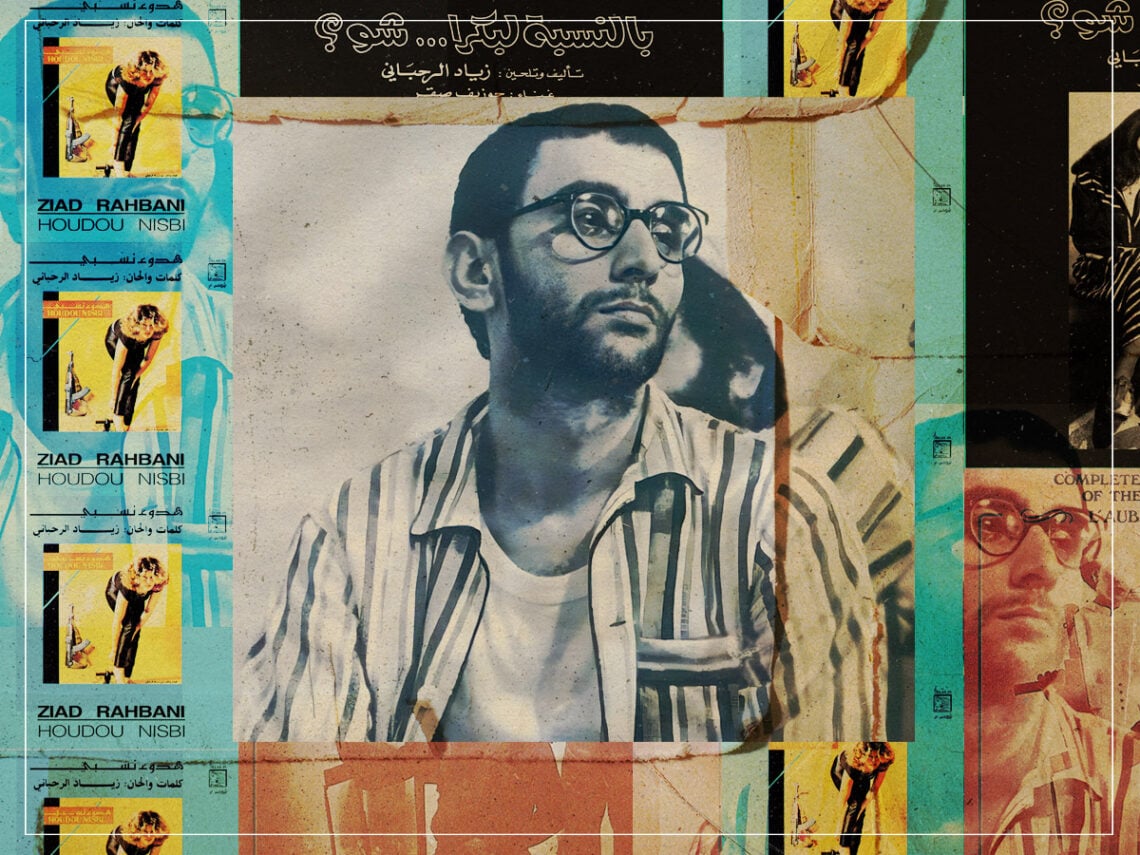
Ziad Rahbani: Arabic jazz funk versus an oppressive political establishment

For hundreds of years, the medium of music has proven to be an effective form of social and political protest, with countless groundbreaking artists and music scenes arising from a time of political upheaval. From the defiant jazz of the Swingjugend in Nazi Germany to the hardcore punk which targeted Ronald Reagan’s presidency, art and music have always sought to challenge those in power. Within the musical landscape of the Middle East, there have been few artists quite as revolutionary as Ziad Rahbani.
Born to the famous Lebanese singer Fairouz and the pioneering composer Assi Rahbani, it seemed as though the world of music was the only sensible option for Ziad Rahbani. During his teenage years, in the late 1960s, he began to establish himself as a songwriter and musician and soon began composing for his mother while his father was ill. Of course, composing for one of the nation’s most prominent singers brought Rahbani a great degree of notoriety, but political unrest got in the way of him dominating the mainstream.
During the mid-1970s, political unrest and the rise of sectarianism in Lebanon reached a boiling point that soon erupted into an all-out civil war. Despite the nation having a considerable population of Sunni and Shia Muslims residing in the country, in addition to the repeated influxes of Muslim refugees fleeing persecution in Palestine, the country’s government was dominated by Christian – and predominantly right-wing – politicians. Soon, the nation was enveloped by conflict, largely resulting from battles between the Lebanese Christian nationalist militias and the Palestine Liberation Organisation.
Coming from a Christian family, Rahbani was expected to be in support of the nationalist militias, but he could not sit by and watch the brutal suppression of the PLO in good faith. So, the composer and songwriter began to use his music and artistry as a means of rebelling against the political establishment of Lebanon. His work would often satirise or criticise the nationalist government, making the songwriter a hero for the political left wing of the Lebanese Civil War and a staunch enemy of the right.
Nowadays, people tend to think of political protest music as being very abrasive, angry and loud – influenced largely by the punk explosion of the 1970s. In contrast, though, Rahbani’s music was defiantly euphoric. Inspired by the influx of Brazilian bossa nova permeating through the Middle East on the radio, Rahbani created a unique and captivating blend of Arabic folk, spiritual jazz and bossa nova. The resulting records were nothing short of groundbreaking and quickly earned Rahbani a reputation as one of the greatest musicians in the Arab world.
As the war waged on, Rahbani worked tirelessly on his music, all the while evading targeted harassment and alienation as a result of his outspoken political views. Following the horrific massacre of Palestinian refugees in Tall a-Za’tar in 1976, which saw 3,000 innocent Palestinians murdered by the far-right Christian militia, Rahbani was forced to flee his home in the religiously mixed area of West Beirut, but it certainly did not stop his musical output.
Throughout the 15-year conflict, Rahbani continued to produce groundbreaking and politically dangerous music, which has since stood the test of time and continues to be enjoyed for its distinct groove and unique blend of influences. Indeed, the composer remains a pretty prominent part of the Arabic music world to this day, having helped to establish the sound of 20th-century Lebanon through his countless records, film soundtracks and even stage performances. Both the sounds and, depressingly, the political content of Rahbani’s music remain an essential part of the cultural fabric of the Middle East.
