


‘Wrong Husband’ movie review: takes on the best features of fairy-tales

Magical reality drama Wrong Husband is essentially a fairy tale, complete with family tragedy, star-crossed lovers, and magical beings helping or hindering the characters.
It takes place in the traditional ‘once upon a time’ – in this case, thousands of years in the past – but in an uncommon setting: the Arctic. Inuit filmmaker Zacharias Kunuk has been a favourite of indie film lovers since his 2001 drama Atanarjuat: The Fast Runner was given the Caméra d’Or award at its world premiere at Cannes.
Kunuk was a major part of the development of the thriving Inuit film industry, including an independent production company of which he was co-founder. His films are usually set within the northern Canadian Inuit territory, are in the Inuktitut language, and relate to Inuit life or culture, and his latest production is no exception.
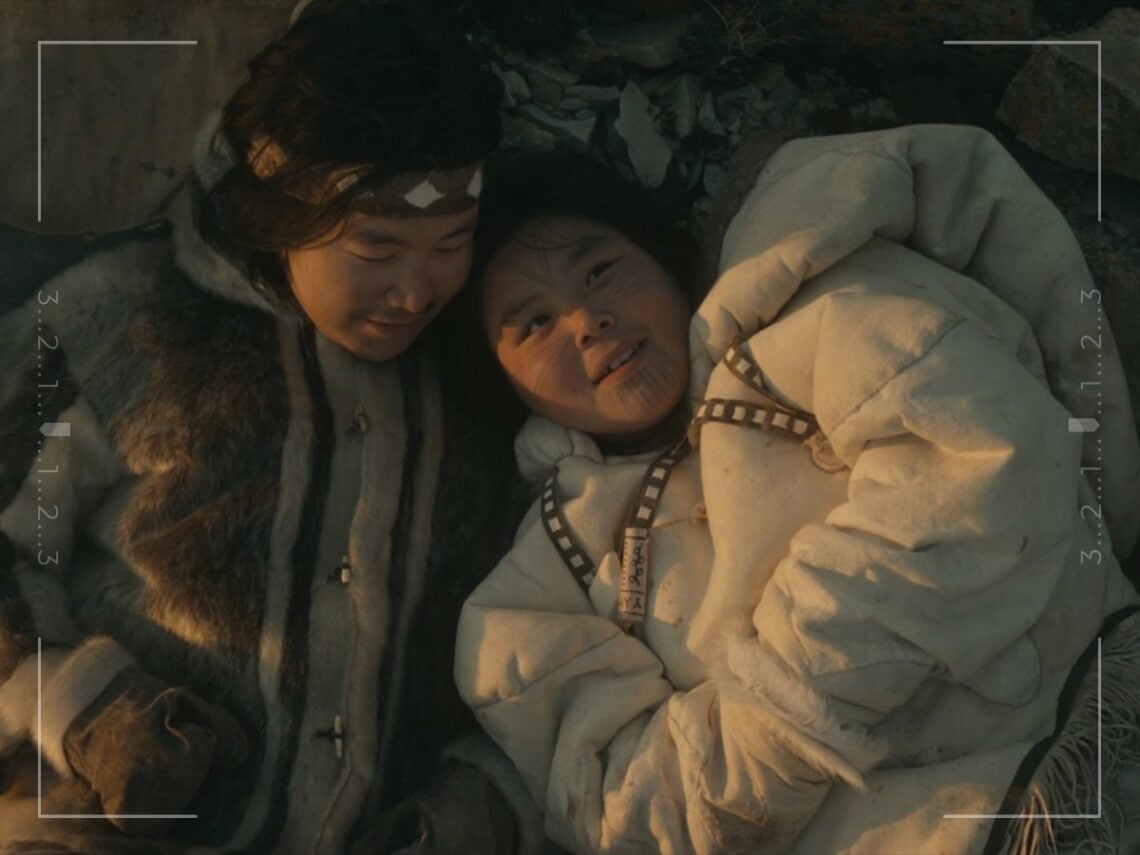
The story deals with an Inuit community, many centuries before European contact. Young couple Kaujak (Theresia Kappianaq) and Sapa (Haiden Angutimarik) have pledged to marry since they were childhood friends, a situation that was not uncommon in the culture. Their happy life and hopes for the future are disrupted when Kaujak’s father unexpectedly dies. The slightly sinister leader of a neighbouring community eventually convinces Kaujak’s mother to marry him and join their camp, and Kaujak is obliged to accompany them.
While unhappy to be separated from her fiancé, Kaujak assumes her betrothal will be respected, but soon, men in the new village begin vying for her hand, with the approval of the heartless chief. Kaujak defies them and hopes Sapa will find a way to reach them and intervene. The film highlights Kaujak’s quiet endurance and courage in the face of mistreatment and an uncertain future. The performances are good and true to life, in spite of using non-professional actors; this is a first movie role for nearly all the main cast members.
The story goes beyond the struggles of the divided young couple, adding mythological features to the events, and having them stand for a greater conflict between good and evil. For this purpose, Kunuk introduces characters from Inuit folklore. A troll-like being lurks in the background, secretly using its powers to encourage the worst instincts of some of the characters, and causing conflict and disorder where it can. Help eventually comes in the form of a second mythical creature, a benevolent being who intercedes in a variety of interesting ways.
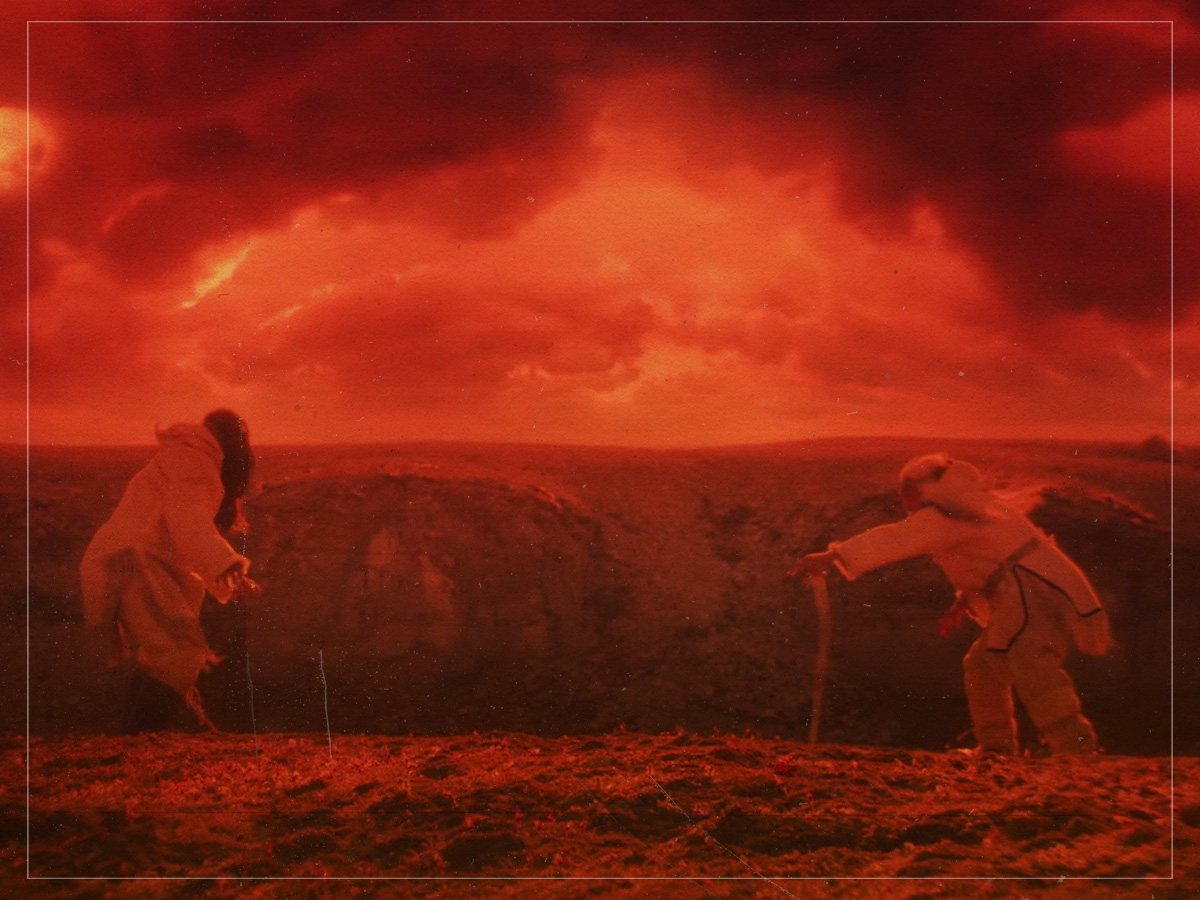
The good and evil beings are shown through the creative use of animation; they are made to look realistic rather than cartoonish, but with a surreal appearance, the troll seeming to be made of rocks and earth, and the ‘good fairy’ resembling colourful, animated fog. They make an interesting contrast to the down-to-earth appearance of the main story and characters.
During interviews for the film’s world premiere, Kunuk explained that Wrong Husband was drawn from several traditional stories. The troll was an established part of Inuit folklore, but the benevolent spirit was largely an invention. The scriptwriter particularly liked the idea of the ‘fog spirit’ bringing messages between separated family members – a rather sweet part of the story, as the spirit delivers these messages in the sender’s own voice. Kunuk also borrowed from an old Inuit myth of altruistic beings who lived on the moon, and who would occasionally come to earth and rescue people who were in trouble.
Like all of Kunuk’s films, Wrong Husband takes place firmly within Inuit culture and makes no effort to adapt either style or content to outside audiences. Kunuk’s childhood community once completely rejected all television programming in the 1970s because their people, language, and culture were not represented there at all. Since then, the region has developed its own television networks, movies, and media content, and it has become a source of support rather than alienation.
Films from the area continue to represent the local people, Kunuk’s work being a big part of that trend. In Wrong Husband, this includes making no effort to either erase or explain Inuit customs or attitudes, allowing the story to make things clear. One minor detail was pointed out by a cast member: in social situations, the Inuit tend to speak more slowly than is normal in most cultures, which some viewers may find irritating, but the characters in Kunuk’s films do not adapt their speech to prevent impatience in the audience. The universal, human concerns at the heart of the story ultimately make the film surprisingly accessible to all. Even the loving views of landscapes which much of the world may find barren and forbidding begin to grow on the viewer, especially when the protagonists so clearly find it beautiful.
This film takes on the best features of fairy-tale traditions, without becoming childish or simplistic. It offers likeable protagonists, a struggle between good and evil, brave endurance under painful circumstances, and when all hope is lost, a happy run-in with the world of magic. The young couple at the centre of the tale are engaging, struggles and sufferings endured are suspenseful and touching, the efforts to escape are imaginative and charming, and the outcome, as it must be in a fairy tale, is a nicely written happily ever after.
