


‘Eureka’ movie review: a unique critique of colonialism

Following a lengthy hiatus, Argentinian director Lisandro Alonso has delivered a new and unusual feature film, one that deals in a unique way with colonialism and the lives of indigenous people of the Americas. It is a challenging film to watch, a painfully slow-paced and erratic discourse that moves from one time period to another, one place to another, refusing to make its message obvious but capturing attention with its quiet observations of human lives and human suffering. The main body of the film has no real plot, only a blend of cinema-verité observation, allegory, and magical reality.
The movie is divided into three chapters, each using a different cinematic style and distinctive ways of segueing into the next. The first, an introductory chapter filmed in black and white, is set in the early 19th century in a stereotypical Wild West, with the director noting that it draws on classic western film clichés rather than reality. Viggo Mortensen plays a mysterious stranger who enters a frontier town on a personal quest.
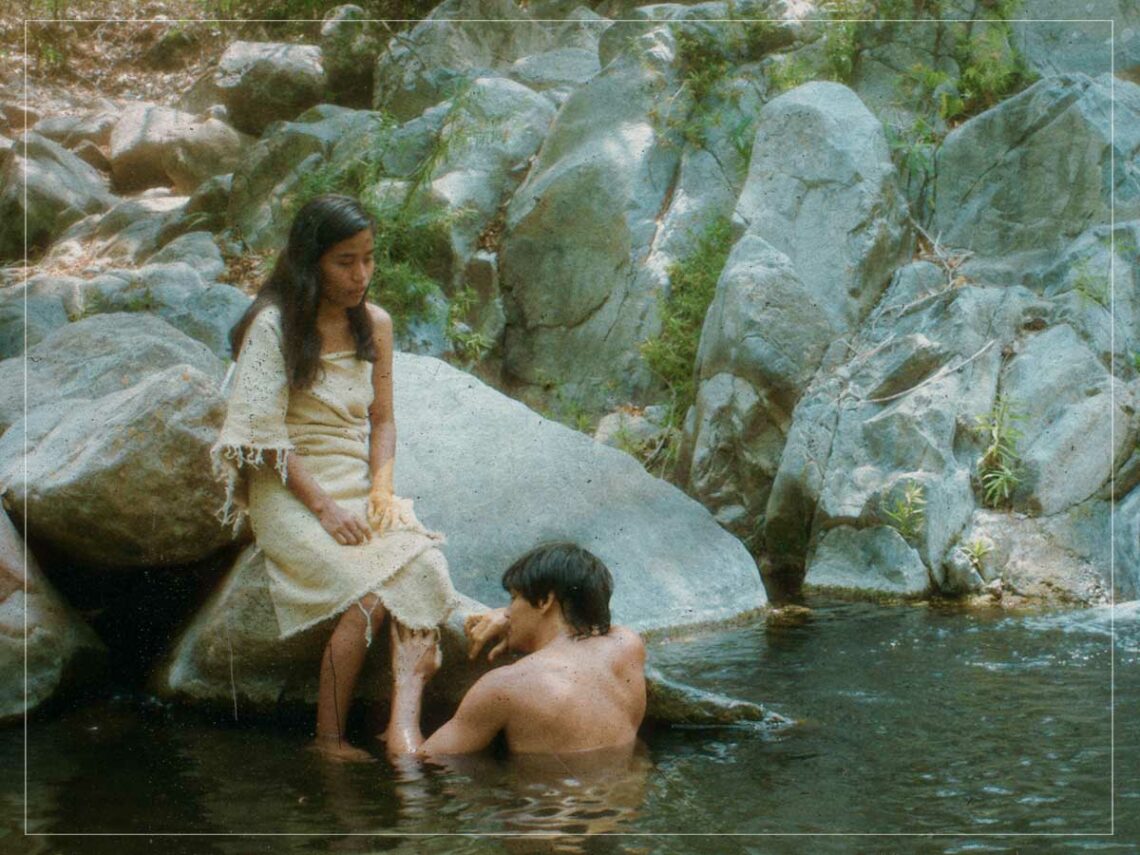
The second chapter is set on a native reservation in South Dakota in the present day and deals with the challenges faced by its residents, particularly a reservation police officer (Alaina Clifford) and a schoolteacher (Sadie LaPointe), who struggle to avoid becoming cynical and pessimistic about the community’s future. The final chapter moves to Brazil in the 1970s by means of an enigmatic Brazilian stork who connects the chapters and follows a group of native South Americans as they try to make a living without being exploited.
Director Alonso began preparing for the project as early as 2017 when he spent a few months at South Dakota’s Pine Ridge Reservation, where part of Eureka is set. It is a community of over 50,000 Native Americans, which, Alonso commented when introducing the film, deals determinedly with perpetually inadequate resources and was the inspiration for the film’s second chapter. The director also made a point of offering roles to amateurs who were part of the community being portrayed, both in South Dakota and Brazil, leading to key scenes providing realism but very little conventional drama.
Eureka is presented in a deliberately ambiguous way that leaves its message open to interpretation. This is by design; the director expected the film to be received differently according to the viewer’s background. “I try to avoid telling a story with words,” Alonso has commented. “I want the spectator to finish the movie in his own head, drawing on his own experiences and making his own connections.” The film asks questions but leaves them unanswered.
For example, it compares the advantages of access to modern technology while losing one’s traditional culture to the benefits of retaining cultural cohesion in a secluded and limited environment, a matter that will be answered differently by each viewer. It also compares forms of coercion by the dominant culture, ranging from overt violence to far more subtle but equally effective methods. No part of the film’s message is overbearing; it is all but hidden in the background of ordinary people’s lives, to be absorbed only in the context of their daily existence.
While the film is often emphatically cryptic, the director is correct in saying, “It is a film nobody has yet made,” particularly since western films, which “gave us a particular image” of Native Americans, have begun, in his view, to “overlook them completely.” It also accomplishes Alonso’s stated intention: to show “the beauty and darkness of the Americas, the people who inhabit it, and the people who damage it.”
