


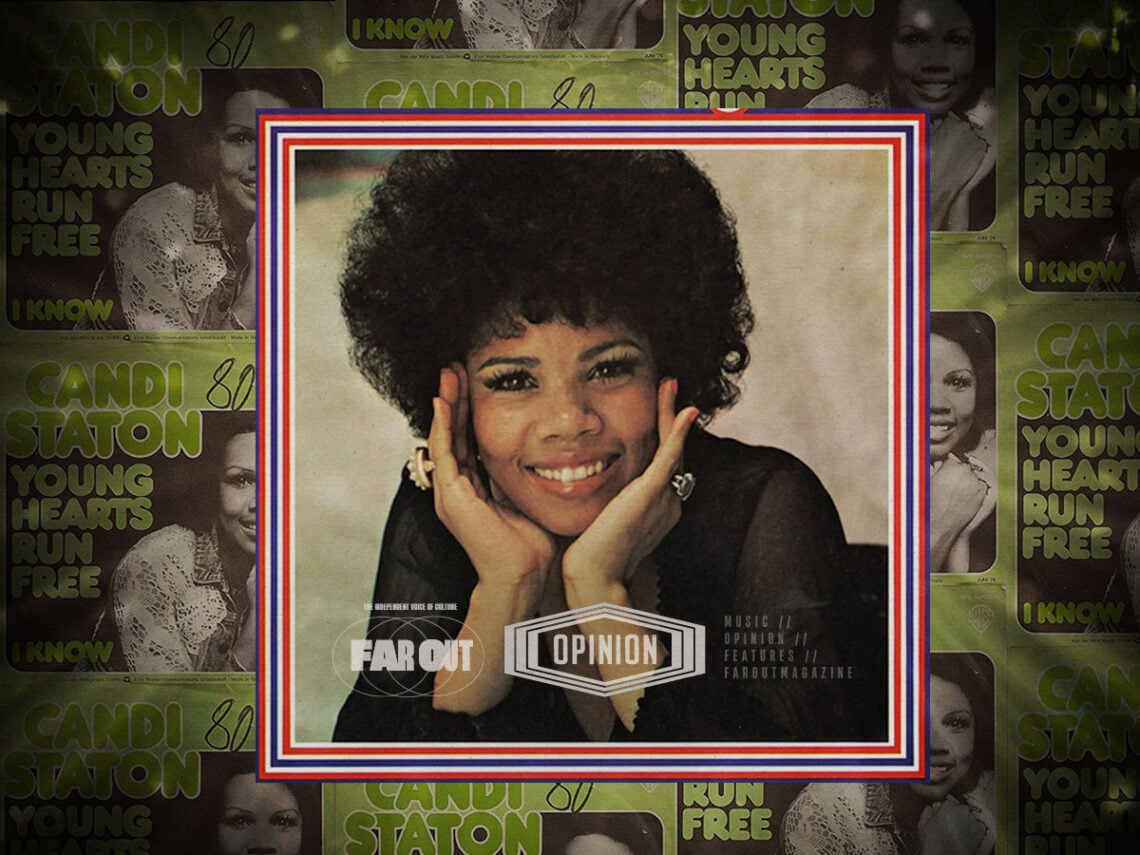
Hear Me Out: I unironically believe ‘Young Hearts Run Free’ by Candi Staton is the greatest feminist anthem of the century

It’s 11pm on a Saturday night in the local bowling club, it’s Elaine’s 50th birthday, the music is loud, the prosecco is flowing, and suddenly, a shout of disco horns starts up from the DJ booth, and a pack of drunk middle-aged mothers descend on the dancefloor – that’s just the Candi Staton effect.
Of course, this may have the intent of a comical image, but despite the largely mundane circumstances, there is a lot of symbolism to be found. Especially in the context of a song like ‘Young Hearts Run Free’, the idea of women dancing together, free of inhibitions and possibly slightly tipsy, is all Staton could have dreamed of half a century ago.
It’s true: the song may be a bona fide floor-filler and undisputed anthem of the disco canon, but the undertones of its message on top of the strife Staton endured in order to inspire it stand as a true testament to the power that all women have to harness throughout their lives. The notion of enjoying the song, without a care in the world, is credit to that progress.
In this sense, I genuinely do believe, for this reason, that ‘Young Hearts Run Free’ is unironically the greatest feminist anthem created over the course of the last century. Its dominant use may be within party playlists and karaoke rooms now, but in my eyes, what is a real celebration of womanhood without a little injection of unbridled joy?
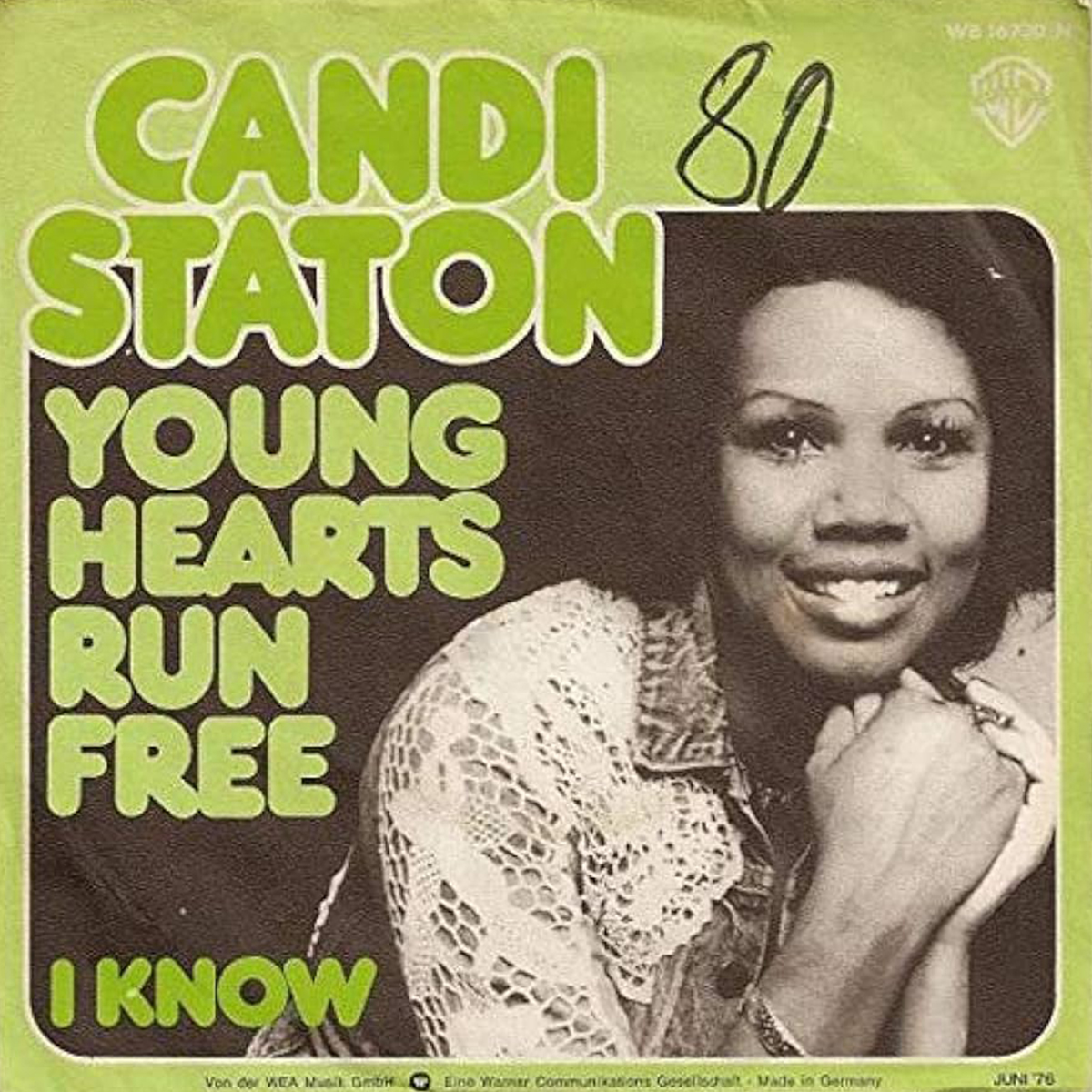
As alluded to now, that status of sheer euphoria sparked by ‘Young Hearts Run Free’ in our current landscape is a product of the far bleaker and more tumultuous times that the song was initially inspired by. The stark reality was that Staton was a victim of domestic abuse within a toxic relationship, but she used these fumes to spark something far greater than that man could ever be.
She referenced as much when explaining how the track came about via producer Dave Crawford, as she once recalled: “Dave Crawford was always asking me: ‘What’s happening in your life?’, and I was [then] with someone I shouldn’t have been with, and it was hard getting out of that…very abusive relationship.”
Staton added: “I [noticed] that [Crawford] was taking notes, and he said, ‘You know, I’m gonna write you a song. I’m gonna write you a song that’s gonna last forever'”… Of course, they managed to achieve just that, but down the line, it’s easy to lose sight of the fact that the song’s themes of self-preservation and independence are not just rooted in something purely figurative.
Consider the fact that it was only as recently as 2024, when the singer was, by this time, 84 years old, that she revealed the terrifying truth behind the ordeal, and Staton admitted she had come close to death at the hands of her ex-husband, who threatened to kill her by dangling her over the balcony of their room in a 20-storey Las Vegas hotel.
In a valiant attempt to save her life, she lied, telling him that the hotel was owned by the mafia and that he would therefore face the highest order of punishment if he were to create such a crime scene on their property, but the man would not take the bait and then pulled out a gun, and yet by the thinnest of inexplicable margins, Staton managed to escape.
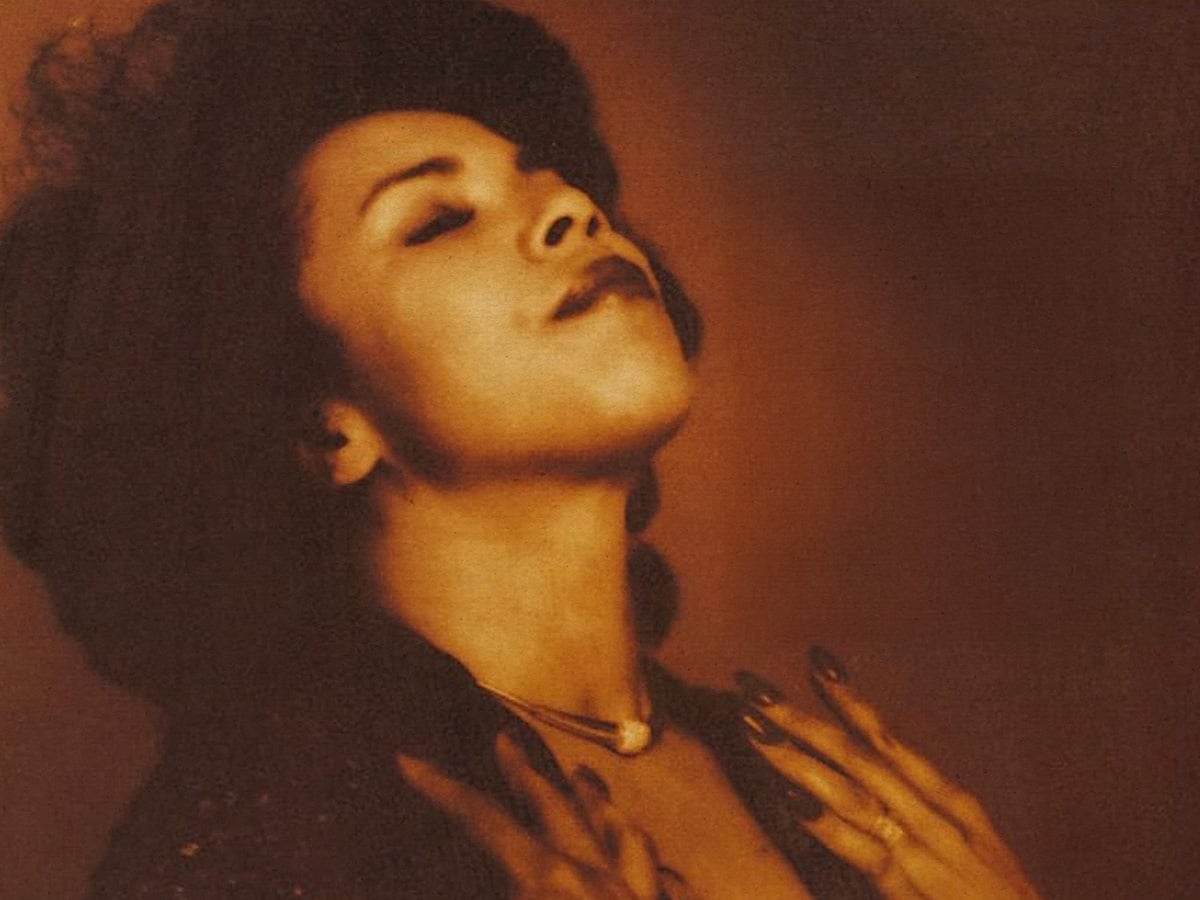
By the sheer act of being able to channel such a traumatic experience into something with even the slightest hint of a celebratory tone is nothing short of remarkable, but in the way Staton managed to take this one step further and transform ‘Young Hearts Run Free’ into one of the most iconic staples of disco is symbolic of unparalleled strength.
You can say so much about some of the most harrowing episodes of trouble which different artists have endured over time. Some choose never to speak of it, while others find solace in the most searing yet heartbreaking ballads. They are perfectly within their rights to do this, of course, but Staton’s defiant stride towards a different path will always be notable.
It proves the point that, as much as Staton could have plainly been painted as a victim as she stood fearing for her life in that Las Vegas hotel room, she has shunned that label in the forthright decision to make something out of it. ‘Young Hearts Run Free’ isn’t resentful or seeking vengeance, however – it’s simply asking people to heed the call.
So, the next time you come across a group of women screeching for the high notes of, “Say, ‘I’m gonna leave’ a hundred times a day/ It’s easier said than done/ When you just can’t break away,” realise that their joy is not just found in the possible drunkenness and spur of the moment, but in all the stories of strength that have come in the generations before them.
Disco and all that came with it may be a strong relic of a 1970s disposition by now, but some things transcend the scores of time and never fade. The choice of a woman to stand strong in the face of such trauma and violence? That’s a spirit which will continue to blaze forever.
