


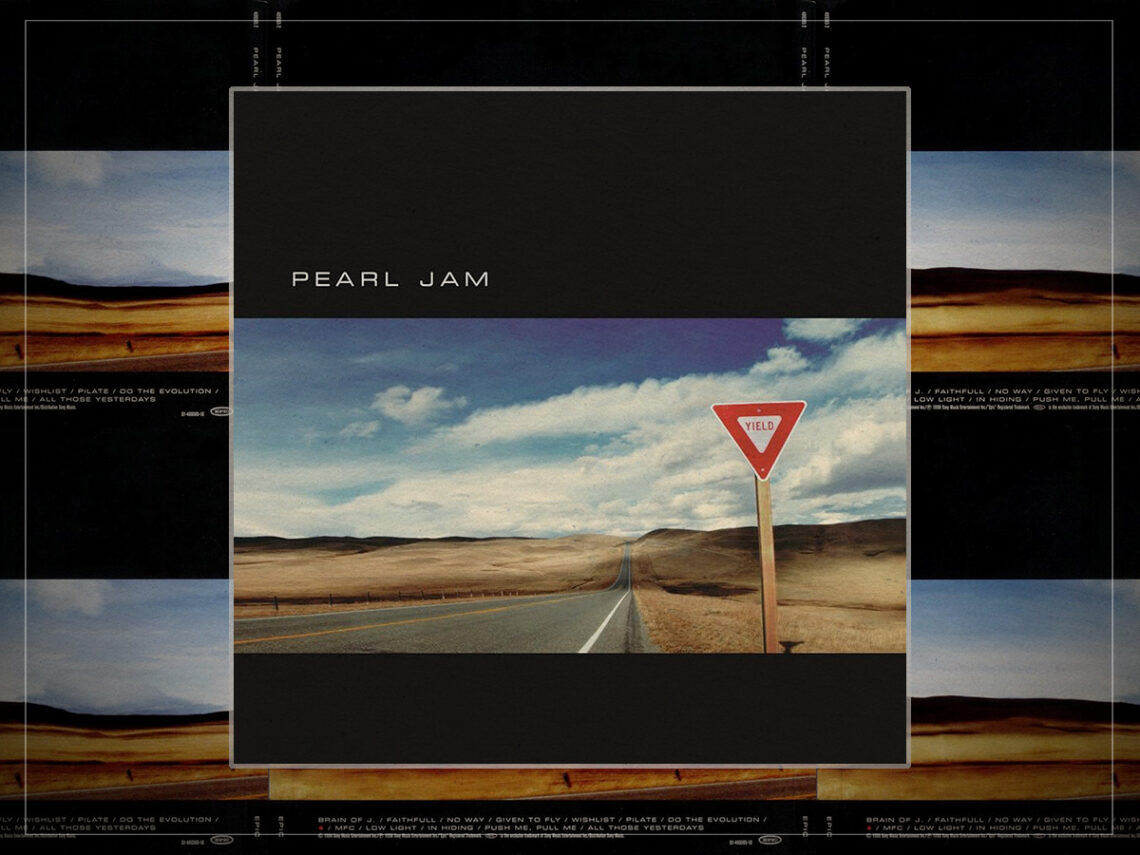
‘Yield’: the last great album of the grunge era

The grunge scene was never meant to last for very long. Even if Kurt Cobain’s death is considered the moment the genre officially died, none of the Seattle bands subscribed to that term, and it wasn’t long before all of them moved on to their own separate projects. But out of the ‘Big Four’ of the genre, Pearl Jam did at least manage to put a nice bow on the genre towards the end of the 1990s.
Right after Cobain’s death, Pearl Jam wasn’t in good shape, either. Eddie Vedder had become slowly desensitised to fame, and listening to an album like Vitalogy, you can hear him airing out his grievances in real-time, including some songs that sounded like they were designed to piss off the fairweather fans like ‘Bugs’ and ‘Pry To’. And it’s not like No Code was much better in that respect, either.
There were still rockers like ‘Hail Hail’, but ‘Lukin’ already showed him getting increasingly agitated with looking after himself, and ‘I’m Open’ is the kind of strange detour you’d find in some obscure Doors single. Once Vedder found out that the stardom would not go away, though, he figured that he would use his platform to say something, and Yield was the first time he managed to capture the spirit found on albums like Ten.
While nothing reaches the heights of something like ‘Jeremy’ or ‘Evenflow’ on it, the band’s fifth outing was the first time where they realised it was okay to write something poppy again. With everyone contributing to certain songs, tunes like ‘Given To Fly’ gave them a massive single to work with, and Vedder knew how to be critical when he wanted to on tracks like ‘Do The Evolution’.
In terms of the band’s post-1994 work, this is by far the most well-balanced record in their catalogue. Pearl Jam have always had a habit of keeping their albums on the long side, but no part of this record ever feels long, always having a breezy tune right next to the fun rockers, like when the beautiful ballad ‘Low Light’ is sandwiched between the songs ‘MFC’ and ‘In Hiding’ towards the end of the record.
The sound might be far from grunge, but the lyrical content is about as true to form as possible. Whereas most of Pearl Jam’s early songs were about channelling their anger into everything they did, this is the flipside of that coin, where they start talking about more open-hearted topics. ‘Do The Evolution’ is a case of Vedder playing a character, but ‘Wishlist’ is an earnest look about all that he could ask for in this life, and his willingness to make a difference on ‘No Way’ feels like the level-headed older brother of a song like ‘Not For You’ from a few albums before.
Going forward, the band would explore some new genres that were completely independent from grunge. Records like Binaural and Riot Act were strange dips into art-rock, and their back-to-basics records had a lot more to do with straight-ahead rock on Backspacer and Lightning Bolt, but Yield strikes that comfortable middle ground to tie a nice bow on the genre before the decade let out.
More than anything, Yield is like watching the entire band have a character arc over the course of one album. They had been the kind of musicians who didn’t want anything to do with big business, but since they were forced into the world of glitz and glamour, this is them finally learning how to be rock stars on their terms.
And while many post-grunge bands had sprung up in the band’s wake to make something that was much more whiny and depressing than before, Yield was a great way to show everyone how it was done. It’s easy to think that all grunge was about was yarling vocals expressing how much pain the singer was feeling at the time, but being able to be more than a huge downer every time an artist goes into the studio is what separates the Pearl Jams of the world from people like Puddle of Mudd.
