


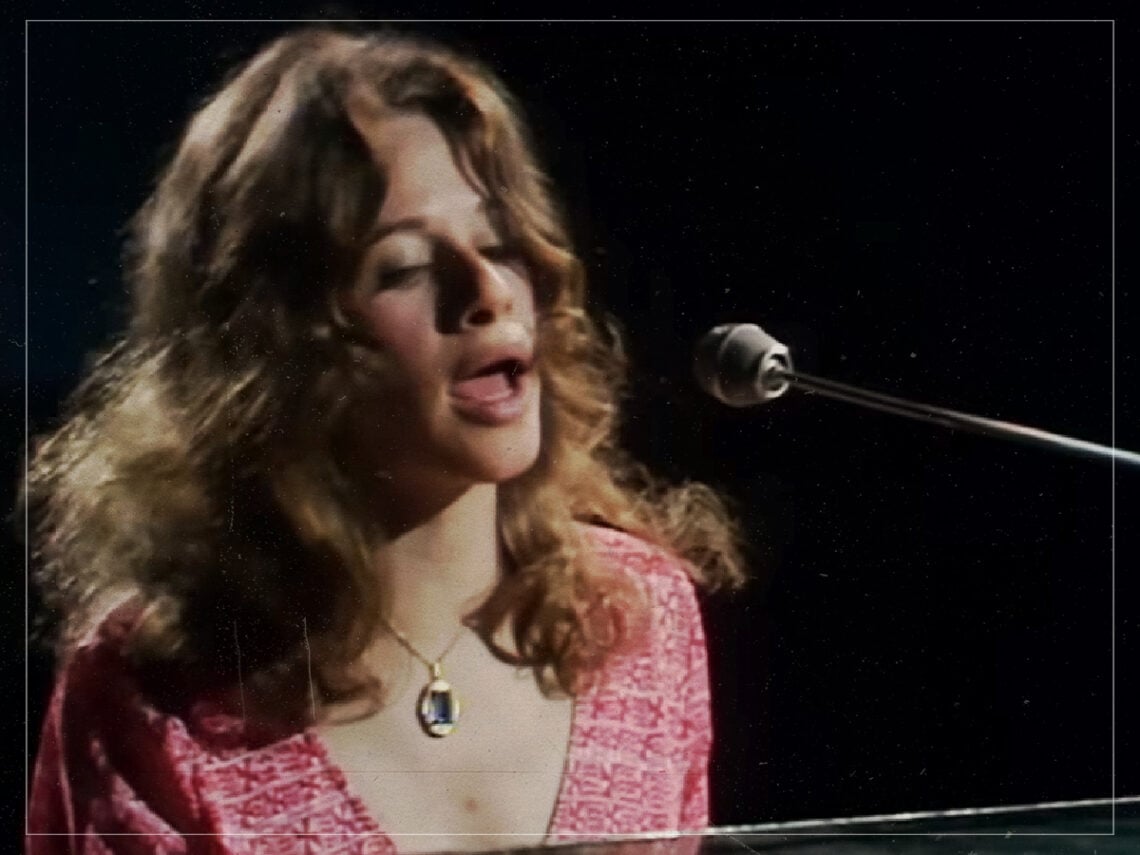
The year Carole King dominated the charts with 15 weeks at number one

Before she broke through with Tapestry, Carole King was already a force in the music industry.
Alongside her then-husband, Gerry Goffin, she had penned countless hits for other artists, becoming one of the most powerful ghostwriters in the history of music.
After all, some of her best-known hits at that point were ones we still very much celebrate today, like The Shirelles’ ‘Will You Love Me Tomorrow’, Aretha Franklin’s ‘(You Make Me Feel Like) A Natural Woman’, and The Monkees’ ‘Pleasant Valley Sunday’. As such, she had everything it took to make it on her own; she just needed the right push to leap for herself.
As it turns out, however, said push came in the form of multiple things, the first being her split from Goffin in the late 1960s, which urged her to move to the bustling Laurel Canyon scene and start afresh. King hadn’t exactly planned on becoming a standalone musician, nor someone who could go the whole nine yards and actually become one of the era’s defining stars.
But after a brief stint in a trio called The City and one album that didn’t really go anywhere, King was calibrating her own position in the industry, and figuring out which path to take that would ensure not just a sustainable career but one which actually had lasting cultural impact. Enter James Taylor, who saw King for precisely what she was: a songwriting prodigy on the cusp of absolute genius.
Taylor would never let anyone credit him with King’s success, of course, but he has acknowledged how he encouraged her to take the plunge, which didn’t have anything to do with changing who she already was as a writer, singer, or even performer. In fact, it was the opposite, with Taylor telling her to go out there and do what she does best, and be herself, completely.
He also remained with her every step of the way, nurturing her abilities across Writer and Tapestry, allowing their shared love for great music to inspire King to reach her own standard of excellence. As Taylor later recalled, they had this mutual understanding that no one else had, the kind that allowed art to flow freely, like it was always meant to be.


As such, Tapestry was the record that quite literally put King on the map, with a handful of hits that sustained its number one position for 15 consecutive weeks, before rather remarkably remaining on the charts for another six years… The achievements didn’t stop there, either, with Tapestry also going on to win four Grammy Awards, one of which was ‘Song of the Year’ for ‘You’ve Got a Friend’, making her the first woman to do so.
It seemed, therefore, that beyond overcoming her own challenges, King had achieved the seemingly impossible, almost single-handedly sparking the entire 1970s singer-songwriter boom and proving that pouring personal confessions into music could be both vulnerable and empowering… And all she had to do to get there was be herself, unapologetically.
