


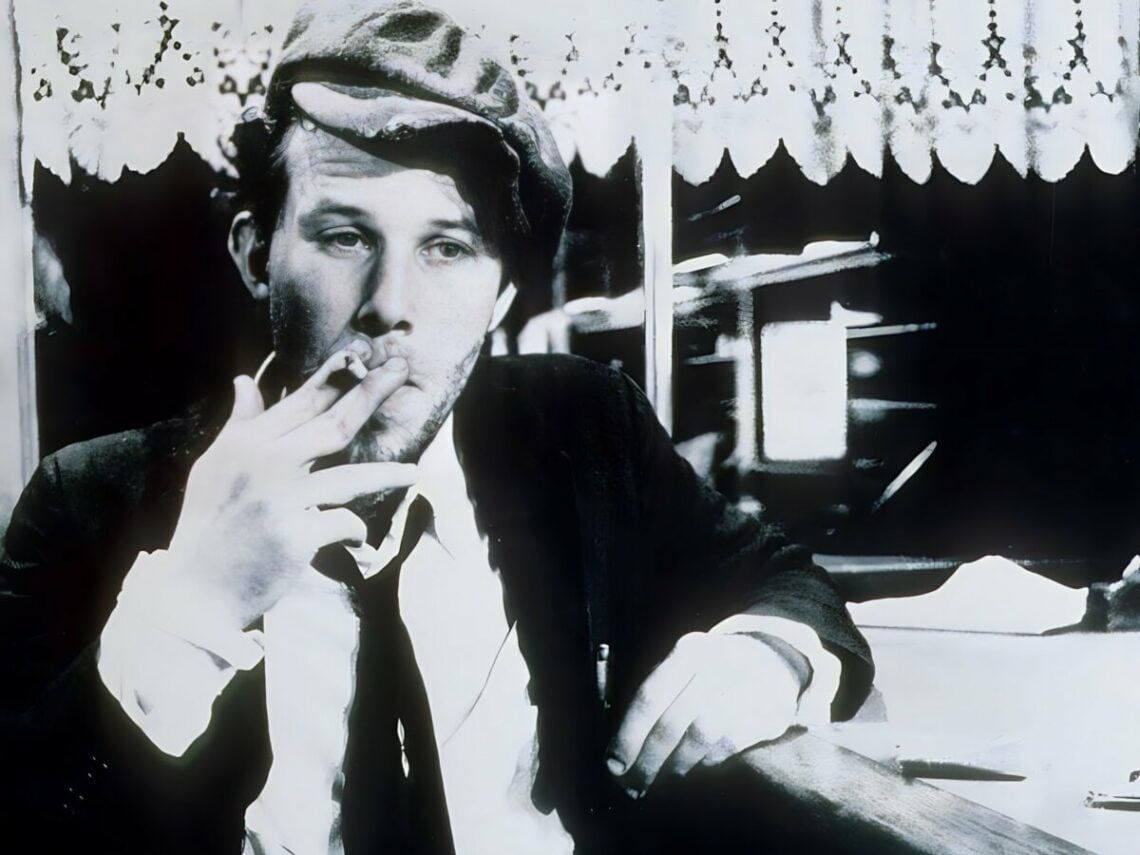
How to write a song like Tom Waits: “Beautiful melodies telling you terrible things”

Right, let’s get this out of the way early. As anyone who studied a humanities degree will tell you, when it comes to learning a creative skill, there is no substitute for doing the damn thing. You can’t listen to an expert long enough that you immediately start doing the thing well; you’ve got to put pen to paper and be bad enough at it long enough to get good. Then, and only then, can you start taking tips from masters like Tom Waits, who very kindly sat down with NPR for an illuminating conversation about his creative process and the tips that he lives by as one of the great songwriters of the age.
Coming out of the silver lake folk scene of the early 1970s, Waits was a devotee of the 1950s beat generation, finding little time for the hippy scene of his native San Diego. This lead to a deep love for Bob Dylan and other counter culture visionaries, whose songs he would cover as he supported the likes of Tim Buckley on the local coffeehouse circuit.
In fact, it was that tribalist attitude that inspired his first songwriting tip: to ignore your comfort zone and listen for inspiration wherever you can get it. In the interview, Waits talks about being inspired less by the songs and more by “the song forms themselves. Cakewalks, parlor songs… nothing more than Jell-O Molds for music.”
At the time, Waits was making ends meet in a pizza restaurant in nearby National City, where he would write down snippets of conversations and sayings he overheard from guests. This leads him to his second tip, the importance of specifics. Look for ways you can heighten the details in your song, even if it’s something as simple as a place name, making a song more immersive. As Waits puts it in the NPR conversation: “There’s the name of a street, there’s something to eat.”
A tireless gigging schedule brought him to the attention of David Geffen, who signed him to Asylum Records and put out his absolutely peerless ’70s work. One could teach a successful songwriting course off the back of Waits’ first seven albums alone, from 1973’s ‘Closing Time’ to 1980s ‘Heart Attack And Vine’. These records are the epitome of what’s arguably the key to Waits’ songwriting as a whole, when he says “I like beautiful melodies telling you terrible things.”
These are records that take your breath away with sweeping melodies before the stories within them break your heart. It’s difficult to believe that anyone could get to a point where they’re sick of making music like this, but by the 1980s, Waits was. He was dabbling in film music, composing the score for Francis Ford Coppola’s mega-flop One From The Heart (one that earned him an Academy Award nomination for his troubles, mind), and flirting with writing a Broadway musical. Then, someone entered his life that changed it forever.
While on set for One From The Heart, he met Kathleen Brennan, who was working as an assistant script editor at the time. Within a week, they were married, and as Waits likes to say, he “didn’t just marry a beautiful woman, (he) married a record collection”. Brennan’s passion for experimental music like Captain Beefheart and Harry Partch began affecting his songwriting almost immediately, which led to the next tip that Waits passed on in the interview. Don’t be afraid to find a co-writer!
Waits says that Brennan’s help prevented him from “an Emperor’s New Clothes situation”. That someone with her taste and work ethic physically prevented him from half-arsing their work together, and from 1982’s Swordfishtrombones onward, Brennan was ever-present in the studio when Waits was working, stating that they “sharped each other like knives”. By combining all of the tips above, Waits has led to one of the most celebrated songwriting careers of his era. Take a few into your own work and see what you can create.
