


Poetics of Sensuality: All Wong Kar-wai films ranked in order of greatness

“I’m not coming from film school. I learned cinema in the cinema-watching films, so you always have a curiosity, I say, ‘Well what if I make a film in this genre? What if I make a film like this?’”
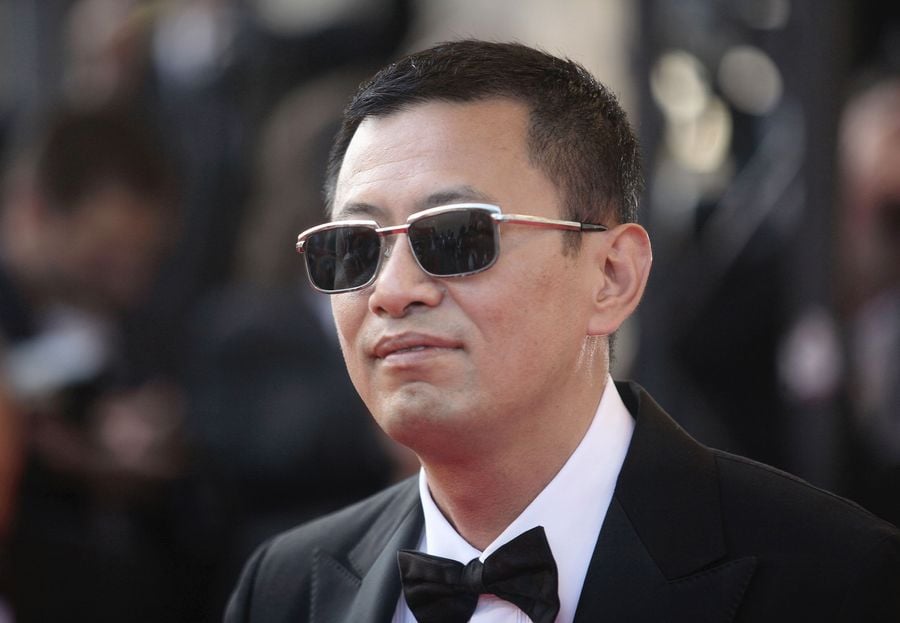
Wong Kar-wai is all about loneliness, sensuality, claustrophobia, alienation and shameless flirtation with Hong Kong. He is not the traditional storyteller and often resorts to vivid colours, exquisite cinematography and a brilliant interplay between frames and shadows to convey the atmospheric message of the film. Wong has said that his films “are never about what Hong Kong is like, or anything approaching a realistic portrait, but what I think about Hong Kong and what I want it to be.” Watching Wong’s work is an experience altogether as one might find themselves slipping into a lucid, fever dream of romance and anguish. The characters are flawed and heartbreaking, often self-actualising and caught in the cusp of chaos and calm.
Born in 1958, Wong relocated to British-ruled Hong Kong, feeling China during the Cultural Revolution. This move had a lot of impact on his life, his attitudes, his creative vision and, ultimately, on his filmography. Seeping through his fingers into almost every plot, the theme of exile and delineation remains ever-present. Wong cannot be cast into a particular genre, his films have ranged from crime thrillers to martial arts epics to those about unrequited love and loneliness. While he dabbles in his stylistic signature of doomed romances and loneliness, accentuating such feelings by incorporating haunting musical scores involving stringed instruments and emotions, Wong has a genre-bending capacity. “I never had a problem with genre because a genre actually is like a uniform – you put yourself into a certain uniform,” he was quoted saying. “But if you dress up in a police officer’s uniform, it doesn’t mean that you are an officer; it can mean something else. But this is the starting point, and the best way is to not to fit into this uniform but to make this uniform a part of yourself.”
Wong Kar-wai often collaborates with the same set of actors, especially Andy Lau, Maggie Cheung, and Jacky Cheung. “Normally, filmmakers would just write a script and cast people to act as certain characters in the story. But in my way of doing things, I have the actors in my mind already, so I’m trying to borrow something that’s unique to them,” he once said, adding: “The characters have a very natural connection to the actors themselves.”
One of Asian cinema’s renowned auteurs, his work has an ingenious poetic aura and sensuality which sets his work apart from most filmmakers. The sublime filmography and unpredictability that often resides in his works play on the crisis of identity and fleeting existence of the city-dwellers, often freezing time via the frenzied camera shots. To watch the films of Wong Kar-wai is to experience the art of falling in love with melancholy and nostalgia once again. With a wide variety of films connected by his classic artistic signature, here are the films of Wong Kar-wai ranked in order of greatness.
Wong Kar-wai films ranked from worst to best:
10. Ashes of Time (1994)
A prequel to the well-known novel The Legend of the Condor Heroes, the film imagines the younger years of the characters in the book. Set in ancient China, the film has five stories about each ain character from the novel with the narrator serving as the connecting link. The narrator Ouyang Feng, who later turns out to be the main antagonist, is a young man who comes in contact with each character, the film portrays his slow descent into madness and villainy and ends up subverting a lot of themes, deviating from the book.
Steeped heavily in metaphors, the film is, however, extremely confusing to even the most dedicated Wong Kar-wai fans. This hallucinatory and nearly dystopian journey into the younger lives of the characters in this melodramatic wuxia film is strange and somehow falls flat. While the book portrayed Feng’s relationship with his sister-in-law as something taboo and forbidden, the film saw it as a proclamation of eternal love; Wong, as usual, does not like to judge his characters and lets it be the audience’s job to make sense of the character choices. However, the chaos and incoherence in the film are redeemed by the wonderful cinematography by Christopher Doyle who seems to share the same creative and artistic vision as Wong.
“The harder you try to forget something, the more it will stick in your memory. Once I heard someone say that if you have to lose something, the best way to keep it in your memory.”
9. My Blueberry Nights (2007)
Elizabeth is heartbroken and finds solace in Jeremy’s blueberry pie while telling him the story about her breakup. She soon leaves for New York City to escape the pang in her chest and works as a waitress where she has certain interesting encounters. An alcoholic heartbroken cop drinks himself into oblivion as he grimaces over his wife’s infidelity before committing suicide at the place where he first met her. At Nevada, Elizabeth (now calling herself Beth), meets a gambler named Leslie who promises her a car yet backs down after learning of her father’s death. Elizabeth eventually returns to the place where she left the key to her apartment and subsequently to her heart.
Wong’s English film debut is not terrible but has an alien perspective to it as he goes on to fetishise and reinstate the stereotypes about the American culture. The film is a classic Wong Kar-wai as the protagonist, trapped by memories and heartbreak, desperately tries to drown her sorrows by escaping from it. The film is intimate, the soundtrack stellar and the casting incredible, yet it lacks the special garnish that would make the film as delicious as the blueberry pie that was delicious enough to make Elizabeth’s broken heart find solace in.
“There’s nothing wrong with blueberry pie. Just people make other choices. You can’t blame the blueberry pie, it’s just no one wants it.”
8. Days of Being Wild (1990)
Set in 1960s Hong Kong, the film revolves around a womaniser named Yuddy who is notorious for breaking hearts. When he learns from his adoptive mother, an ex-prostitute, that he is not her biological son, he wants to look for his real mother whom he discovers is a Filipino aristocrat. Meanwhile, two girls, unfortunately, pine over Yuddy, one of them being the quiet Li-zhen and the other being the spirited cabaret dancer Mimi. Yuddy’s mommy issues push him towards indecisiveness as he cannot fully commit to either of the two women.
Yuddy is one of Wong’s most flawed and fulfilled characters. Yuddy’s life takes a complete turn when he comes to know the truth about his mother and this triggers an emotional conflict within himself. The search for his identity and the sense of nostalgia for a person he has never met sets the film in motion. The film is slow, relying on colours, shadows and the songs of Hong Kong summers and rains, witnessing violence and alienation dancing in tandem with sensuality and desire with a certain kind of restlessness essential to Wong. While it was a commercial failure, it was definitely an artistic success as Wong Kar-wai’s signature is distinct in this film, something that he expands in his later masterpieces.
“I used to think there was a kind of bird that, once born, would keep flying until death. The fact is that the bird hasn’t gone anywhere. It was dead from the beginning.”
7. Fallen Angels (1995)
Wong Chi-ming is a disillusioned hitman who shares a tender, unrequited relationship with his distant “partner”, the latter being completely infatuated with him. After three years of partnership, Wong finally wants to leave his job and finds it inappropriate to mix business with pleasure. Thus he tries to find a different woman to focus his attention on, the woman being Blondie, a strange lady looking for her elusive ex-boyfriend Johnny. The subplot that runs parallel to the story is the story of a hilarious mute named Ho Chi-mo who breaks into cafes, restaurants and ice cream trucks at night and coerces people to purchase his goods, and follows Ho Chi-mo’s journey as he falls in love with Charlie, who whines over her ex-boyfriend having left her for the elusive Blondie.
Wong Kar-wai had initially decided to use this film as the third story for his 1994 film Chungking Express. However, he changed his mind and borrowed heavily from his previous film in terms of the locations, themes and cinematography yet added a different tinge to the film. The overall Hong Kong setting seems manic, cheap and heartless, being the site of a nightmarish romance. The film seems like a feverish dream steeped in themes of isolation, nocturnal adventures, neon-lit violence, unrequited infatuations, revelations, obsessions and romance. Wong Kar-wai uses the repetitive imagery of subways and arcades, cityscapes and streets in form of fast-paced shots or time-lapse to juxtapose the bustle of the city life to the slow unfurling of the lives of the characters.
“There are some people you can never get close to. Get too close, and you’ll find him boring.”
6. As Tears Go By (1988)
Wah, a mob enforcer, and his hot-headed subordinate Fly are delinquents. The latter keeps getting into trouble and the former has to rush to his rescue. When Wah’s cousin Ngor comes to live with him, he is smitten by her and decides to quit this dangerous life. As Wong Kar-wai’s debut film, it is a quintessential Hong Kong crime thriller where the new artist is still trying to discover his voice and vocabulary that shall aid him in his expression of art. It also serves as a foundation for Kar-wai’s later films as it is rewarding to watch his creative genius evolve slowly from the start.
With a young Maggie Cheung’s naivete adding delight to the film, themes of loyalty and the commercial gangster tropes loom large over the film. Andy Lau and Jackie Cheung are spectacular in their roles. Wong’s artistic camera shots help retain the haunting effect that is quintessential in his films. With the addition of a Cantopop soundtrack, rushed camera sequences, melodramatic dialogues and layered characters, the film shows how the young artist manages to navigate his way through the chaos and noise to find what resonates with him and his craft.
“People like us don’t have tomorrows.”
5. Happy Together (1997)
Constantly bickering among themselves, gay couple Ho Po-Wing and Lai Yiu-Fai visit Buenos Aires to escape their mundane life in Hong Kong, hoping to rejuvenate their love. However, they soon understand that their relationship is extremely toxic as they are caught in the cyclic web of making up and breaking up. Soon they decide to part ways and take up individual professions to support themselves in Argentina as well as earn enough money to fly back home. Fai ends up befriending a Chinese man named Chang who shows him the futility of his relationship with the promiscuous Ho Chang is on his way towards finding purpose and abandons Lai. Ho and Lai soon realise that their desperation and loneliness force them to indulge in various sexual encounters to fill the emptiness.
Wong Kar-wai is known for his excellent commentary on love, loneliness, relationships and the daily drudgery of life. Brilliant cinematography and acting skills add to the charm of the film with the political climate of Hong Kong looming large over the film which is set in Buenos Aires. The characters have a painful and harrowing relationship that is laced with desire, longing, hatred and emotional abuse. The pathetic amounts of longing and regret in the film emphasise the loneliness that lays hidden in the human heart where sex becomes the only way of fulfilling it. The film questions masculinity, delving into the complexities of the human psyche as two gay individuals try to find their way back home. Wong Kar-wai, however, does not want his film to be labelled as a “gay film”.
“It’s more like a story about human relationships and somehow the two characters involved are both men,” he said. “Normally I hate movies with labels like ‘gay film,’ ‘art film’ or ‘commercial film.’ There is only good film and bad film”.
“Damn right I do. I had no regrets until I met you. Now my regrets could kill me.”
4. 2046 (2004)
Chow Mo-wan is a journalist and novelist and is jilted in love. He writes a novel about a mysterious train that is headed towards a place called 2046 quite often and is boarded by all those who want to revisit their old memories. According to legend, 2046 never changed and everything is as it used to be before. However, none can confirm as nobody could ever come back from 2046. The film focuses on Chow’s romantic involvements with women after failing to court Su Li-zhen.
Brimming with surrealism and nostalgic claustrophobia evocative of a dystopian 1960s Hong Kong, the film abounds in “retro-futuristic sci-fi sequences” that heighten the overall despair and alienation in the film. The film is devastating as it causes one to spiral into a sense of introspection, while longing for an evasive place. 2046 was in continuation with Wong’s In the Mood For Love, where the title was actually the room number — the site of romance and red, that cascaded emotions in the protagonists. The film is charged with emotions and is a poignant watch with a profound message. The parallel and non-chronological story arcs are in accordance with Wong’s inability to adhere to traditional storytelling and his brilliant camera work adds a new dimension to 2046.
“I once fell in love with someone. I couldn’t stop wondering if she loved me back. I found an android which looked just like her. I hoped she would give me the answer.”
3. Chungking Express (1994)
A heartbroken Cop 223 is crestfallen as he obsessively checks his pager for new messages, hoping to patch up with his girlfriend May and buying a can of pineapples every day with the expiration date of May 1 to commemorate his girlfriend’s birthday. He soon moves on after sharing a blurry drunken night in the club with a mysterious woman with whom he finds a stronger connection. Cop 663 is sorrowful when he is dumped by his stewardess girlfriend. His mundane yet philosophical lifestyle is soon disrupted by the entry of an eccentric Faye who blasts ‘California Dreamin” repeatedly while working at the snack bar that he frequents and soon develops a crush on him.
Chungking Express is a colourful frenzied dream of blurry frames, whizzing camera movements, a buzzing urbanscape, young and unrequited passion and pangs of love and loneliness. Again set in Hong Kong, the film is a tale of four individuals entwined in the web of infatuation, love, passion and heartbreak. The characters are refreshing in their own ways, each retaining their unique quirks, energy, ideas and dream. The overall air of melancholy and nostalgia is accentuated by the jilted lovers who find new love in the most unexpected of places. The characters are all on their individual quests to leave behind the past and look for their purpose. Memory plays an important role in Kar-wai’s masterpiece that shows intersecting storylines of the individuals who keep finding their way back to each other. The second story, ‘California Dreamin” is an important song that plays a crucial role in adding a sense of nostalgia and longing to the film.
“Every day I buy a can of pineapple with a sell-by date of May 1. May loves pineapple, and May 1 is my birthday. If May hasn’t changed her mind by the time I’ve bought thirty cans, then our love will also expire. Somehow everything comes with an expiry date.”
2. The Grandmaster (2013)
With a high dose of devastation, sadness, fatalism and love, this epic film is not just a mere Jung Fu biopic. Wing Chun grandmaster Ip Man is living a happy and peaceful marital life which is torn down by the Second Sino-Japanese War. Later, he meets Gong Er who wants to regain her family honour by combating Ip Man. After the end of the war, Ip Man moves to Hong Kong where he desperately tries to make ends meet to provide for his family while Gong Er embarks on a path of vengeance against those responsible for her father’s death.
The action film is poetic and reflects Wong’s signature style while intensely retelling the story of Ip Man. The continuous oscillation between reflecting upon the past and moving forward into the future sets the film in motion, the introduction of Gong Er’s character shows Wong’s classic symphony between violence and poetic musings. With an ongoing banter about tradition and honour, the film shows off sublime cinematography which adds rhythm to the film and provides an insight into the minds of the characters, as do the brilliant film scores, composed by Ennio Morricone as well as Wong’s favourite, Shigeru Umebayashi. The film is a well-crafted product of Wong Kar-wai’s philosophical and artistic genius.
“Remember when I told you that there is nothing to regret in life? It’s all bullshit. If life had no regrets it would be really boring.”
1. In the Mood for Love (2000)
Set in the 1960s conservative Hong Kong, Wong Kar-wai’s In the Mood for Love is a feverish tryst with shadows, colours and haunting stringed music that heightens the overall feeling of longing, loneliness and haplessness of two neighbours in a dingy Cantonese apartment. Mrs Chan and Mr Chow are both trapped in respective loveless marriages where their spouses are always absent, leaving them to bear the misery of existence on their own. They eventually become friends after sharing stolen glances along the hallway, during game nights or at the alley in front of the noodle place, which gradually culminates into love. The film is a slow burn and an excruciatingly painful watch for the audience who have to watch the two failing to acknowledge their feelings at the same time.
Kar-wai’s well-crafted film is a tale of missed chances and coincidences. Yumeji’s theme is harrowing and accentuates the feeling of despair and melancholy with all the “what-ifs” and “could-have-beens” emphasizing the vulnerability of the two lovers. A particularly memorable scene would be one as they walk through the alley, trying to play the role of their respective spouses, eventually discarding the ‘borrowed robes’. With its fatalistic proclamation of “Quizas, Quizas, Quizas”, the palpable tension, “erotic sadness”, a fruitless longing that conveys the overwhelming sense of loss, isolation, alienation and love through the screen, the shared silence speaks volumes and the film ruins the audience with the heartbreaking poetic romance.
“I sometimes wonder what I’d be if I hadn’t married. Have you ever thought of that?”
Far Out is currently the media partner for the brilliant Wong Kar-wai season taking place in London, with tickets on sale now. At Far Out, we’ll continue to bring you all the news, reviews and detailed coverage in the coming weeks.
