


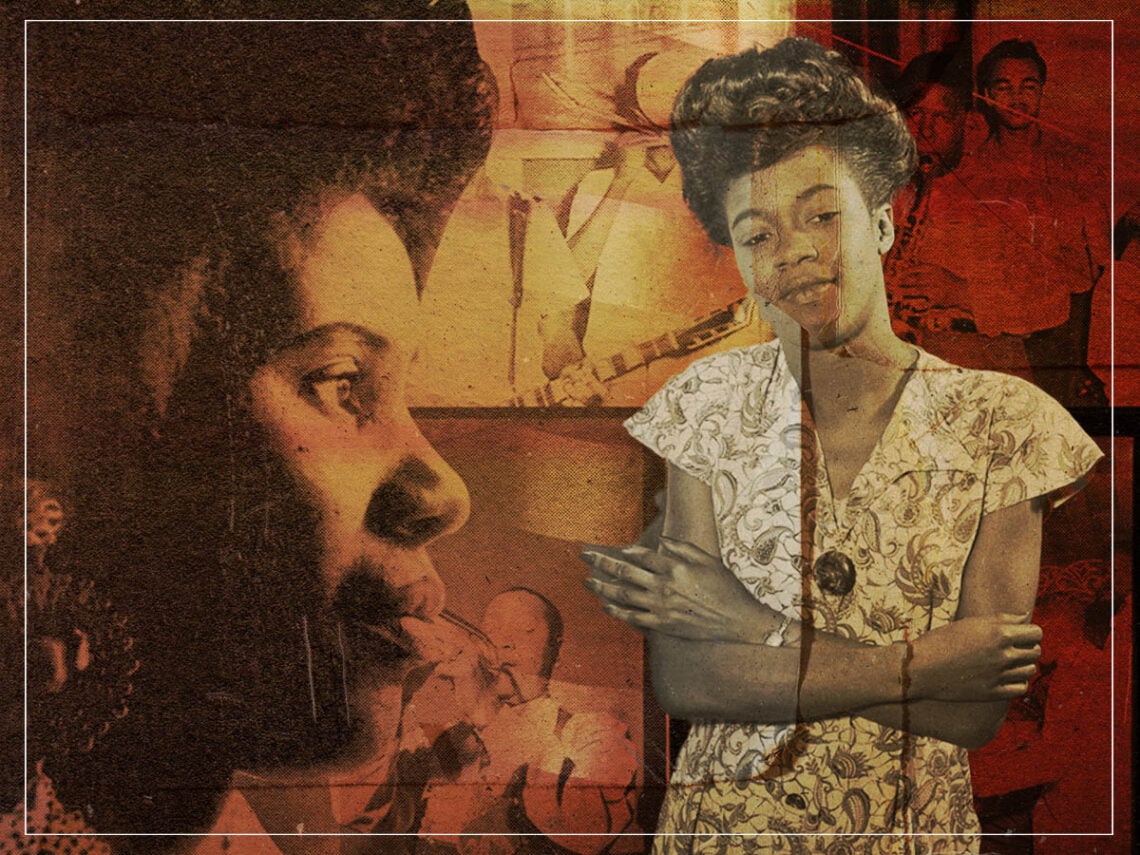
The unspoken history of the women who kept jazz music afloat

In 1958, Art Kane set out to capture a photo that perfectly encapsulated the thriving jazz scene in Harlem. At the time, the New York suburb was the home for all levels of influence and inspiration in the developing soundscape of music. Musicians were learning how to step out of the established rules of scale and tempo, instead embracing chaos and disorganisation to charge full speed ahead into sonic revolution. And many of the people who pioneered that movement can be seen in the photo taken by Art Kane.
The famous image, now known as A Great Day in Harlem, immortalises some of the people at the forefront of a new cultural movement. The photo has a lot of things: great minds, character, and authenticity, but what seems to be missing is women, so where are they?
Women have never been given the credit they deserve in the world of jazz, not only in the sense that there are female jazz musicians who struggled to be considered as influential as their male counterparts but also because women played a massive role in generally being able to keep the movement afloat. This article will discuss both of these different aspects and the vital role that women played in what is predominantly considered a male-driven movement.
When you begin to study some of the jazz instrumentalists who made a name for themselves in the 1950s and ‘60s, it quickly becomes apparent that women received very little recognition. This is due to the world in which jazz operated, which, because of social stigmas at the time, wasn’t a world where a woman was expected to be.
Around this period, the image of “the perfect housewife” was pushed massively. This image became a cornerstone of American values, as the ideology that women should stay home, look after the children and make the house a nice place to live superseded everything. A jazz club was the antithesis of this image. Subsequently, it was borderline unfeasible for a woman to leave her home for the tobacco-heavy speakeasy setting of a jazz bar filled with the strong scent of whisky and the chatter of raucous music fans.
It was a lot harder for a woman to climb the ranks, so now, over seven decades after these shows took place, many women contributing to the movement have been lost in time. Of course, there are a few notable exceptions; for instance, Alice Coltrane is a household name. She didn’t manage to gain broad popularity until a decade after she started playing, but her long career has led to her becoming a legend of the genre.

Other women who played a big part in the development of jazz include the likes of Barbara Donald, Monnette Sudler, Matana Roberts and Tomeka Reid. It’s worth noting, though, that these names are only a tiny percentage of the women who became a pivotal part of the genre, but because of values and the attitude of many listeners, they have struggled to get the recognition they deserve.
There is another layer to the underrecognition of women in jazz, though, especially in the development of free jazz. It often goes unnoticed, but without women around the development of the genre, music today would look very different. This isn’t just because of the role they played in creating the music but also because they had to support those who were creating it.
Val Wilmer puts it best in her book As Serious As Your Life, when she says, “Another, seldom acknowledged spirit behind the male musicians is that of the women who share their lives,” she writes, “The freelance musician has always been forced to lead a precarious existence, and his economic plight is increased if he refuses to compromise his art or subsidise his income with a day job. As a result, he generally relies on a woman for support.”
Wilmer goes on to point out that many musicians will refuse the support they received from their wives or partners in pursuit of their art, but the movement these musicians were pioneering wasn’t profitable. They wouldn’t have been making enough money to support themselves financially, so they needed the women in their lives to ensure they could continue pursuing their passion.
“The majority of the musicians deny this, but wives or ‘old ladies’ are often responsible for maintaining them spiritually as well as economically, and yet the man who puts his wife and family before the music tends to be rejected by the subculture.”
Jazz is one of the world’s most important genres of music, given that so much of what we now know about music stems from it; however, there were more people than just the artists who needed to ensure the genre developed the way it did. The amount of people required for the creation of jazz has resulted in a number of women getting overlooked for the hard work they did within the genre, both in terms of the music they made and how they helped keep the sound afloat from behind the scenes. You can look at A Great Day in Harlem and see it as a cultural milestone because it is, but it remains merely a snapshot.
