


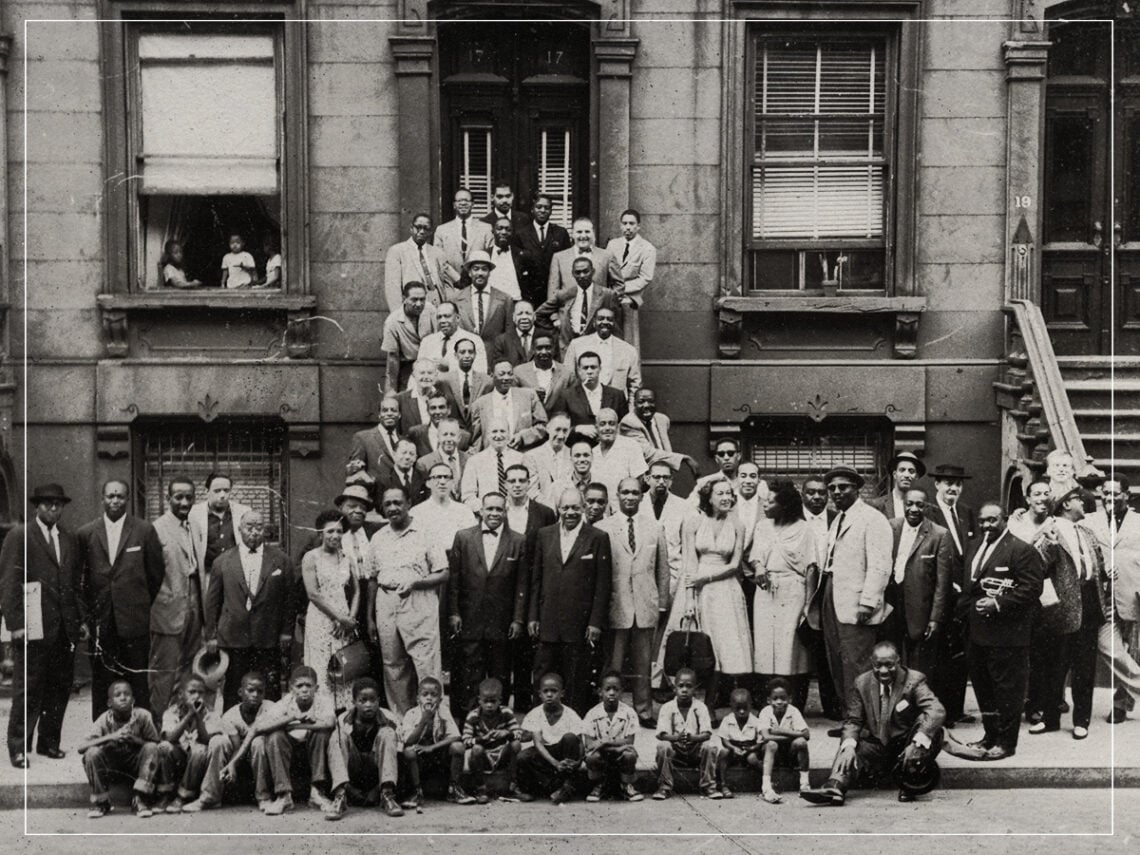
A Great Day in Harlem: the photo that showcased the birth of modern jazz

Bringing together a select group of iconic stars to capture and immortalise a singular moment in history may appear an impossible feat. Yet, in 1958, Art Kane accomplished precisely that. For a special edition magazine cover that would become synonymous with jazz excellence for years to come, the American photographer captured the essence of the iconic Harlem scene during the 1950s, showcasing the vibrant community of musicians who lived and performed in the neighbourhood.
In the ’50s, Harlem, long considered the epicentre of African American culture and creativity, was a melting pot of influences, ideas, and innovations. The neighbourhood’s jazz scene, in particular, thrived, attracting some of the most talented musicians of the day and serving as a crucible for experimentation and artistic expression.
However, the area wasn’t just defined by musical creativity – it also marked a comprehensive outburst of artistic and political ideologies, laying the foundation for the burgeoning civil rights movement of the 1940s and ’50s. This period witnessed a surge of artists engaging across diverse disciplines, encompassing literature, among others.
At the heart of Harlem’s thriving scene were its legendary jazz clubs and venues, which served as gathering places for musicians and enthusiasts alike. Iconic establishments like the Apollo Theatre, Minton’s Playhouse, and the Cotton Club played host to some of the era’s most memorable performances, providing a platform for both established stars and up-and-coming talent to showcase their skills.
The 1950s also saw the emergence of new styles and trends within Harlem jazz. Bebop, with its complex harmonies and rapid-fire improvisations, gained popularity among musicians and audiences alike, pushing the boundaries of the genre and laying the groundwork for future innovations. While bebop would later serve as a fundamental influence on rock ‘n’ roll, the spontaneous nature of the innovations at the time meant that many jazz pianists would attend each other’s performances, sporting rolled-up cuffs, to closely study the playing styles of figures like Thelonious Monk and hastily jot down musical notations on their cuffs.
The historical photograph captured by Kane in 1958 subsequently became a symbol for everything jazz represented back then, which it continues to carry now. Jazz during the era was as much an exciting genre as it was a catalyst for social change, a profound essence which effectively radiates from the image itself. The photograph resulted from an idea proposed by Kane, who wanted to gather as many jazz musicians as possible for a group portrait in Harlem.
Despite initial scepticism about the feasibility of the project, Kane managed to assemble 57 jazz musicians at 10am on the morning of August 12th, 1958, at 17 East 126th Street, between Fifth and Madison Avenues. The resulting image, known as A Great Day in Harlem, magically immortalised some of the greatest musicians of the time, including Dizzy Gillespie, Thelonious Monk, Count Basie, Charles Mingus, and Art Blakey, among many others.

The 57 jazz musicians in ‘A Great Day in Harlem’
Red Allen – An influential American jazz trumpeter and vocalist who became known for his distinctive playing style and expressive singing voice.
Buster Bailey – An influential American jazz clarinettist and saxophonist renowned for his virtuosic technique, melodic improvisations, and versatility across different styles of jazz.
Count Basie – A jazz and swing pioneer whose songs ‘One O’Clock Jump’ and ‘April in Paris’ became jazz standards and remain beloved by audiences to this day.
Emmett Berry – A jazz trumpeter whose tenure with the Count Basie Orchestra in the late 1930s and early 1940s solidified his reputation as one of the leading trumpeters of his time.
Art Blakey – A central figure in the development of hard bop, a style of jazz that emerged in the 1950s as a response to the more complex and harmonically adventurous forms of bebop.
Lawrence Brown – A trombonist whose smooth, expressive trombone playing set a standard for future generations of jazz musicians.
Scoville Browne – A jazz musician who played a crucial role in shaping the sound of jazz during the early decades of the 20th century. Browne left behind a legacy that continues to be celebrated by jazz enthusiasts around the world.
Buck Clayton – An influential American jazz trumpeter, composer, and bandleader. He played a significant role in the development of swing music and was known for his powerful yet lyrical trumpet style.
Bill Crump – An American jazz instrumentalist proficient in alto and tenor saxophone, clarinet, flute, and oboe.
Vic Dickenson – An American jazz trombonist whose career commenced in the 1920s, spanning collaborations with notable figures such as Count Basie, Sidney Bechet, and Earl Hines.
Roy Eldridge – An American jazz trumpeter renowned for his sophisticated harmonic approach, which incorporated tritone substitutions. His virtuosic solos departed from the prevailing style of jazz trumpet popularised by Louis Armstrong, significantly influencing Dizzy Gillespie and establishing him as one of the most influential musicians of the swing era and a precursor of bebop.
Art Farmer – A jazz trumpeter characterised by his warm, lyrical tone and his ability to craft beautifully melodic solos. He was also known for his versatility, seamlessly transitioning between bebop, hard bop, and cool jazz styles.
Bud Freeman – An influential American jazz musician known for his exceptional skill as a tenor saxophonist. A leading figure in the Chicago jazz scene of the 1920s and 1930s, Freeman’s robust, swinging style left a lasting mark on the development of jazz music.
Dizzy Gillespie – A pioneering American jazz trumpeter, bandleader, and composer. Known for his virtuosic trumpet playing, innovative approach to jazz, and co-creation of the bebop style, Gillespie remains one of the most influential figures in the history of jazz music.
Tyree Glenn – An American jazz trombonist and vibraphonist known for his versatility and mastery of multiple instruments. He gained prominence for his work with Duke Ellington’s orchestra and his contributions to the world of jazz music during the mid-20th century.
Benny Golson – An American jazz saxophonist, composer, and arranger known for his prolific contributions to the jazz genre.
Sonny Greer – American jazz drummer best known for his long tenure with the Duke Ellington Orchestra. Renowned for his unique style and showmanship, Greer’s innovative drumming contributed significantly to the distinctive sound and success of the Ellington band during the Swing Era.
Johnny Griffin – An influential American jazz saxophonist known for his remarkable speed, technical proficiency, and improvisational skills. Nicknamed ‘The Little Giant’ due to his diminutive stature and powerful playing, Griffin made significant contributions to the world of jazz during the mid-20th century.
Coleman Hawkins – A pioneering American jazz saxophonist known for his mastery of the tenor saxophone and influential recordings such as Body and Soul.
Gigi Gryce – An American jazz saxophonist, flautist, composer, and arranger known for his contributions to the hard bop and bebop styles during the 1950s and 1960s.
J.C. Heard – An American jazz drummer known for his powerful and dynamic techniques, performing with numerous big bands and leading his own ensembles.
Jay C. Higginbotham – An American jazz trombonist known for his distinctive, gutbucket style of playing, which contributed to the sound of many swing and Dixieland recordings.
Milt Hinton – An American jazz bassist and photographer known for his extensive work as a sideman with numerous jazz luminaries and for his iconic photographs documenting the jazz scene.
Chubby Jackson – An American jazz double bassist and bandleader known for his energetic and dynamic style, as well as his leadership of various big bands during the swing era.
Hilton Jefferson – An American jazz alto saxophonist known for his work with the Duke Ellington Orchestra during the 1920s and 1930s.
Joe Thomas – An American jazz trumpeter known for his smooth and lyrical approach, performing with various big bands and small groups during the swing era.
Wilbur Ware – An American jazz bassist known for his work with numerous jazz luminaries, including Thelonious Monk and Art Blakey.
Dickie Wells – An American jazz trombonist known for his distinctive, blues-infused playing style and his collaborations with Count Basie and other prominent bandleaders.
George Wettling – An American jazz drummer known for his energetic and driving rhythm, performing with various Dixieland and swing bands during the early to mid-20th century.
Ernie Wilkins – An American jazz saxophonist, arranger, and composer known for his prolific work as a sideman and his arrangements for big bands led by Count Basie and Dizzy Gillespie.
Mary Lou Williams – An American jazz pianist, composer, and arranger known for her innovative compositions and arrangements, as well as her collaborations with Duke Ellington and Benny Goodman.
Lester Young – An influential American jazz tenor saxophonist known for his smooth, cool style and his collaborations with Count Basie and Billie Holiday.
Osie Johnson – An American jazz drummer known for his versatility and creative approach to rhythm, performing with various big bands and small groups during the swing era.
Hank Jones – An American jazz pianist known for his impeccable technique and sensitive accompaniment, performing with numerous jazz legends, including Ella Fitzgerald and Charlie Parker.
Jo Jones – An American jazz drummer known for his impeccable sense of swing and innovative use of brushes, performing with Count Basie and other prominent jazz ensembles.
Jimmy Jones – An American jazz pianist known for his elegant and sophisticated playing style, performing with numerous jazz luminaries during the mid-20th century.
Taft Jordan – An American jazz trumpeter known for his smooth and lyrical approach, performing with various big bands and small groups during the swing era.
Max Kaminsky – An American jazz trumpeter known for his fiery and expressive sound, performing with various Dixieland and swing bands during the 1920s and 1930s.
Gene Krupa – An influential American jazz drummer known for his dynamic and energetic technique, leading his own bands and performing with Benny Goodman and other prominent figures.
Eddie Locke – An American jazz drummer known for his impeccable sense of time and solid, swinging beat, performing with various jazz legends during the mid-20th century.
Marian McPartland – An English-American jazz pianist and composer known for her distinctive style and her long-running radio show Piano Jazz, where she interviewed and performed with numerous jazz artists.
Charles Mingus – An influential jazz bassist, composer, and bandleader known for his innovative compositions and his eclectic, avant-garde approach to jazz music.
Miff Mole – A jazz trombonist known for his virtuosic technique and expressive playing style, performing with various jazz ensembles during the 1920s and 1930s.
Thelonious Monk – A jazz pianist and composer known for his distinctive improvisational style and his innovative compositions, which helped shape the course of modern jazz.
Gerry Mulligan – An American jazz saxophonist, composer, and arranger known for his pioneering work in the cool jazz genre and his collaborations with Chet Baker and other prominent jazz musicians.
Oscar Pettiford – A jazz bassist and cellist known for his innovative approach to the bass and his compositions, which contributed to the development of bebop and modern jazz.
Rudy Powell – An American jazz saxophonist known for his smooth and lyrical playing style, performing with various big bands and small groups during the swing era.
Luckey Roberts – An American jazz pianist and composer known for his virtuosic piano playing and his compositions, which blended elements of ragtime and jazz.
Sonny Rollins – An influential jazz saxophonist known for his powerful improvisational style and his groundbreaking recordings as a leader and sideman.
Jimmy Rushing – A jazz singer known for his deep, resonant voice and his collaborations with Count Basie and other prominent figures.
Pee Wee Russell – An American jazz clarinettist known for his idiosyncratic playing style and his collaborations with various Dixieland and swing bands during the early to mid-20th century.
Sahib Shihab – An American jazz saxophonist and flautist known for his distinctive sound and his contributions to the hard bop and bebop genres during the 1950s and 1960s.
Horace Silver – An American jazz pianist and composer known for his catchy melodies and infectious rhythms, leading his own bands and recording numerous influential albums.
Zutty Singleton – An American jazz drummer known for his energetic and propulsive approach, performing with various Dixieland and swing bands during the early to mid-20th century.
Stuff Smith – An American jazz violinist known for his virtuosic technique and his innovative approach to jazz improvisation, recording numerous influential albums.
Rex Stewart – An American jazz cornetist and composer known for his inventive playing style and his collaborations with Duke Ellington and other prominent jazz musicians.
Maxine Sullivan – An American jazz vocalist known for her clear, unaffected singing style and her interpretations of classic jazz standards, recording numerous albums during the swing era.
