


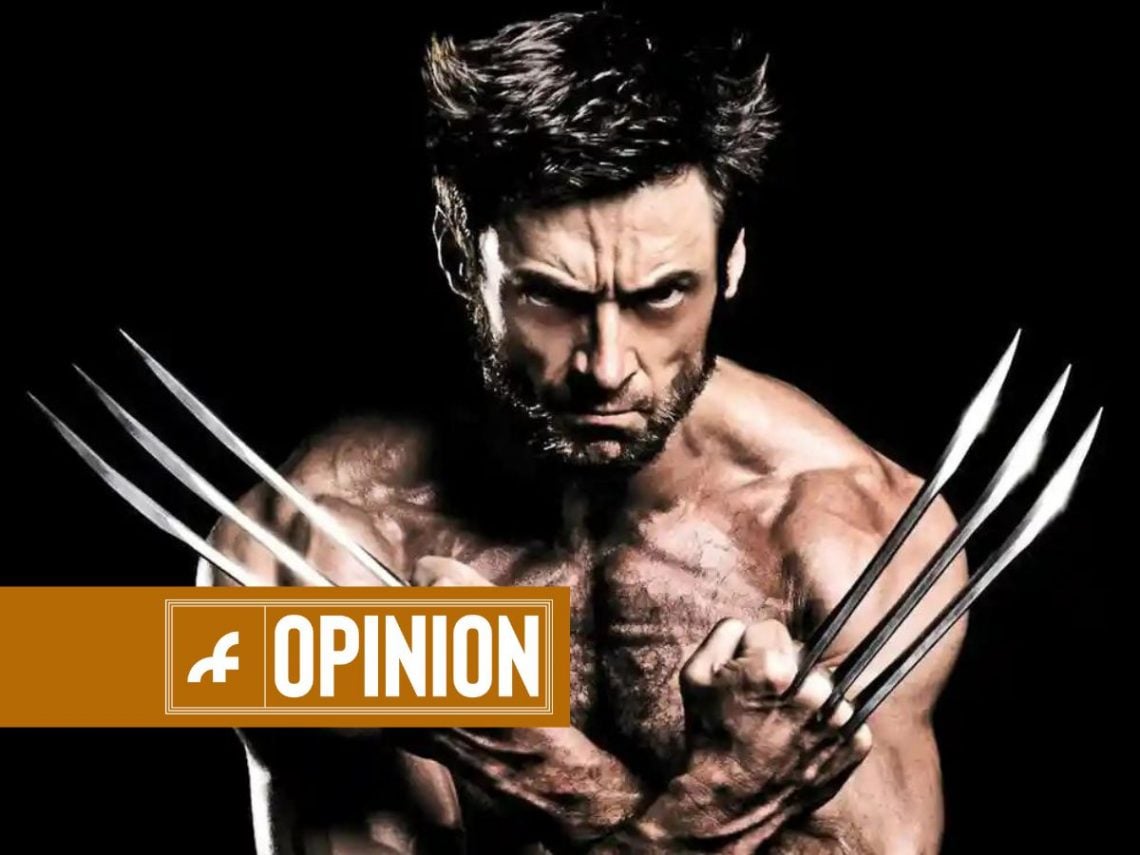
Hear Me Out: Wolverine is cinema’s greatest anti-hero

Hugh Jackman‘s Wolverine is currently slicing and dicing his way to more than a billion dollars in worldwide ticket sales thanks to the ultraviolent, ultra-foul-mouthed Deadpool & Wolverine. The film—which sees Jackman’s hairy antihero enter the Marvel Cinematic Universe for the first time—is part fan wish fulfilment, part franchise lifeline, and part love letter to the Fox X-Men movies, which helped lay the groundwork for the MCU.
While most observers would – correctly – credit Ryan Reynolds’ sarcastic, fourth-wall-obliterating breakout character Deadpool with being responsible for a lot of the film’s buzz, there’s no denying the extra boost that comes from the return of Jackman as Logan/Wolverine. In fact, I’d argue that without him, the movie wouldn’t have had the same X-factor – get it?! – that everyone’s favourite memory-challenged mutant killing machine gives it. For our money, you see, Wolverine is the greatest anti-hero in cinema history – and here’s why.
Way back in 2000, when Bryan Singer’s X-Men first hit cinema screens, most people had no idea who Wolverine was. The X-Men were super popular in comic book circles and with kids who watched the awesome cartoon in the early 1990s, but mainstream audiences were unfamiliar with the characters.
Wolverine captured the world’s imagination in that first X-Men movie, and Jackman seemingly emerged out of nowhere as a fully-formed star. At the time, the Australian actor was mostly known for musical theatre and had never made a Hollywood movie, making him even more of an unknown than the character he was portraying. This may have been part of what helped Wolverine become so instantly iconic—the character and the actor arrived as a package deal, each defining the other in a way that felt fresh and unexpected.
At his core, Wolverine was unshakable, dangerous, mysterious, and sexy – all things that make for a great anti-hero. He was a violent loner who found himself teaming up with a group of superpowered mutants in black leather almost by happenstance, and he was constantly busting the chops of Cyclops, the straight-laced leader of the team. He helped the teenage runaway Rogue because she was in trouble, which was the right thing to do, but he also took a run at Cyclops’ girl Jean Grey, which wasn’t so cool. On top of that, when the chips were down and bad guys needed to be dealt with, Wolverine was there with those razor-sharp claws and a pithy one-liner.

In essence, Wolverine was Clint Eastwood’s ‘Man With No Name’ and Dirty Harry Callahan characters thrown into a tight-fitting costume and given knife hands. Naturally, the world loved this new badass anti-hero, and he returned in 2003’s X2 and 2006’s X-Men: The Last Stand. Just like in the comics, though, the character proved so popular that fans clamoured to see him outside the constraints of an X-Men story – and this led to three solo movies: 2009’s X-Men Origins: Wolverine, 2013’s The Wolverine, and 2017’s Logan.
These films proved that Wolverine had something few other cinematic anti-heroes can match: adaptability. The character is so well-defined that he can be inserted into different kinds of stories and make all of them work.
It was with The Wolverine and Logan that Wolverine’s top-tier antihero status solidified. Director James Mangold smartly realised that he could tell a romantic samurai story with the character and then an elegiac Western that would force fans to confront the mortality of their beloved immortal antihero.
Jackman nailed his performances in both films, adding newfound depth to a character he had portrayed for nearly two decades. Wolverine became more violent, yet more profound. He grew more solitary, yet also more compassionate—a lover and even a father figure, willing to sacrifice his own life to do the right thing. Wolverine wasn’t purely good, but he wasn’t all bad either—he was a complex blend of contradictions, and that’s exactly what audiences loved about him.
This brings us back to Deadpool & Wolverine and the character’s triumphant—or not-so-triumphant—return from the dead. Some fans worried that this would undo the powerful sendoff Logan gave the character. However, the Wolverine Jackman portrayed was from another universe, where the X-Men had all been killed in his absence. This clever twist allowed Jackman to break free from the constraints of his original role, as this Wolverine wasn’t the same one audiences knew. As a result, he played the character with entirely new layers—angrier, more depressed, and even more violent—yet consumed by tragedy and haunted by his own failings.
In the end, the makers of Deadpool & Wolverine needed someone to give the movie a beating, bloody heart, otherwise all the multiverse shenanigans and dick jokes would have meant nothing. In that scenario, who better to enlist than the greatest anti-hero cinema has ever seen?
