


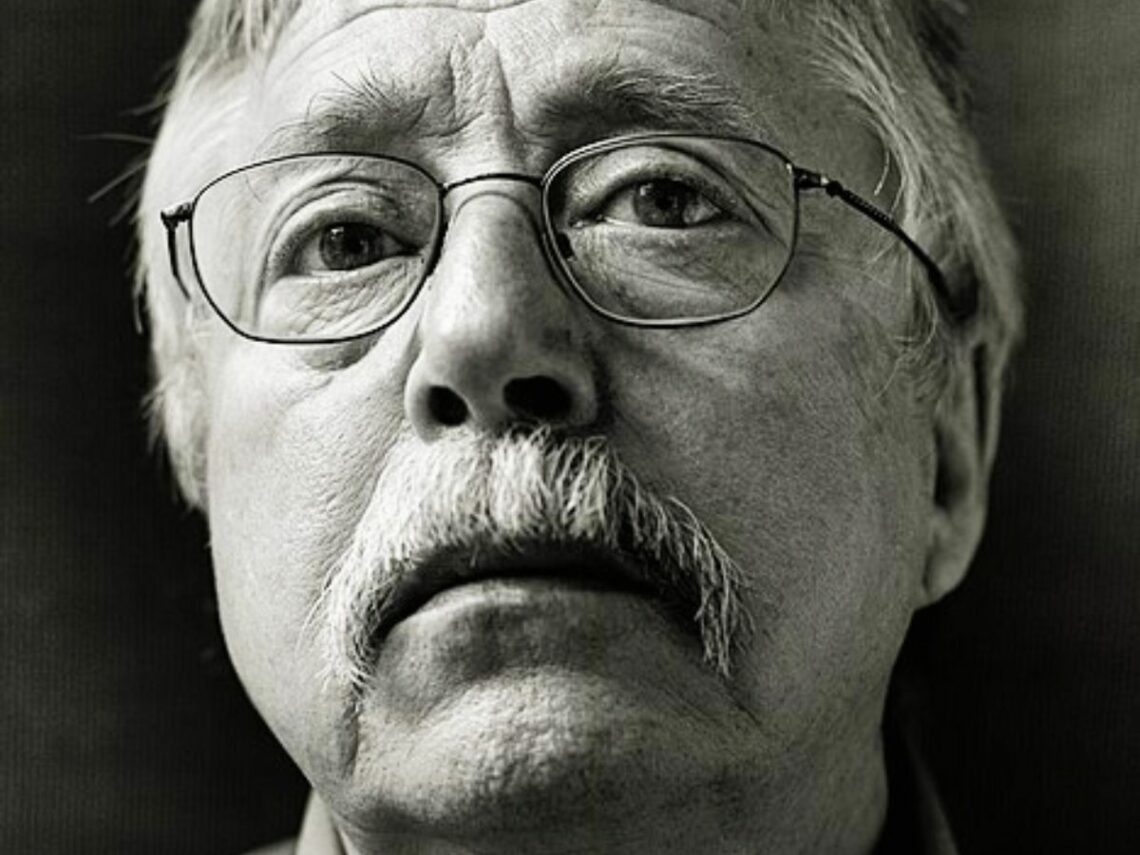
Wolf Biermann: The musician who shook the Berlin Wall

During tumultuous times of civil unrest and authoritarian governments, some flee for a better life, and some stay and try to make a change. Wolf Biermann was one of those who hoped to make positive changes in East Germany during the Cold War. However, his plans were foiled when the government of the East exiled him from the country, starting a chain reaction that eventually led to the fall of the Berlin Wall and the collapse of communism in the country as a whole.
Biermann, himself a communist, had moved to East Germany from Hamburg in the early 1950s to help shape the nation into a free-thinking, artistic place where he was free to share his music. The songwriter was not alone in this desire; countless artists such as Nina Hagen, Sarah Kirsch, and Jurek Becker, among others, remained in the East despite the increasingly authoritarian nature of its government.
The son of Jewish communists, his father a victim of the Holocaust, Biermann grew up in a divided post-war Germany. Biermann became very popular across both East and West Germany, with politically charged lyrics challenging the East German government. As a result of the nature of his lyrics, the songwriter was placed under a stage ban in the East. He was considered an enemy of the state for his criticism of government policy and was heavily monitored by the East German secret police, the Stasi. Despite this, the state did permit Biermann to tour West Germany, for inexplicable reasons.
This tour featured a televised appearance in Cologne in 1976. Given the stage ban he was under in the East, his first official concert consisted of folk performances, politically charged ballads, spoken word poetry, and even some comedy. However, it was Biermann’s stunning indictment of life in East Germany that was most memorable, singing “The barbed wire grows slowly inward, deep into the skin, into the chest and legs, into the brain, into its cells”.
Biermann’s Cologne gig was a tremendous success, with the songwriter receiving a huge standing ovation from the packed-out Kölner Sporthalle. Unsurprisingly, the East German state was less pleased with his performance. As he travelled to his next scheduled show in Bochum, he heard news on the radio of his expatriation from East Germany. The government had decided to forbid him from re-entering East Germany as a result of his anti-government stance shown in Cologne. “I felt cast aside. I was miserable and overcome with anxiety,” the singer later said. “That’s it! Everything is over! Life is over.”
What the East German state could not predict was the public reaction to his expatriation. Prominent East German writers and artists began a petition protesting against the songwriter’s forced exile, which later received hundreds of signatures. Although the government came down harshly on those who signed, often banning artists from working or imposing sanctions upon them, a widespread cultural reaction to their authoritarian treatment of Biermann had already begun. The autobahn from Berlin to Leipzig featured graffiti simply reading ‘Biermann’ every few miles.
Many of those artists who had started the petition made the difficult decision to leave East Germany as a result of this harsh treatment of creatives like Biermann, and many more people followed. It was a mass exodus from which the East German state could not recover. So, although other prominent artists like David Bowie or Bruce Springsteen are credited with helping to bring down the cultural wall between East and West during their performances in the 1980s, it was Wolf Biermann who started the chain reaction that led to the unification of Germany in 1990 with that fateful concert in Cologne.
