


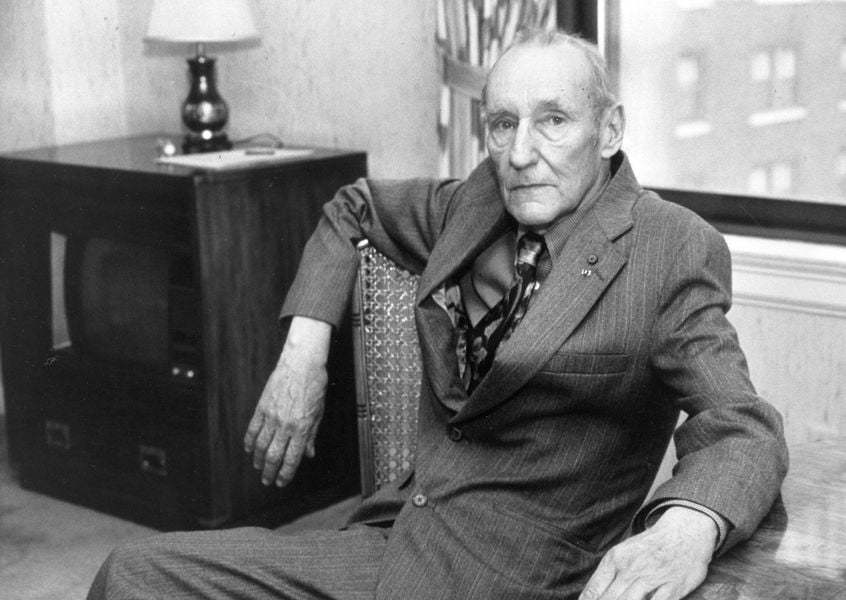
William S. Burroughs’ connection to ‘Blade Runner’

William S. Burroughs was a prominent figure in the Beatnik generation of prose writers and had a far-reaching influence on popular culture in music, art, film and literature. Burroughs’ style was highly experimental, and interestingly, he also played a hand in the development of Blade Runner.
Of course, Ridley Scott’s 1982 film was based on Philip K. Dick’s 1968 novel Do Androids Dream of Electric Sheep? so Burroughs’ connection to the film starring Harrison Ford as Rick Deckard is more indirect. In 1979, Burroughs published a science fiction novella by the name Blade Runner (a movie).
The novella arose when Burroughs began to consider a story treatment for a film adaptation of another science fiction literary work called The Bladerunner by Alan E. Nourse, published four years prior. He first came across the book when he moved to a converted YMCA building called “the Bunker” in lower Manhattan.
Nourse’s novel told of a near-distant future whereby the Earth’s inhabitants cannot receive medical treatment unless they are sterilised to prevent infection, disease and sickness from spreading amongst the human populace. This leads to the rise of a black market for medical services, and the novel’s protagonist, Billy Gimp, is a “bladerunner” who supplies medical tools to the black markets’ doctors.
However, Burroughs felt he could take Nourse’s notion of medical eugenics further and wrote a ‘treatment’ on the story, or what he thought might eventually become a film. He wrote the prequel to The Bladerunner, explaining how the medical emergency of sterilisation came to be.
The legendary Beat writer then had it so that medicine was only available to the ultra-rich of America, which rid the world of “undesirable” characters, reiterating his distaste for the inequality of modern capitalism. However, Burroughs’ typically experimental prose meant that the film was somewhat challenging to produce and never saw the light of day.
Ridley Scott had caught wind of the term “blade runner” in one of his iconic film’s early screenplays written by his co-writer Hampton Fancher. Scott loved the phrase and wanted to use it as a title for the film.
He said in a 1982 interview, “I thought, Christ, that’s terrific. Well, the writer looked guilty and said, ‘As a matter of fact, it’s not my phrase.’ Of course, the phrase belonged (technically) to Burroughs. However, Scott’s legal team contacted Burroughs and gained permission to use the title and the rest, as they say, is history.
