


William Onyeabor: Disco for Christ and the USSR, the life and times of a Nigerian legend

The word ‘pioneer’ gets bandied around a lot within music discourse, but there seems to be little alternative when it comes to William Onyeabor. The Nigerian musician and businessman was an early disciple of the synthesiser, blending those futuristic sounds with the classic funk sounds inherent in a great deal of popular music in Nigeria.
Onyeabor’s story starts in the unlikely setting of the USSR, where he went to study film – or, at least, that is a widely shared rumour. The thing about Onyeabor that will soon become apparent is that there is very little in the way of definite, provable facts. Nevertheless, it is thought that his studies in Europe exposed him to the joys of the synthesiser. Returning, this time to Western Europe, to buy synths, Onyeabor studied record manufacturing in Sweden.
Returning to his native Nigeria with this newfound knowledge and equipment, Onyeabor set up a one-man music industry. Not only were his nine studio albums all self-released, Onyeabor produced, mastered and even pressed all his own work. As if that wasn’t impressive enough, his music features the kind of synth-mastery that was not witnessed in Western popular music until years later, with bands like The Human League or Depeche Mode.
Early electronic music is often thought of as being industrial, dark and moody. This sound can usually be attributed to groups like Kraftwerk and Telex, creating early electronic sounds in Western Europe. Fittingly, given its history of funky Fuji music and jazz, Nigeria’s electronic pioneer was distinctly more danceable. So much so that some of his tracks became notable within dance music scenes in Europe in the 1990s, with ‘Atomic Bomb’ a particular favourite of Blur’s Damon Albarn.
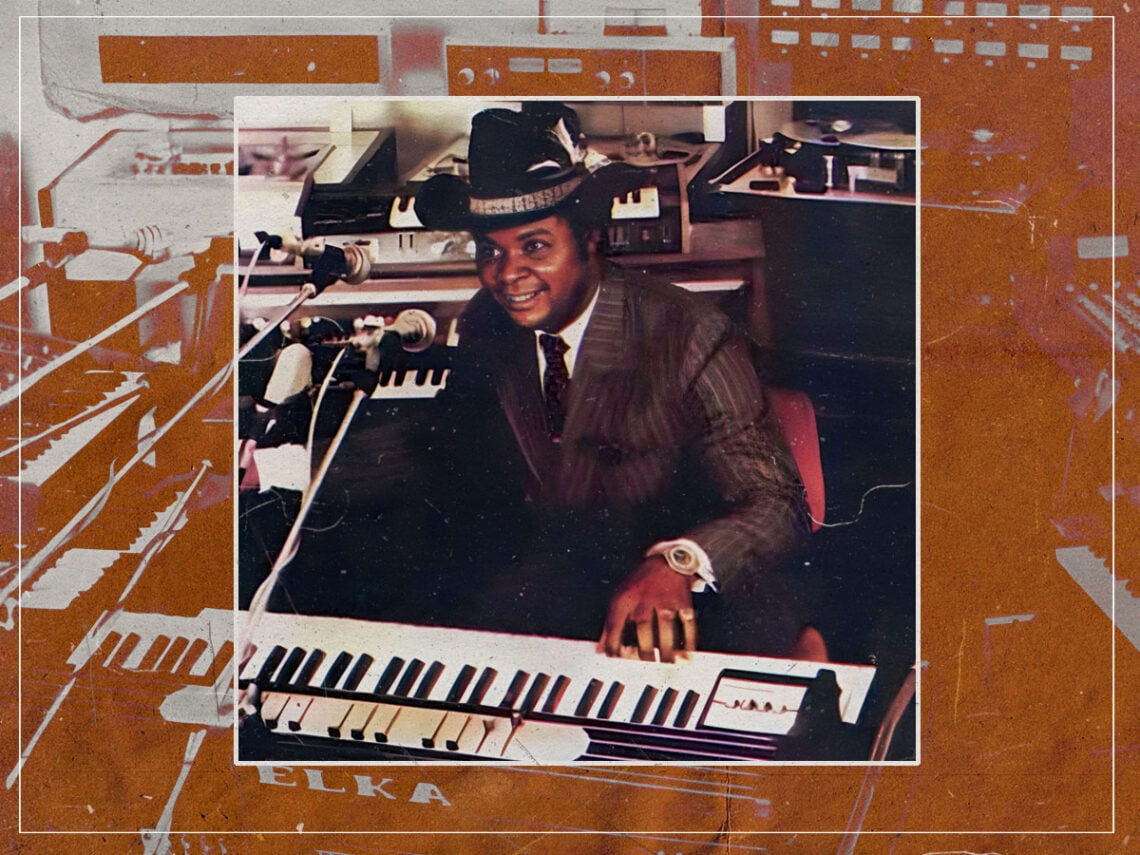
Releasing his last album, Anything You Sow, in 1985 through his own Wilfilms imprint, Onyeabor cemented his position among the greatest musicians Nigeria has ever produced. The cover of Anything You Sow, showing the larger-than-life Onyeabor in his trademark cowboy hat surrounded by a sea of synthesisers, is perhaps the best summation of his sound and character.
Soon after his 1985 album, Onyeabor became a born-again Christian, devoting himself to serving God and running a flour mill, a business that won him ‘West African Industrialist of the Year’ in 1987. During this time, Onyeabor became an incredibly reclusive figure, refusing to make more music or even talk about his musical career.
For years, he spent his time in his house in Nigeria alone, his musical career behind him. His music became more widely known in the West thanks to the compilation album Who Is William Onyeabor, released in 2013 on David Byrne’s Luaka Bop Records, which led to a resurgence in fans of his pioneering synth music. Despite efforts to track Onyeabor down or conduct an interview with him, he still refused to talk about his music. That was until December 2014, when he appeared on BBC 6 Music, discussing his newfound motivation to record new material. Unfortunately, this material never came to fruition before Onyeabor’s death in 2017 at the age of 70.
