


‘Eileen’ movie review: thrills arrive too late and are gone too soon

Ottessa Mohsfegh has co-written the screenplay with Luke Goebel for the film adaptation of her 2015 novel Eileen, directed by William Oldroyd and starring Thomasin McKenzie in the titular role with support from Marin Ireland, Owen Teague and Anne Hathaway. However, even with the author on board for the project, the movie feels short of length and relatively devoid of focus.
Eileen Dunlop is a young woman living in 1960s Boston who works in administration at a local prison by day and suffers the physical and mental abuse of her alcoholic father at dusk. She possesses a deeply repressed sexuality that has her masturbating over backseat kisses and fantasising about the prison guards she works with taking her forcibly in the heat of a daydreamed moment.
That’s not the only fantasy Eileen has, though, as there are frequent flashes within the film that blend the layers of reality and imagination – much in the way that Hal Ashby and Bud Cort do in Harold and Maude – in which she shoots herself at point blank range in the head or does the same to her father, which provides genuine moments of shock before the audience realises they’ve been had.
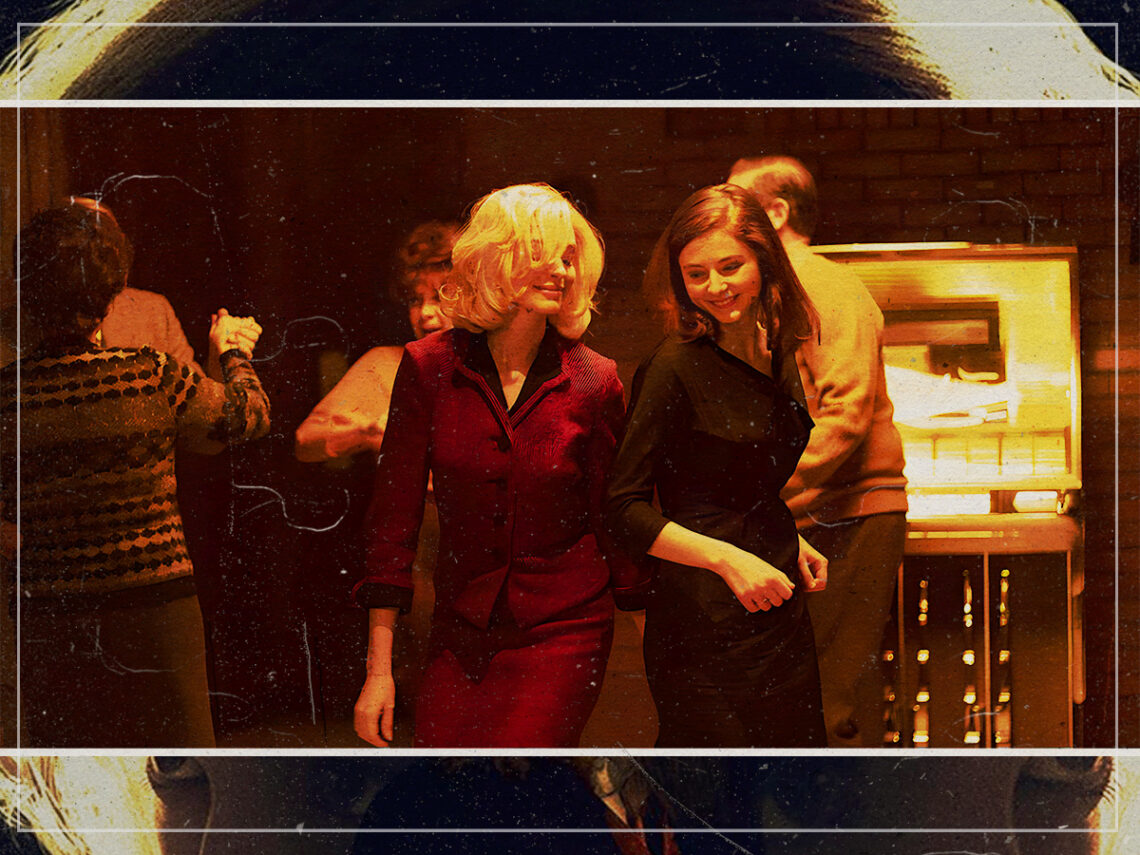
These fantasies are the only real moments of excitement in Eileen’s life, at least until a magnetically beautiful and charismatic counsellor begins working at the prison. Somehow, Eileen, “pretty in an incredibly ordinary way”, seems to allure Anne Hathaway’s Rebecca, and she awakens in her a previously hidden sexuality and a penchant for life – or at least for drinking and dancing.
Hathaway dominates the screen with her blonde shock of hair amid the drudgery of New England, and with her confident yet chaotic persona, it’s easy to see why she is so exciting to young Eileen. However, we eventually discover that Rebecca has a motive of her own, and Eileen would have been so lucky to win her affection through her paltry charm and dulled beauty.
This volta is surprising but resolves itself all too quickly, mainly through the actions of Eileen, which are then seemingly passed off in favour of a comic turn. Even with Hathaway on-screen at her most alluring, Eileen had begun to drag somewhat, so it’s incredibly disappointing when the most thrilling moment of the film is disposed of seemingly as quickly as it ended.
A vintage 1960s feel and score are welcome to proceedings, but Eileen serves as a rare occasion when a film is too short to explore its characters and themes. Suppose Rebecca’s arrival and the pair’s deeds act as an awakening of Eileen into characteristics that lay within her hitherto unknown. In that case, Oldroyd and Moshfegh have succeeded in their aim, but the credits roll far too early when more exposition is needed.
Eileen is well-crafted and relatively well-performed, but not to the point of speciality. McKenzie provides an ample performance of a lost young woman while Hathaway’s portrayal occasionally teeters on the irksome, and they become an unlikely duo that will only last in the memory for a little while longer than the runtime.
