


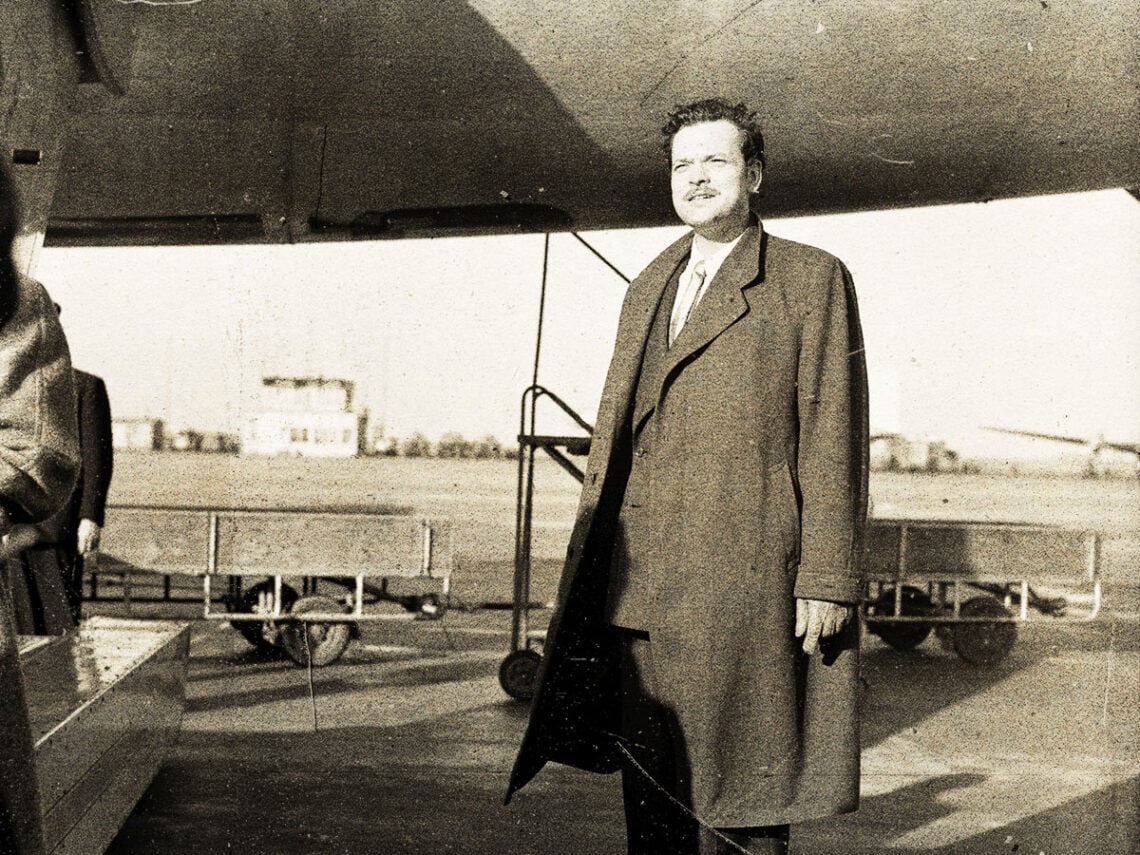
Why Winston Churchill bowed in the presence of Orson Welles: “He thinks I am very well connected”

Even when his career wasn’t going swimmingly, Orson Welles always carried himself with a certain air of grandiosity, and his famously silver tongue enabled him to lay the charm on thick to potential investors and financial partners he was hoping to entice into funding his latest creative endeavour.
Sometimes it worked, and sometimes it didn’t, which is why the latter years of the former wunderkind’s career were defined by false starts, abandoned productions, and paycheque gigs that even saw him voice a planet-eating alien robot in an animated Transformers movie.
However, it can often help to have friends in high places, and Welles found one of his unlikeliest allies in Winston Churchill. The two first became acquainted long before the filmmaker had taken Hollywood by storm when his debut feature, Citizen Kane, quickly took its place among the pantheon of all-time greats when he was still in his mid-20s.
Their paths would continue crossing from time to time, and the most beneficial by far came when Welles was cosying up to some wealthy Russians. “So there he was in the hotel, the Toledo, with Clementine, his wife,” he relayed to Dick Cavett. “One day at lunch, I came in with a Russian businessman I was trying to hustle for some money for this picture.”
Welles had spied Churchill, and because they were familiar with each other, the former Prime Minister gave him a nod of recognition. “And the Russian went out of his mind,” Welles explained. “When he saw that not only did Mr Churchill know me but gave a rather special acknowledgement, it was clear to me that I had the money for my picture.”
Getting the seal of approval from one of World War II’s most instrumental figures and a towering personality who’d already secured their place in the history books was enough to leave Welles’ prospective financiers suitably starstruck. However, the best was yet to come, with Churchill saving his final flourish for the very same day.
Continuing his drive to squeeze every penny out of his cohort, Welles returned to the same hotel restaurant for lunch. Who happened to be there awaiting their next meal? It was that man Churchill again. Having already nodded, he decided to take the next step and show his deference to the auteur, which would have blown that miscellaneous Russian fella’s mind.
“I came in with the financier again,” Welles elaborated. “And Mr Churchill rose from his chair and bowed.” Prime Ministers don’t often curtsy in the presence of anyone other than royalty and heads of state, but it was the ultimate seal of approval for the writer and director. Just like that, Welles’ chances of getting his movie paid for had shot through the roof.
