


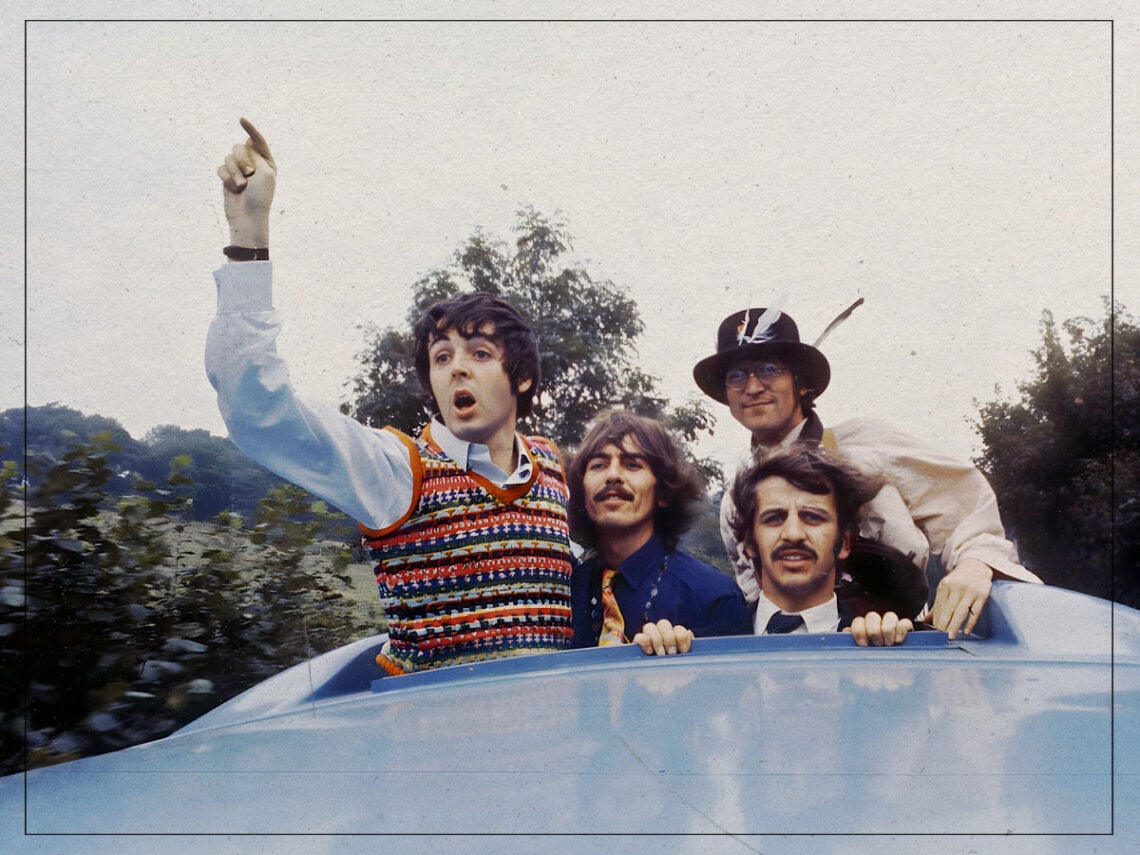
Why was the ‘Magical Mystery Tour’ movie the worst reviewed Beatles release ever?

During the 1960s, the word “failure” didn’t seem to be a massive part of The Beatles’ vocabulary.
They had to go through all hell to get their first tunes off the ground, but once Beatlemania, it felt like they didn’t have proper time to breathe for the rest of the decade before they eventually split up. Or at least, that’s how people like to write about it. In reality, the band had a few dips in their career, and one of their biggest cough-ups ended up not even being their fault.
For a brief moment in time, though, the band were already starting to give up on parts of their own celebrity. They never liked the idea of touring once they stopped hearing themselves, and even if they decided to walk away from it altogether, hearing them change the rules of the studio took them into a completely different area. They were sonic scientists at that point, and Sgt Pepper was the big jumping-off point into uncharted territory.
There simply wasn’t music out there like this, and while any other band could have easily fallen on their face for trying to make a record that ambitious, ‘A Day in the Life’ helped turn rock and roll into high art. So if they were able to pull from the avant-garde movement and make the most forward-thinking music of their career, who said that they couldn’t do the same thing on the big screen?
After all, the cartoonish version of themselves in Help was far from the persona they wanted to present to the world. It was an era of new innovations, and while Magical Mystery Tour had a far less linear storyline than anything they had done before, it did have its fair share of highlights in certain places.
This was the case of a band making what would now be considered a “visual album” with vignettes for every single track, but in an era where people needed things like plot and character development, it’s not surprising that everyone took a look at the trippy sequence of ‘I Am the Walrus’ and were confused by what they were seeing. If it was already hard to follow in its intended format, though, the choice for the BBC to air the whole thing in black and white pretty much neutered everything great about the film.
Because when you take out any semblance of colour from this film, it ceases to be anywhere close to a masterpiece. While someone might be able to understand what they’re going for in the video for ‘Your Mother Should Know’ without needing to add colour, a track like ‘Blue Jay Way’ doesn’t make sense without the effects on the background, especially with all of the shadows around George Harrison’s face.
In fact, if you take the US version of the record other than the EP released in the UK, the videos included on the B-side would have made the whole thing even better. ‘Hello Goodbye’ gave everyone a sense of the fun they could have during this time, and even though ‘Strawberry Fields Forever’ is among the finest studio moments they ever had, it also holds the distinction of being their best video, especially with the reversed moments and the surreal colours throughout, which would have been a crime to show in black and white.
While The Beatles stood by the project as an art movie, the idea of them releasing the whole thing in monochrome is up there with them bringing in Allen Klein as one of the biggest blunders of their career. It’s not like they were trying to make the most engaging movie of all time, but whereas everyone was complaining about how nothing made sense, it’s hard to judge a movie where colour is half of the story.

Never Miss A Beat
The Far Out Beatles Newsletter
All the latest stories about The Beatles from the independent voice of culture.
Straight to your inbox.