


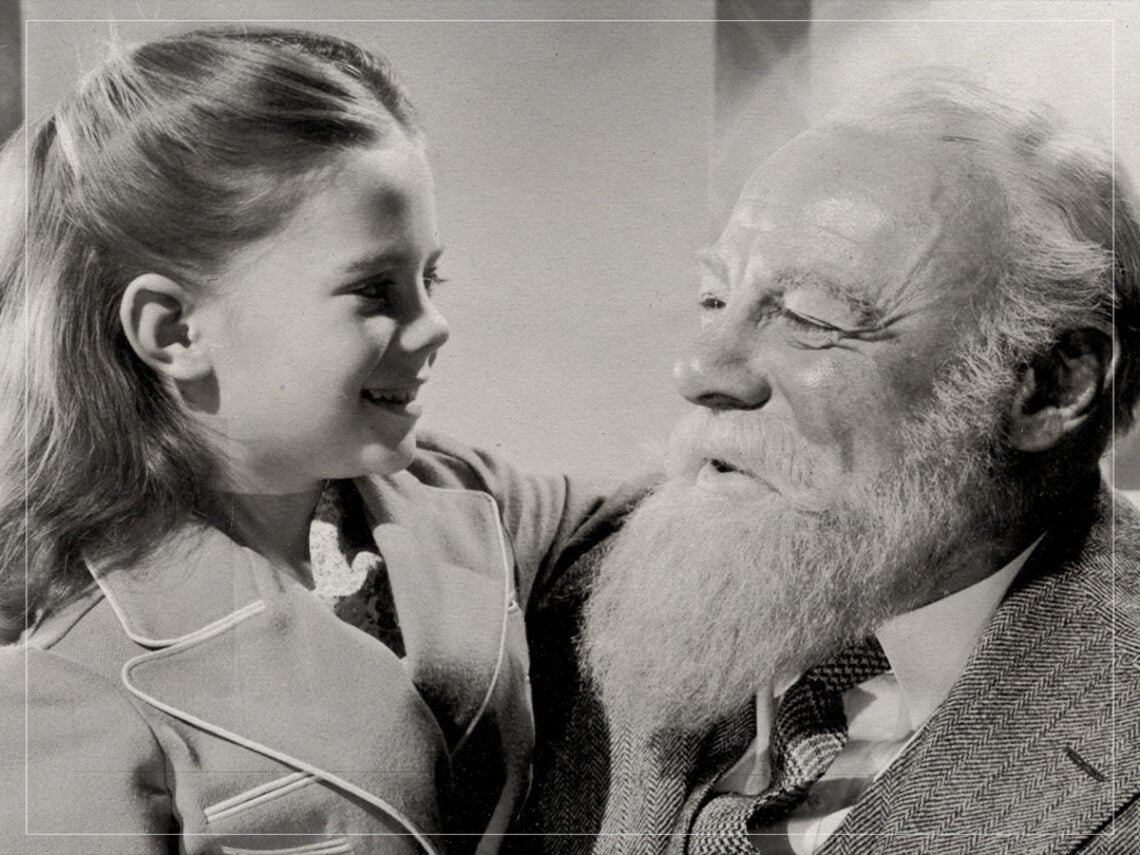
Why was the classic Christmas movie ‘Miracle on 34th Street’ released in June?

Each year, there’s always someone who believes that the Christmas festivities should actually start in November, but can you defend Christmas in June?
Back in 1947, 20th Century Fox had a new family-friendly comedy-drama, Miracle on 34th Street, ready for release, which involved Maureen O’Hara, John Payne, and a young Natalie Wood starring alongside Edmund Gwenn as Kris Kringle, in a plot about a Macy’s Santa Claus claiming to be the real deal.
You’d think that the studio would’ve waited until the later months of the year to bring the movie to the public, but Miracle on 34th Street would find itself in theatres during the warmth of summer, becoming one of the studio’s biggest hits that June.
But the unsurprising answer to why they would choose to release a movie set between that exciting period between Thanksgiving and Christmas, with months to go until the big day, is a case of marketing, with 20th Century Fox’s Darryl F Zanuck believing that summer was a much more profitable time for movie releases than the winter.
You see, back then, Christmas movies weren’t as big a phenomenon as they would become in the following decades, so Zanuck perhaps saw the risk of relying on the festive element of the movie as a bit of a gamble, with its possibility not being enough to sell plenty of tickets during the winter season. Summer was always a more profitable period for films because, quite simply, movie theatres were one of the only reliable sources of air conditioning, and many people chose to escape the heat by going to catch the latest release.
He knew that he’d undoubtedly have much more success if the film were released earlier in the year, so Miracle on 34th Street was very craftily promoted without reference to its Christmas setting. In fact, images of Gwenn as Kringle were completely omitted from the trailer and promotional images, with the focus instead being on O’Hara and Payne.
On the surface, it looked like just another romantic drama, so audiences were surely in for a shock when they sat down in the theatre to discover a movie so prominently centred around Christmas. Yet, despite this slight deception, the movie proved successful, and it won several Academy Awards, including ‘Best Supporting Actor’ for Gwenn.


These days, it’s considered one of the definitive Christmas movies of all time, still loved all these years later. It was remade in 1994, too, with Richard Attenborough and Mara Wilson, although you can’t beat the magic of the movie’s post-WW2 release that makes it feel even more special, with the movie insisting on indulging in fantasy and holding onto faith during tough times.
Luckily, Miracle on 34th Street was enough of a success that its charm carried audiences through to Christmas, and it has remained popular ever since, but it’s funny to imagine the confusion on the audience’s faces when, back in June 1947, they sat down to discover that they’d been misled into watching a full-blown Christmas movie.
