


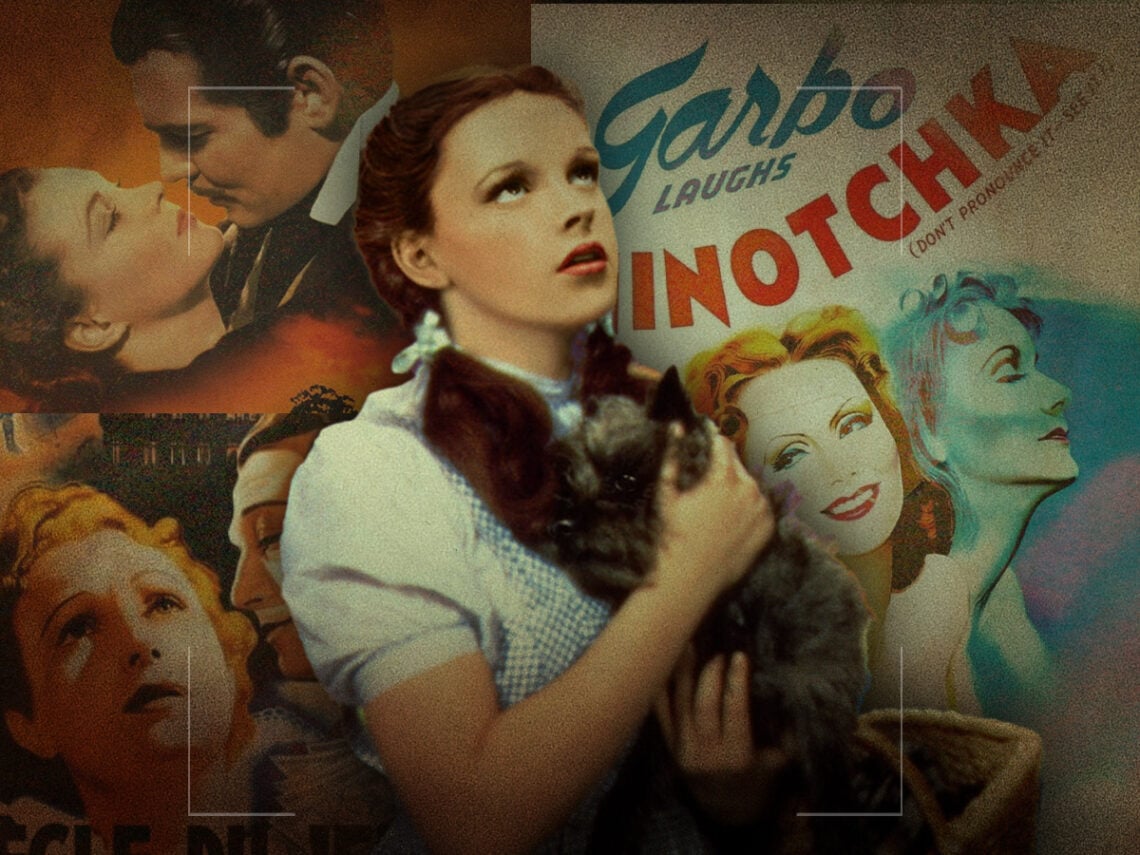
Why was 1939 such a good year for cinema?

Arguably, a good cinematic year needs to have delivered a handful of timeless movies that are widely considered masterpieces. Besides that, it also needs to have seen releases that actually made a significant influence on the art form by inspiring significant developments and changes.
Just look at 1999, which brought us Fight Club, The Virgin Suicides, Beau Travail, Star Wars – Episode One: The Phantom Menace, Eyes Wide Shut, The Matrix, The Sixth Sense, Audition, All About My Mother, Toy Story 2, But I’m A Cheerleader, and I could go on. But really, all you need to know is that if you wanted to go to the cinema that year, you were probably going to watch something that would quickly become a modern classic.
But what about 1939, a year we associate with the end of the Great Depression in the United States, as well as with the start of World War II, wherein, somehow, the tumultuous state of the world didn’t seem to affect the production of some of Hollywood’s most influential films.
It was the year that gave us The Wizard of Oz, a beloved classic that truly feels like one of the most ‘Hollywood’ movies ever made. This fantastical piece of art, laden with impeccable set design and unforgettable musical numbers, was all filmed in stunning Technicolour, standing as a symbol of the ultimate crowning achievement of cinema as this larger-than-life source of escapism and entertainment.
Then there’s Victor Fleming’s other project from that year, Gone With the Wind, one of the most quoted and beloved movies ever made. It’s interesting, though, because it hasn’t aged well at all, yet its status has been elevated to such high heights over the years that it’s impossible to ignore its place in people’s hearts as a titan of Old Hollywood.
Perhaps it’s the controversy, and you can say the same about the controversy surrounding the production of The Wizard of Oz, that has further helped to keep it in mainstream public consciousness, but that’s not to say that they’re not great films in their own right (minus the many issues of race representation in Gone with the Wind), somewhat earning a mythical status, surrounded by endless discussion.
1939 also gave us a whole host of other big hitters from Hollywood in the form of the comedy drama Mr Smith Goes to Washington, Wuthering Heights, Only Angels Have Wings, Gunga Din, Stagecoach, which revolutionised the western, Ninotchka, which delivered an unforgettable performance from Greta Garbo, arguably her best, and The Women, which was groundbreaking in giving us an entirely female ensemble cast full of stars like Joan Fontaine, Norma Shearer, Rosalind Russell, and Joan Crawford. There were some equally remarkable entries from across the pond, too, such as The Rules of the Game and Love Affair, so much so that it’s hard to imagine the industry without any of them.
These movies have all gone down in Hollywood history as incredibly important releases, encapsulating an era in which mainstream American cinema was reaching its peak, featuring incredible attention to detail, the best actors in the game, and really left an impression on audiences. These were big works of art that demanded attention and were accessible movies that everyone could discuss. They were epic in scope, and despite the fact that the world was heading towards another great big war, Hollywood stood proud as this illustrious dream factory, where impressive entertainment could be made in spite of outside factors.
1939 changed Hollywood, and, as a result, cinema as a whole, demonstrating the power of filmmaking to unite collective consciousness, showing us just how powerful the art form could be. The Wizard of Oz was just one of many era-defining movies that emerged during this precarious political climate, demonstrating the American tendency to focus on maintaining the image of themselves as a place where dreams can come true, of which Hollywood is the ultimate embodiment.
