


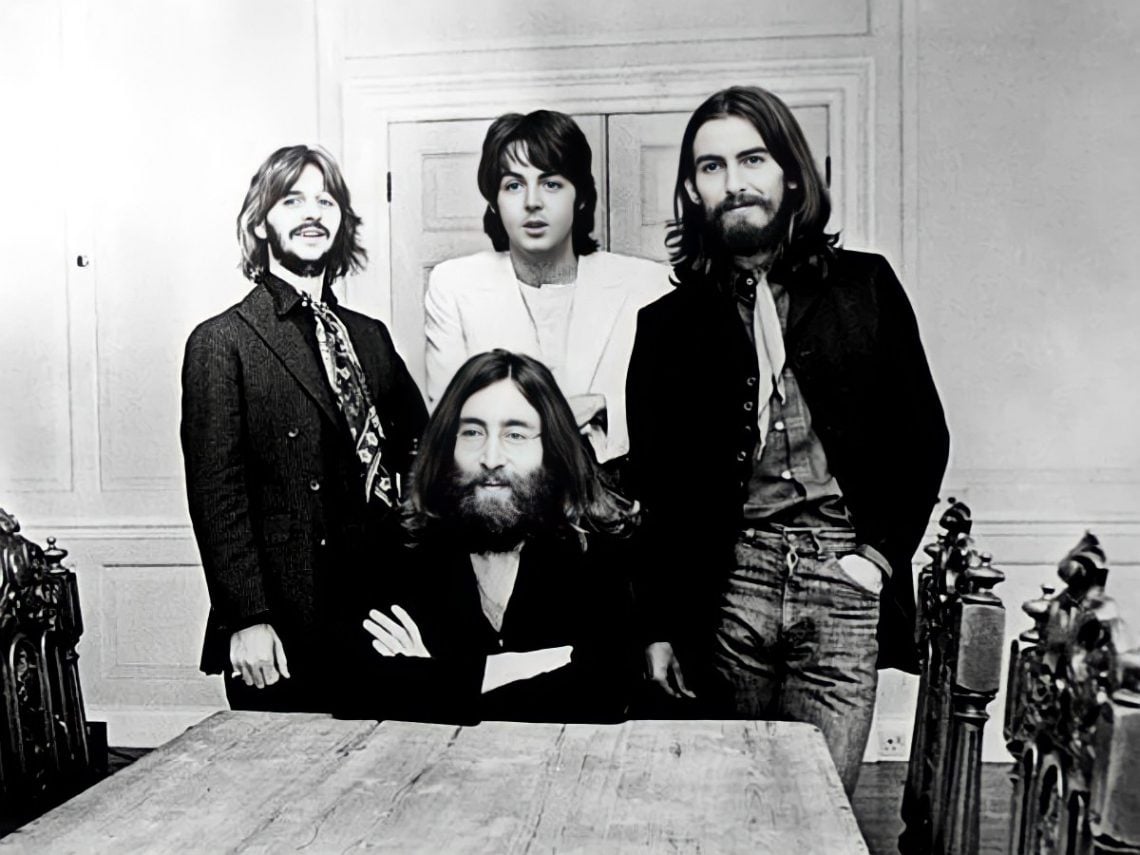
How and why The Beatles formed Apple Records

After the Sgt. Pepper era, The Beatles seemed lost. Having made one of the best albums of their career, the death of long-time manager Brian Epstein left a big question mark for the future of the Fab Four. Paul McCartney’s solution was to soldier on, and that meant putting all of their creative endeavours under one roof.
In an attempt to self-manage themselves, Apple Records was created to spread the Beatles’ love for music to the next generation of rock and rollers. Since the band had gotten wealthy, they wanted to put their money back into music, signing acts that were more alternative than the teeny-bopper bands they were performing with on the pop charts.
Opening on May 11th, 1968, McCartney was adamant about signing acts for the sheer art of sharing music, saying: “We’re in the happy position of not really needing any more money. So for the first time, the bosses aren’t in it for profit. If you come and see me and say, ‘I’ve had such and such a dream’, I’ll say, ‘Here’s so much money. Go away and do it’. We’ve already bought all our dreams. So now we want to share that possibility with others.”
The goal of the company was to eventually spread out beyond music altogether, with John Lennon saying: “It’s a business concerning records, films, and electronics. And as a sideline, whatever it’s called… manufacturing, or whatever. But we want to set up a system whereby people who just want to make a film about anything don’t have to go on their knees in somebody’s office.”
The first Beatles album made under the Apple label, The White Album, is a good indicator of what they intended with this new vision. After years of playing around with tape loops, this was the eclectic mix that drove Apple in its early days, blending everything from psychedelic songs to folk rock ballads under one roof.
Aside from the Beatles’ own endeavours, the band brought in some future legends into the fold, from old friends like Billy Preston to newcomers like James Taylor. Taylor noted the whole vibe in the studio was pretty surreal, saying, “They were like a mirror of the entire culture. It was surreal to actually be invited into a room with Paul and George. I sat down and played them my little song, and they said, ‘It sounds good. If you want to record him, let’s go.'”
However, the Fab Four were still artists, and they ended up taking a few cues from their recent signings. In the next phase of their career, George Harrison nicked the title of James Taylor’s ‘Something in the Way She Moves’ for Abbey Road cut ‘Something’. The rest of the band also got a boost of inspiration when Billy Preston joined them during the Get Back sessions, to the point where Lennon wondered if Preston could be the fifth Beatle in the group.
While most labels would want to serve the bottom line and run artists into the ground, newcomer Jackie Lomax mentioned the Beatles being protective of their artists. He remarked that Harrison “made time for me and was protective even, inviting me to his home. I felt really privileged. It was incredible. To have my name associated with The Beatles – what better thing could happen to a budding artist?”
This was never just a business venture, either. Every one of the Fab Four had a hands-on approach to putting the bands together, including writing some of their biggest hits. While Badfinger blossomed into a great act by themselves, McCartney wrote their first hit, ‘Come and Get It’ and told them not to change a thing from his original demo. Harrison was also close with the new bands on the roster, donating the song ‘Sour Milk Sea’ to Lomax and playing slide guitar on Badfinger’s ‘Day After Day’.
Apple Records may have looked like another Beatles triumph, but it wasn’t one the Fab Four would survive intact. While meetings with accountants started to take their toll on the group, the internal tension between the Fabs started to disrupt their own creative dynamic. After being pulled in different directions, Lennon was the first one to call out the financial ruin of Apple, saying that he was down to his last $25,000 in his bank account.
Bringing in Allen Klein to oversee the company didn’t help matters either. Although the Rolling Stones warned the Fabs not to take Klein on, the business tycoon muscled his way between the Fab Four and drove a division between them. Paul McCartney became the odd man out and went to war with his musical soulmates.
By the time the Beatles broke up in 1970, Apple had become a shadow of its former self. Although the label would release new music, it would only be from the Beatles’ solo careers, dropping all of the new artists and trying to make a profit before folding the label.
Even after all these years, the legacy of Apple lives on. While Steve Jobs might have nicked the name of the company, he mentioned being inspired by the Beatles when he first started his own million-dollar business saying, “They were four guys who kept each other’s kind of negative tendencies in check. They balanced each other, and the total was greater than the sum of the parts. That’s how I see business: Great things in business are never done by one person. They’re done by a team of people.”
And in an era that’s boiling art down to streaming numbers and SEO statistics, the true artists of the world can take a few cues from Apple Corps. It’s not about the money you can make off of a record. It’s about doing something that you want to express to the rest of the world.

Never Miss A Beat
The Far Out Beatles Newsletter
All the latest stories about The Beatles from the independent voice of culture.
Straight to your inbox.