


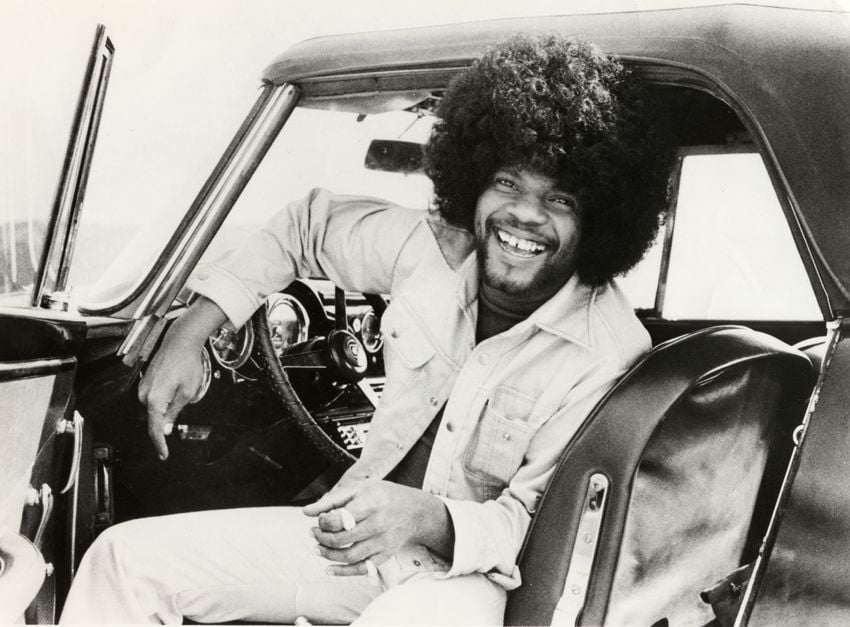
Every song Billy Preston recorded with The Beatles

“You’re giving us a lift, Bill.” That’s how John Lennon responded after just a few hours of playing with Billy Preston. When the American R&B singer/keyboardist visited the Apple Corps building in January of 1969, it was simply to see his old friends in The Beatles. Preston had rubbed elbows with the band in Hamburg nearly a full decade prior and, in the time between their meetings, had joined Ray Charles’ band.
When he arrived, he found the group in a state of confusion. Just a few days before Preston arrived, George Harrison had quit the group and had to be cajoled back, forcing a relocation to the basement of the band’s Apple headquarters. Progress on songs was still slow, and even though they were in a more comfortable setting than the cold and dreary Twickenham Studios, The Beatles were still lacking the spark that would bring their music to life.
Within minutes, Preston sat at a keyboard and started jamming with the group. The response was immediate. Soon, song ideas started to fit together more clearly. Preston’s natural ear led to additions that weren’t contrived or too flashy. He was playing backup to The Beatles, but the difference between him being on a track and him not being on a track is substantial.
The band recognised it too. Throughout his brief association with the band during the Get Back sessions (just two weeks), Preston recorded eight songs and joined the group during their impromptu rooftop performance on January 30th. The connection was so strong that Preston even came back to add keyboard parts to two songs during the Abbey Road sessions. Here are all ten songs that Billy Preston recorded with The Beatles.
Every song Billy Preston recorded with The Beatles:
‘Get Back’
The song that put Billy Preston in elite company, ‘Get Back,’ is probably the song that most fans and die-hards associate with Preston during his time with The Beatles. As the A-side to the only Beatles single that gives credit to an artist outside the band (not counting Tony Sheridan’s ‘My Bonnie’), ‘Get Back’ is the legacy song for Preston during his brief time with the Fab Four.
And you know what? That credit is well deserved. Preston’s electric piano pops out and gives the song its distinctive honk, perfectly playing off of Lennon’s lead guitar, whether you prefer the single version or the truncated album mix. His solo is one of the most technically impressive moments in any Beatles recording, and ‘Get Back’ remains one of the band’s best songs.
‘Don’t Let Me Down’
Lennon’s impassioned plea to Yoko Ono, ‘Don’t Let Me Down’ was inexplicably left off the final sequencing of Let It Be by producer Phil Spector. The track wound up as the B-side to the ‘Get Back’ single, the same single that gives Preston a credit. That places ‘Don’t Let Me Down’ firmly as one of Preston’s best-known contributions to The Beatles.
Preston’s restraint throughout ‘Don’t Let Me Down’ is remarkable. During the “I’m in the love for the first time” bridge, Preston simply vamps chords to keep the song’s momentum going. Sure, he gets to show off with some fleet-fingered runs during the choruses, but Preston was a musician’s musician, ducking out of the way when the time is right.
‘Dig a Pony’
The only version of ‘Dig a Pony’ that was deemed good enough for inclusion on Let It Be was the one and only performance of the track during the band’s rooftop concert.
However, if you truly want to appreciate Preston’s contributions to the track, listen to the Let It Be… Naked version of the song. While it’s the same performance from the rooftop concert, Preston’s keyboards are more present in the mix. He’s fantastically frenetic in the song’s intro and keeps pace with his fellow musicians by throwing counterpoint melodies out like they’re leaking out of him.
‘I’ve Got a Feeling’
‘I’ve Got a Feeling’ is a great example of Preston rescuing from potential oblivion. As one of the final true Lennon-McCartney collaborations, ‘I’ve Got a Feeling’ was the source of much tension throughout the group, particularly the guitar lines George Harrison was playing versus what Paul McCartney imagined for the song.
When Preston came in, he filled the gaps that Harrison’s rhythm playing would have, allowing Harrison to fully focus on fills and licks throughout the song. ‘I’ve Got a Feeling’ isn’t the flashiest of Preston’s performances, but it is one of the most essential.
‘The Long and Winding Road’
One of the most controversial arrangements in The Beatles’ canon, ‘The Long and Winding Road’ contains excessive orchestral overdubs and truly atrocious bass playing from Lennon. It was such a disappointment to McCartney that he specifically cited the song in his appeal to the English High Court while attempting to legally disband The Beatles.
One non-controversial element to the arrangement is Preston’s electric piano. Preston simply follows McCartney’s lead without trying to step on his carefully-chosen chords as a subtle addition to the ballad. McCartney certainly thought highly of Preston’s playing: though almost all the additions to ‘The Long and Winding Road’ were stripped from Let It Be… Naked, Preston’s electric piano remains.
‘One After 909’
A raucous rocker that only required one take to perfect, ‘One After 909’ was one of the earliest songs that John Lennon and Paul McCartney ever wrote together. A basic four-chord song, ‘One After 909’ was souped up with frantic energy during the group’s rooftop concert.
Plenty of that energy comes from Preston. Although he was ostensibly an R&B keyboard player, Preston had the ability to adapt to just about any genre, from jazz to pop to classical music. Here, Preston shows off just how skilled he is at rock and roll, pounding away like Jerry Lee Lewis throughout the track.
‘Dig It’
When Preston first arrived at Apple Corps in the middle of January, 1969, he injected immediate life into the turgid sessions. The Beatles were so excited that they simply kept jamming throughout the days to keep the good feelings going.
Hence, we get something like ‘Dig It’, an improvised song largely rooted in Preston’s carnival-like Hammond organ playing. The actual jam lasted about 15 minutes, and at one point, there was a four-minute mix that was set to be included, but as it stands, the final version of ‘Dig It’ is less than a minute long.
‘Let It Be’
The emotional centrepiece and namesake of the Let It Be album, ‘Let It Be’ very well may be Paul McCartney’s finest ballad. The gospel overtones of the track were clear from the very outset, including McCartney’s reference to Mother Mary doubling as both a personal preference and a biblical reference.
With his origins in church organ, Preston brought that same mindset to his organ playing on ‘Let It Be’. His iconic keyboard line during the breakdown right before Harrison’s solo is legendary, making ‘Let It Be’ a truly religious experience thanks to Preston’s contributions.
‘Something’
After logging time with The Beatles during the sessions that would eventually turn into Let It Be, Billy Preston didn’t leave the band’s orbit. Just a few months later, Preston was back in London, this time visiting EMI Studios while the band were finalizing a song that was first previewed during the Get Back sessions: ‘Something’.
Preston’s Hammond organ hangs over the track with brief stabs and swirling lead lines. Harrison’s guitar might be the star of the track, along with McCartney’s bouncy bassline, but Preston’s presence is still felt heavily throughout the song.
‘I Want You (She’s So Heavy)’
A dark and sinister track that features increasingly hectic additions, including white noise and screams, ‘I Want You (She’s So Heavy)’ is one of the more intense songs that The Beatles ever recorded.
It’s easy to get caught up in Lennon’s harried howls, but during the breakdown sections, it’s actually Preston’s organ that takes the lead. While it floats in and out of the arrangement throughout most of the song, Preston’s organ dominates throughout the climactic sections of the track.

Never Miss A Beat
The Far Out Beatles Newsletter
All the latest stories about The Beatles from the independent voice of culture.
Straight to your inbox.