


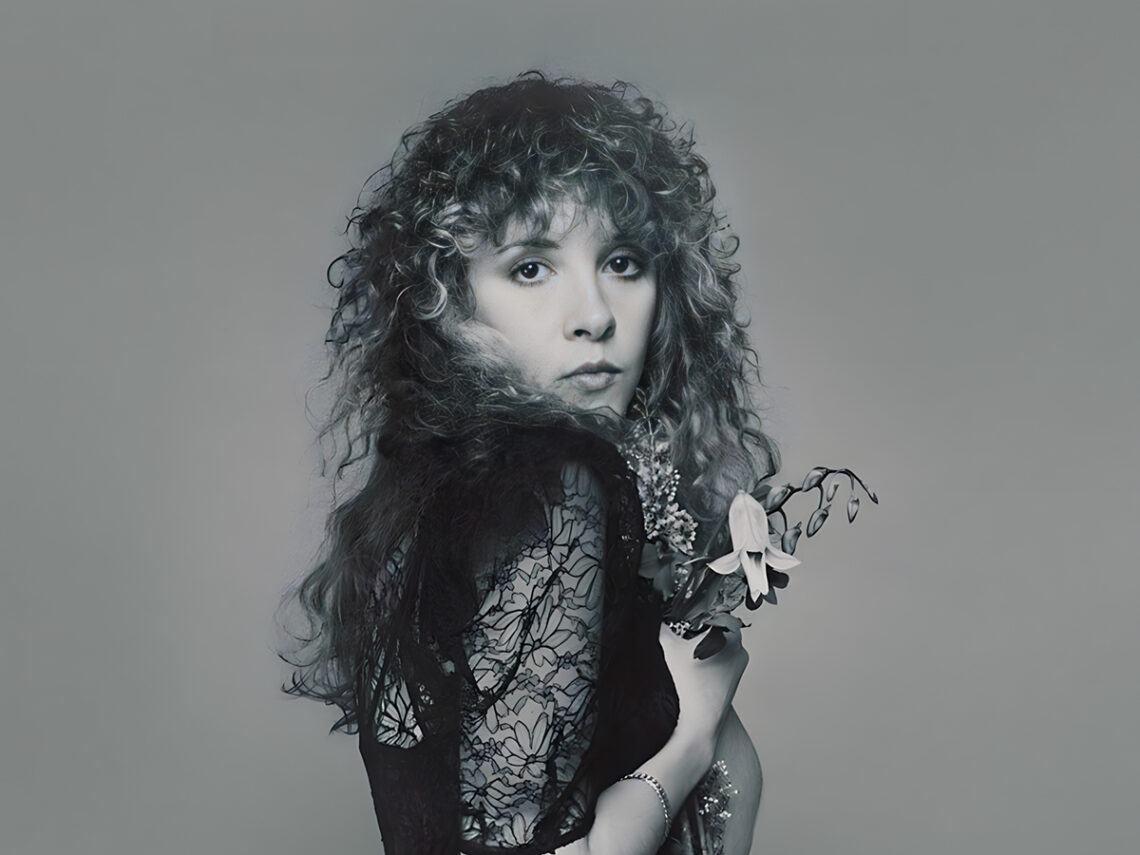
Why Stevie Nicks thought she didn’t fit in Fleetwood Mac: “I can’t enjoy being with these people”

Ever since 1967, Fleetwood Mac have been part of the woodwork of rock and roll, spawning countless hits and cementing themselves as legends almost for as long as time can remember. Of course, within that we’ve seen various faces come and go – but if nothing else, it’s hard to imagine a lineup without the commanding presence of Stevie Nicks, frontwoman and ethereal icon, at the helm.
As much as she’s decidedly the glue that holds the band together, it’s scary to think she almost didn’t see it through. It was not for the reasons you might think, either – nothing to do with her sparring feuds with lover-turned-enemy Lindsey Buckingham or her short-lived affair with Mick Fleetwood, but simply because Nicks felt she didn’t quite fit in.
The ’Landslide’ singer reminisced in 1995 on her early days with the band, saying she never felt she could properly settle in because: “Pretty soon I realized I can’t enjoy being with these people, because they look at the world through a different pair of glasses than I do.”
Despite what the classic status of records like Rumours might suggest, Nicks indicated that the magic dynamite of the band didn’t extend far beyond the limits of the stage or the studio. It’s fair to say that their slightly toxic romantic intertwining may not have helped the situation, but it’s also equally true that Fleetwood Mac were thrust together not only from different walks of life, but different corners of the world. “Lindsey and I were California girls and boys,” she expanded. “We were a strange group of three English people and two American people, and that was very hard on the road, because we were just so different.”
To say touring can be a slog is no understatement, but in circumstances like that, Nicks was inevitably bound to feel a little bit of a duck out of water. Hailing from a life far from the spotlight, the singer didn’t get a taste of her future career until she met Buckingham himself in her senior year of high school, where they formed a – mostly unsuccessful – duo before being scouted for Fleetwood Mac.
This was a far cry from the starry lifestyle of some of her fellow bandmates, Nicks explained: “Christine McVie had Stevie Winwood carrying her books home from school, and Eric Clapton was best friends with Mick Fleetwood when they were sixteen, and I could not even relate to that.”
With all their star-crossed paths and her lack thereof, Nicks felt as though she had been put on the back foot. “It was like, ‘You guys are too famous for me. And I’m getting really nervous’,” she recalled, exposing an almost charming vulnerability to a persona known for being so innately powerful and vibrant.
While some of the Fleetwood Mac delegation might have been considered the nepo-babies of their day, Nicks proves to us all that connections in high places can only get you so far. What really matters is how you make people feel, and audiences won’t care where you’ve come from for that. Although those days will seem like a long past hazy memory now, Nicks shows that imposter syndrome can strike us all. But it’s true what they say – diamonds form under pressure – and it’s the mark of what the woman created that sets her apart.
