


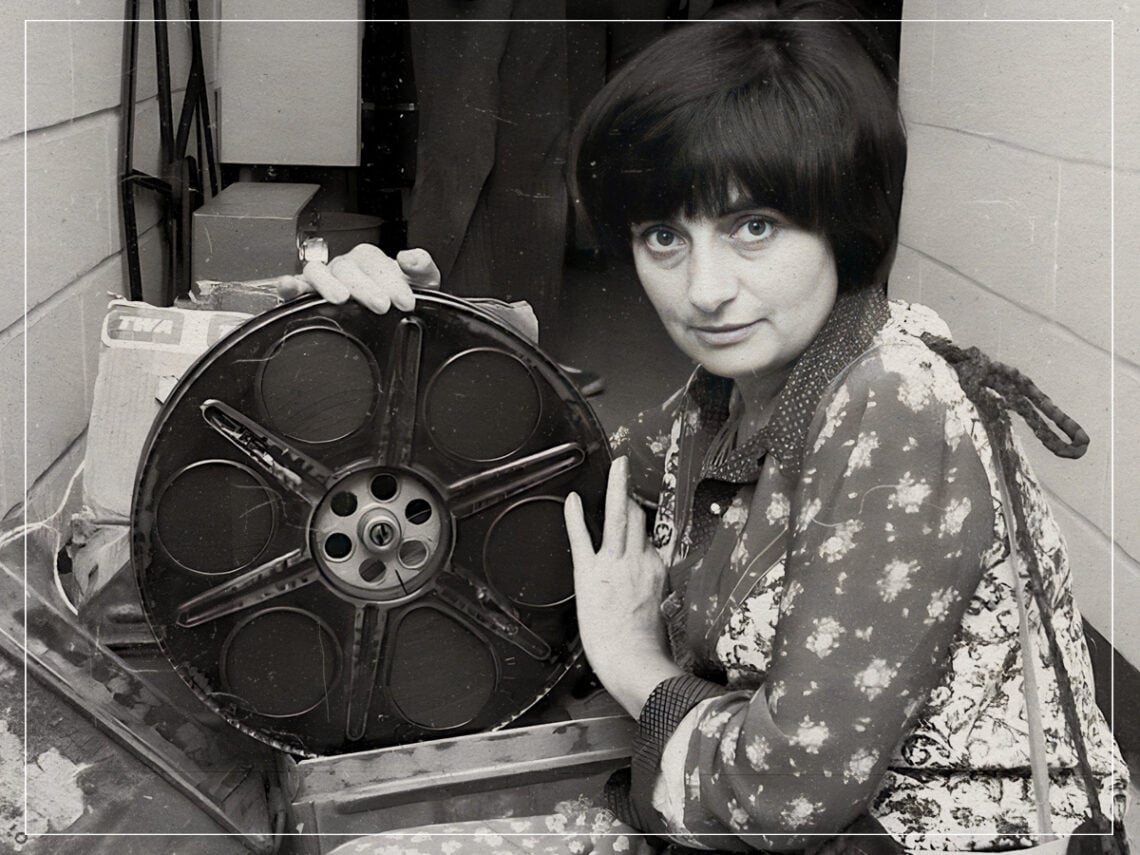
Why “simple people” always remained Agnès Varda’s biggest inspiration

The nouvelle vague might’ve given us classics like François Truffaut’s The 400 Blows and Jean-Luc Godard’s Breathless, but where would French cinema be if not for Agnès Varda?
Before these iconic French New Wave directors made their debut features, Varda, a photographer, decided to make a film of her own, even though she knew little about the medium, and she quickly championed a style that blended documentary and fiction.
Many critics have since labelled 1955’s La Pointe Courte as the true beginning of the French New Wave, released when Truffaut and Godard were only just beginning to dabble in short films. It wouldn’t be until 1962, however, that Varda would make a movie that would propel her to international heights, with Cléo from 5 to 7 becoming a defining film of the decade and the nouvelle vague.
As her career progressed, Varda moved between narrative features and documentaries, but more often than not, she merged the two with impressive precision, creating extraordinary portraits of ordinary people. Even Cleo merges fiction and reality in a way, with the sounds of radio broadcasts about the Algerian war playing in the background of her taxi ride, while her encounters with street performers are wholly real – it’s clear that Varda has wielded her lens at these odd acts and utilised them for her film. Nothing is staged.
When Varda went to America for the first time, she fell in love with the people of California, and here she made documentaries like Black Panthers. This interest in the merging of the personal and the political returned a few years later with Women Reply, a documentary about womanhood, which nicely tied into the release of her abortion-themed musical-drama One Sings, The Other Doesn’t.
Her frequent blending of fiction with documentary really spoke to her preoccupation with the people we meet every day, whether that be the strange shopkeeper we keep coming back to, a distant family member we reunite with, or the same homeless person we often see on the street. “Mostly, reality inspires me. I did a lot of films with simple people. My first film, called La Pointe Courte, was with fishermen,” she told The Guardian.
Varda was never interested in making big-budget Hollywood-esque productions that provided an overblown view of human life. She didn’t exist anywhere near that realm. Instead, she honed such a unique and idiosyncratic way of filmmaking, often bringing the person she knew better than anyone into her narratives – herself.
She appears at the start of Vagabond, an otherwise fictional narrative about a young homeless woman, inserting herself into the film as a reminder of its grounding in the real world. Later, she’d make The Gleaners and I, a documentary which saw her meet with various subjects – normal people – who ‘glean’ in their own way, whether that be bin-diving to feed themselves, collecting scraps off the street to make art, or living extremely frugally for moral reasons.
Drawing parallels between these wrinkling potatoes gleaned by locals with her own wrinkling skin, the film also becomes a meditation on ageing, on decay, on waste. “And when I made The Gleaners and I, it was so important to put a finger on the huge waste of our society. An incredible waste,” she added.
Varda’s style, often metafictional, was testament to her appreciation for the mundane, for the everyday people who define our experience of life.
This is perhaps most evident in Daguerréotypes, a portrait of her local neighbourhood in which she spends time with the weird and wonderful figures who illuminated her street. Varda celebrated the simple, normal person with every chance that she got, and that’s what made her films feel so personal and so special.
